undefined City View

Travel Guide

The capital of the People's Republic of China, it is the national political center, cultural center, international exchange center, and technological innovation center. Beijing is a global city and a world leader in culture, diplomacy, politics, finance, commerce and economics, education, research, language, tourism, media, sports, science and technology, transportation and the arts. It is home to the headquarters of most of China's largest state-owned enterprises, has the most Fortune Global 500 companies in the world, and the four largest financial institutions in the world by total assets. Beijing has a rich history dating back more than three thousand years and is one of China's Four Great Ancient Capitals, serving as the nation's political center for most of the past eight centuries. It is known for its magnificent palaces, temples, parks, gardens, mausoleums, city walls and gates. Beijing is one of the most important tourist destinations in the world, with eight UNESCO World Heritage Sites including the Forbidden City, the Temple of Heaven, the Summer Palace, the Ming Tombs, the Peking Man Site at Zhoukoudian, the Central Axis of Beijing, and sections of the Great Wall and the Grand Canal.

Best Time to Visit

Spring and Autumn

Daily Budget

¥400-800 ($60-120) per day

Getting Around

Subway, Bus, Taxi, Ride-hailing, Shared bicycle, Beijing Capital International Airport, Beijing Daxing International Airport

Suggested Stay

3-7 days

Must-Visit Attractions

National Museum of China

National Museum of China

The National Museum of China is an art and history museum located on the east side of Tiananmen Square in Beijing. It has a total construction area of approximately 200,000 square meters, houses over 1.4 million artifacts, and has 48 exhibition halls. It is the largest museum in the world in terms of single building area and the museum with the richest collection of Chinese cultural relics. It is a first-level public institution funded by the Ministry of Culture and Tourism. The museum's permanent exhibition, "The Road to Rejuvenation," showcases China's modern history since the First Opium War, focusing on the history of the Chinese Communist Revolution and the founding of the People's Republic of China. After visiting the exhibition, Xi Jinping elaborated on the political concept of the Chinese Dream in November 2012, declaring that "the great rejuvenation of the Chinese nation is the greatest dream of the Chinese nation in modern times." The museum's collection covers Chinese history from the Yuanmou Man of 1.7 million years ago to the end of the Qing Dynasty (the last feudal dynasty in Chinese history), with 1.05 million permanent collections, many of which are precious and rare cultural relics that are difficult to find in other museums in China and the world. The most important collections include the Shang Dynasty's Houmuwu Ding (the world's heaviest ancient bronze ware, weighing 832.84 kg), the Shang Dynasty's Four Sheep Square Zun, the Western Zhou Dynasty bronze water plate, the Qin Dynasty tiger tally, the Han Dynasty jade burial suit, and a comprehensive collection of Tang Dynasty tri-color pottery and Song Dynasty ceramics. The museum also has an important collection of coins, including 15,000 coins donated by Luo Bozhao.

Palace Museum

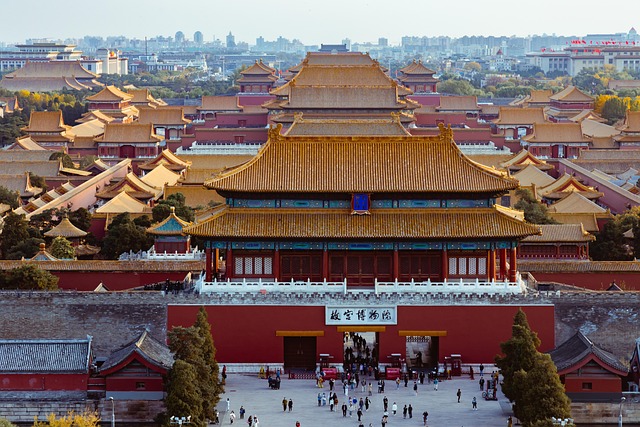
Palace Museum

The Palace Museum, also known as the Forbidden City in Beijing, is a large national comprehensive museum located within the Forbidden City in the core area of Beijing, China. It covers an area of 720,000 square meters. The museum inherited the royal palaces of the Ming and Qing dynasties in China and opened to the public in 1925. It consists of 980 buildings and houses more than 1.8 million works of art, mainly from the royal collections of the Ming and Qing dynasties. It is the most visited museum in the world.

Summer Palace

Summer Palace

The Summer Palace, the royal garden of the Qing Dynasty in China, formerly known as Qingyi Garden, is located in the western suburbs of Beijing, 15 kilometers away from the city. It is the largest and most well-preserved royal garden in China. It is modeled after the West Lake in Hangzhou, absorbing some design techniques and artistic conceptions of Jiangnan gardens, while retaining the grandeur of the northern royal gardens. The Summer Palace concentrates the essence of Chinese garden art and is evaluated by UNESCO as a "masterpiece of Chinese landscape garden design" and was listed as a World Heritage Site in 1998.

Tsinghua University

Tsinghua University

Tsinghua University is a renowned institution of higher education in China, located in Haidian District, Beijing. Its predecessor, Tsinghua Academy, was founded in 1911. It is one of the most outstanding universities in China and even Asia. The university is a national key university directly under the Ministry of Education of the People's Republic of China, and is among the universities included in the national "211 Project", "985 Project", and "Double First-Class" initiative. It is a member of the C9 League. The campus is located on the site of former Qing Dynasty royal gardens, boasting a beautiful environment and numerous historical buildings. It is an academic palace that blends traditional garden style with a modern atmosphere. The university has 21 colleges and 59 departments, covering a wide range of disciplines including science, engineering, humanities, law, medicine, history, philosophy, economics, management, education, and art. Since its establishment, Tsinghua University has adhered to its motto of "Self-Improvement and Social Commitment", cultivating numerous outstanding talents for the nation in scientific, engineering, political, business, and academic fields.

Jingshan Park

Jingshan Park

Jingshan Park is a royal park covering 23 hectares (57 acres), located in the Imperial City area directly north of the Forbidden City in Beijing, China. The focal point of the park is the artificial hill, Jingshan (景山, literally "Prospect Hill"). Originally an attached private royal garden of the Forbidden City, Jingshan Park was opened to the public in 1928. The park was officially established in 1949. It is listed as a national key park and administratively belongs to the Xicheng District in the city center of Beijing.

Peking University

Peking University

Peking University, abbreviated as "PKU", was founded in 1898, originally named the Imperial University of Peking. It was the first national university in modern China and the first school to be established under the name of "University", marking the beginning of modern higher education in China. PKU is a top comprehensive research university in China, listed in the "Double First-Class Initiative", "Project 985", and "Project 211". It is a member of the C9 League and enjoys a high reputation in teaching and research.

Ming Tombs - Dingling Tomb

Ming Tombs - Dingling Tomb

Dingling Tomb is the mausoleum where Zhu Yijun (the Wanli Emperor), the thirteenth emperor of the Ming Dynasty, and his two empresses, Empress Xiaoduanxian and Empress Xiaojingwenmu, were buried together. Dingling Tomb is the only imperial tomb in the Ming Tombs that has been actively excavated. Construction began in 1584 and lasted until 1590, covering an area of 180,000 square meters. Its underground palace is located 27 meters underground and has unearthed a large number of precious cultural relics, including silk fabrics, wooden objects, and porcelain. The excavation of Dingling Tomb provides valuable physical data for the study of Ming Dynasty history and burial system, but the controversy over the protection and excavation process of its cultural relics has also become an important case in the history of Chinese archaeology.

Prince Kung's Mansion Museum

Prince Kung's Mansion Museum

Prince Kung's Mansion Museum, also known as Prince Kung's Mansion, is a museum and tourist attraction located in Xicheng District, Beijing, north of Shichahai Lake. It consists of a large courtyard-style mansion and garden. Prince Kung's Mansion was originally built in 1777 for Heshen, an official known for corruption during the reign of Emperor Qianlong. Later, it was named after Prince Gong Yixin, an influential politician in the late Qing Dynasty, who lived here in the late 19th century. Prince Kung's Mansion is one of the most exquisite and well-preserved royal residences in Beijing, covering a total area of 60,000 square meters.

Old Summer Palace Ruins Park

Old Summer Palace Ruins Park

The Old Summer Palace Ruins Park, located in Haidian District, Beijing, is a large royal garden of the Qing Dynasty, composed of Yuanmingyuan, Changchunyuan, and Qichunyuan, also known as the "Three Gardens of Yuanmingyuan", covering an area of more than 350 hectares. It was once the main place for the Qing Dynasty emperors to handle government affairs and live, and was known as the "Garden of Gardens". However, during the Second Opium War, it was looted and burned by the Anglo-French Allied Forces in 1860, and only ruins remain. The most famous ruins in the park are the Western Buildings Scenic Area, which showcases the architectural style and exquisite garden art of the combination of Chinese and Western cultures.

Shichahai

Shichahai

Shichahai is a scenic area with a long history, located in the northern part of Beijing's central city, consisting of three lakes: Qianhai, Xihai, and Houhai. It is located northwest of the Forbidden City and north of Beihai Park. During the Yuan Dynasty, Shichahai was an important commercial district at the northernmost end of the Grand Canal, surrounded by many temples and royal residences, among which Prince Gong's Mansion and Prince Chun's Mansion are the most famous. The name Shichahai means "Sea of Ten Temples". The lake area has beautiful scenery, with boating in summer and ice skating in winter. It is a famous historical and cultural scenic spot in Beijing, and was listed as a "Historical and Cultural Scenic Area" by the Beijing Municipal Government in 1992.

Juyongguan Great Wall

Juyongguan Great Wall

Juyongguan Great Wall is a famous ancient military pass on the Great Wall and one of the famous eight scenic spots in Beijing. It has a strategic location and has been a battleground for strategists of all dynasties. Inside the pass is the well-preserved Cloud Platform, with exquisite carvings and high artistic value. Visitors can appreciate the magnificence of the Great Wall and feel the vicissitudes of history here.

Tiananmen Square

Tiananmen Square

Tiananmen Square is located in the center of Beijing and is a symbolic landmark of the People's Republic of China. The square is named after the Tiananmen Gate Tower on its north side, which separates it from the Forbidden City. The square contains the Monument to the People's Heroes, the Great Hall of the People, the National Museum of China, and the Mausoleum of Chairman Mao. These building complexes, as part of the central axis of Beijing, were added to the UNESCO World Heritage List in 2024. Chairman Mao Zedong proclaimed the founding of the People's Republic of China here on October 1, 1949. Tiananmen Square is vast in size, bears witness to many important events in Chinese history, and has significant cultural significance.

Ming Tombs Scenic Area

Ming Tombs Scenic Area

The Ming Tombs are the mausoleum complex of the Ming Dynasty emperors, located at the foot of Tianshou Mountain in Changping District, Beijing, about 42 kilometers from the city center. The entire mausoleum area is vast and carefully selected based on Feng Shui theory, with mountains behind it and a tranquil environment. Starting with Emperor Yongle, a total of thirteen Ming Dynasty emperors were buried here. The mausoleum area includes the Changling Tomb, Dingling Tomb, Zhaoling Tomb and other open tombs, as well as the Sacred Way and other attractions. During the Ming Dynasty, these tombs were not open to the general public. Today, the Ming Tombs are listed as a World Cultural Heritage site as part of the "Imperial Tombs of the Ming and Qing Dynasties".

National Centre for the Performing Arts

National Centre for the Performing Arts

The National Centre for the Performing Arts is located in the center of Beijing. It is a comprehensive national-level performing arts center integrating opera, drama, concert performances, art exchanges, art popularization, and art education. It was designed by French architect Paul Andreu. Its unique oval shape and water-surrounded design make it one of Beijing's iconic buildings.

Fragrant Hills Park

Fragrant Hills Park

Fragrant Hills Park, also known as Jingyi Garden, is located at the foot of the Western Hills in Haidian District, Beijing. It is a large mountain forest park with royal garden characteristics. The park covers an area of 160 hectares and is known for its natural pine and cypress forests, maple trees, smoke trees, and persimmon trees covered hills, as well as traditional buildings and cultural relics. Its name comes from Incense Burner Peak, a 557-meter-high mountain peak with two huge rocks resembling incense burners at the top. The park was first built in the Jin Dynasty in 1186 and expanded during the Yuan and Ming Dynasties. In 1745, Emperor Qianlong ordered the construction of many halls, pavilions, and gardens, and named it "Jingyi Garden". Fragrant Hills Park is most famous for its red leaves all over the mountains in autumn, attracting thousands of tourists every year to take the cable car to enjoy the autumn scenery.

Beijing Zoo

Beijing Zoo

Beijing Zoo is one of the oldest and largest zoos in China, founded in 1906 and located in Xicheng District, Beijing. The zoo covers an area of 89 hectares and has a rich variety of animals, including giant pandas, red pandas, golden monkeys and other rare and unique Chinese animals, as well as more than 450 species of terrestrial animals and more than 500 species of marine animals from all over the world. The park has a beautiful environment and integrates the style of classical Chinese gardens. It is a comprehensive park integrating animal protection, scientific research, science education and leisure and entertainment.

Beijing Olympic Park

Beijing Olympic Park

Beijing Olympic Park is an Olympic park located in Chaoyang District, Beijing, China. It was built for the 2008 Summer Olympics and Paralympics, and served again as the venue for the 2022 Beijing Winter Olympics and Paralympics. The main facilities in the park include the National Stadium (Bird's Nest), the National Aquatics Center (Water Cube), and the National Indoor Stadium.

Temple of Heaven Park

Temple of Heaven Park

The Temple of Heaven Park is a royal sacrificial building complex located in the southeast of Beijing. It was first built during the Yongle period of the Ming Dynasty and was used by emperors of the Ming and Qing Dynasties to worship heaven and pray for good harvests. In 1998, it was listed as a World Cultural Heritage Site by UNESCO and is praised as a "masterpiece of architecture and landscape design, vividly interpreting the cosmology of great significance to the development of important civilizations in the world." Its symbolic layout and design have had a profound impact on the architecture and planning of the Far East. The park covers an area of 2.73 square kilometers, and its main buildings include the Hall of Prayer for Good Harvests, the Imperial Vault of Heaven, and the Circular Mound Altar. All buildings are built in accordance with strict philosophical requirements and are a testimony to the long history and culture of the Chinese nation and an important carrier.

National Botanical Garden (North Garden)

National Botanical Garden (North Garden)

The National Botanical Garden of China (North Garden) is located in Haidian District, Beijing, between Xiangshan and Yuquan Mountain. It is integrated on the basis of the existing Institute of Botany, Chinese Academy of Sciences (South Garden) and Beijing Botanical Garden (North Garden), with a total planned area of nearly 600 hectares. The North Garden mainly focuses on ex-situ conservation, popular science education, and exhibitions, with emphasis on applied plant research, conservation of rare and endangered plants, collection and display of horticultural plants, and research and training in landscape gardening technology. The garden cultivates more than 6,000 species of plants, including 2,000 species of trees and shrubs, 1,620 species of tropical and subtropical plants, 500 species of flowers, and 1,900 species of fruit trees, aquatic plants, and traditional Chinese herbal medicines. Greenhouse exhibitions are a major highlight of the park.

Mutianyu Great Wall

Mutianyu Great Wall

The Mutianyu Great Wall is located in Huairou District, Beijing, 70 kilometers from the city center. It is the best-preserved section of the Ming Great Wall and a famous tourist attraction. It connects Juyongguan Pass in the west and Gubeikou in the east, and has been a vital military stronghold guarding Beijing since ancient times. The Mutianyu Great Wall is famous for its steep terrain, unique structure, and magnificent scenery. The wall is mainly built of granite, 7 to 8.5 meters high and 4 to 5 meters wide at the top. Compared with other sections of the Great Wall, the Mutianyu Great Wall has unique construction features, with dense watchtowers, 22 watchtowers on the 2250-meter-long wall. Parapets are set up on both the inner and outer sides of the wall, which is very rare in other sections of the Great Wall, allowing archers to cover shooting on both sides. The Mutianyu Pass consists of three watchtowers, a large building in the middle and two smaller buildings on each side. The three watchtowers are connected on the same platform, forming a rare structure in various sections of the Great Wall. In addition, this section of the Great Wall is surrounded by forests and streams, with a forest coverage rate of over 90%. Visitors can choose to take a cable car or toboggan up and down, or climb more than 4,000 steps on foot.

Beihai Park

Beihai Park

Beihai Park is a public park and former imperial garden located northwest of the Forbidden City in Beijing, China. Built in the 12th century, it is one of the largest and best-preserved imperial gardens in China, with many historically significant buildings, palaces, and temples. Beihai Park was once part of the Imperial City and has been open to the public since 1925. Like many Chinese imperial gardens, Beihai Park is designed to mimic famous scenic spots and architecture from all over China, especially the Jiangnan region of the Yangtze River Delta. Aspects of the park are reminiscent of the exquisite pavilions and canals of Hangzhou and Yangzhou, the elegant gardens of Suzhou, and the natural scenery around Taihu Lake, known for its porous and bizarre stones. Beihai Park itself is now considered one of the masterpieces of Chinese gardens and landscapes.

Wangfujing Street

Wangfujing Street

Wangfujing Street is a famous shopping street located in Dongcheng District, Beijing, China. Commercial activities have been carried out in this area since the mid-Ming Dynasty. During the Qing Dynasty, ten royal mansions and princess residences were built here. It was later named "Wangfu" (royal mansion) and "Jing" (well) because a sweet well was discovered here. Most of the main areas of this street have been pedestrianized and are known for their many shops, department stores, and Wangfujing Snack Street with exotic cuisine.

Confucius Temple and Guozijian Museum

Confucius Temple and Guozijian Museum

The Confucius Temple and Guozijian Museum is located on Guozijian Street, Dongcheng District, Beijing. It was the site of royal Confucian sacrifices and the highest institution of learning during the Yuan, Ming, and Qing dynasties in China. The Confucius Temple was first built in 1302 (the sixth year of the Dade reign in the Yuan Dynasty) and is the second largest Confucius Temple in the country, second only to the Confucius Temple in Qufu, Shandong. The Guozijian was first built in 1306 (the tenth year of the Dade reign in the Yuan Dynasty) and was the highest institution of learning in Chinese history. The museum covers an area of approximately 20,000 square meters and retains its complete historical appearance. It houses 198 steles with the names of Jinshi (successful candidates in the highest imperial examinations), engraved with the names, origins, and rankings of more than 50,000 Jinshi from the Yuan, Ming, and Qing dynasties, as well as famous historical sites such as the 'Touching Traitor Cypress'. It was once the place where emperors of the Yuan, Ming, and Qing dynasties sacrificed to Confucius and held national studies education, and is an important window to understand ancient Chinese etiquette, education system, and Confucian culture.

Panjiayuan Antique Market

Panjiayuan Antique Market

Panjiayuan Antique Market (or Panjiayuan Flea Market) is an open-air market located in Panjiayuan Subdistrict, Beijing, and is one of the largest flea markets in Beijing and even China. Stalls sell various items such as books, calligraphy and paintings, and handicrafts, many of which are antiques. The market covers an area of 48,500 square meters, of which 26,000 square meters are used for business, with approximately 4,000 stalls. It is a popular place for historians and collectors to find Mao-era art and documents, but there are also many fakes and reproductions. The market is divided into a Buddhist statue area, an antique furniture area, a high-end antique store area, a book and scroll area, and a central area that is open on weekends.

Capital Museum

Capital Museum

The Capital Museum is a large comprehensive museum located in Beijing, China. It opened in 1981 and moved to its new building in 2006. The museum has a rich collection, including ancient porcelain, bronzes, calligraphy, paintings, jade, sculptures, and Buddhist statues from Chinese dynasties and other Asian cultures. Some of the museum's collections were previously housed in the Confucius Temple on Guozijian Street in Beijing.

Gubei Water Town

Gubei Water Town

Gubei Water Town is located in Gubeikou Town, Miyun District, Beijing. It is a resort-style town with unique northern characteristics at the foot of the Great Wall. It is situated at the foot of the Simatai Great Wall, with the unique style of a northern water town, integrating historical culture, natural scenery and leisure vacation elements.

Fayuan Temple

Fayuan Temple

Fayuan Temple is one of the oldest and most famous Buddhist temples in Beijing, China. It was first built in the 19th year of the Zhenguan reign of the Tang Dynasty (645 AD), originally named Minzhong Temple, and was built by Emperor Taizong of Tang to commemorate the soldiers who died in the campaign against Goguryeo. It was later rebuilt during the Zhengtong period of the Ming Dynasty (1436-1449). The temple covers an area of 6,700 square meters and houses a large number of precious cultural heritages, including ancient bronzes, stone lions, and gilded sculptures of the Three Buddhas. The temple also houses a large number of Buddhist scriptures from the Ming and Qing dynasties. The overall layout of the temple is compact, and the buildings are symmetrically arranged along the central axis. The main buildings include the temple gate, the Hall of Heavenly Kings, the Great Hall of the Great Sage, the Great Compassion Altar, the Sutra Library, and the Bell and Drum Towers. The Bell Tower and Drum Tower are located on both sides of the temple gate. The Great Hall of the Great Sage is magnificent and solemn, and enshrines the three saints of the Huayan School: Vairocana Buddha, Manjusri Bodhisattva, and Samantabhadra Bodhisattva. The Great Compassion Altar houses Buddha statues, stone carvings, and artistic masterpieces, including the most precious Buddha statues in ancient China: a pottery seated Buddha from the Eastern Han Dynasty, a pottery vase Buddha statue from the Eastern Wu Dynasty, a stone Buddha statue from the Tang Dynasty, and a steel-cast Guanyin statue. Taiwanese writer Li Ao published the novel 'Beijing Fayuan Temple', which tells the story of the beginning and failure of the Reform Movement of 1898 in the late Qing Dynasty, and was nominated for the Nobel Prize in Literature for this.

Miaoying Temple White Pagoda

Miaoying Temple White Pagoda

Miaoying Temple White Pagoda, also known as White Pagoda Temple, is located on Fuchengmen Inner Street, Xicheng District, Beijing. It is a Tibetan Buddhist temple and is now open to the public as a museum. The white pagoda in the temple was built in 1279 during the Yuan Dynasty and was designed and built by the Nepalese craftsman Araniko. It is the oldest and largest Tibetan-style pagoda in China. The temple was listed as a national key cultural relics protection unit in 1961.

Yonghe Temple

Yonghe Temple

Yonghe Temple, also known as the Yonghe Lamasery, commonly known as the Lama Temple, is a Gelug school Tibetan Buddhist temple located at No. 12 Yonghegong Street, Dongcheng District, Beijing, China. The architecture and art combine Han and Tibetan styles, making it one of the largest Tibetan Buddhist temples in mainland China. During the mid-to-late Qing Dynasty, Yonghe Temple was the highest Buddhist temple in the country. It was originally the residence of Yinzhen (Emperor Yongzheng), the fourth son of Emperor Kangxi. After Emperor Yongzheng ascended the throne, it was converted into an imperial palace, and later converted into a Tibetan Buddhist temple by Emperor Qianlong in 1744. Yonghe Temple is known for its exquisite architecture, precious cultural relics, and unique Tibetan Buddhist culture, attracting many tourists and believers.

Ming Tombs - Changling Tomb

Ming Tombs - Changling Tomb

Changling Tomb is the head of the Ming Tombs, and it is the joint tomb of Zhu Di, Emperor Chengzu of the Ming Dynasty, and Empress Xu. The mausoleum architecture is magnificent, and it is the most complete and largest mausoleum among the Thirteen Tombs, fully reflecting the artistic style of Ming Dynasty architecture and the imperial mausoleum system. The above-ground buildings of Changling Tomb are well preserved, mainly including the Mausoleum Gate, Ling'en Hall, Fangcheng, and Ming Tower.

Ditan Park

Ditan Park

Ditan Park, also known as Fangze Altar, is the place where emperors of the Ming and Qing dynasties worshiped the "God of the Earth". It is the second largest altar among the five altars in Beijing. The park is full of ancient trees and has a quiet environment, making it an important place for citizens to relax and exercise. During the Spring Festival every year, the Ditan Temple Fair is one of the most representative traditional cultural activities in Beijing.

Taoranting Park

Taoranting Park

Taoranting Park is located in Xicheng District, Beijing, in the south of the city. It is the first modern urban park with the characteristics of Chinese classical gardens built after the founding of the People's Republic of China. The park is named after the "Taoranting Pavilion" built here by Jiang Zao, a secretary of the Ministry of Works during the Kangxi period of the Qing Dynasty, taking the poetic meaning of Bai Juyi, a poet of the Tang Dynasty, "Waiting for the chrysanthemums to turn yellow and the home-brewed wine to mature, I will get drunk and happy with you." The park has a total area of 59 acres (approximately 240,000 square meters), including a water area of 17 acres (approximately 69,000 square meters). There are historical sites such as Cibei Temple and Taoranting Pavilion in the park, as well as memorial sites such as the tombs of Gao Junyu and Shi Pingmei. It is an important place for literati to gather and citizens to relax and entertain.

Dashilan

Dashilan

Dashilan is a famous commercial district located west of Qianmen Street in Xicheng District, Beijing. It is adjacent to the south side of Tiananmen Square and is known for its unique historical features and many time-honored Chinese brands. The history of Dashilan can be traced back to the Ming Dynasty, when the wooden fence set up to maintain the security of the capital was called "Dashilan" (meaning "Big Fence") by the locals because of its large scale, and gradually evolved into the official name of this block. Although modern commercial centers have shifted, it still retains century-old shops such as Tongrentang, Ruifuxiang, Majuyuan, Neiliansheng, and Zhangyiyuan, which are the epitome of traditional Chinese commercial culture and one of the entertainment centers of old Beijing, once boasting many large theaters.

798 Art District

798 Art District

798 Art District (also known as Dashanzi Art District) is located in the Dashanzi area of Chaoyang District, Beijing. It is an art community transformed from old military factory buildings with a 50-year history. The unique Bauhaus architectural style provides a rich space for artistic creation, bringing together galleries, art studios, cultural companies, fashion shops and other business formats. It is an important contemporary art gathering place and cultural and creative industry park in Beijing. The most important venue in the area is the Ullens Center for Contemporary Art, and it is also the main venue for the Beijing Queer Film Festival and Beijing Design Week.

Wanshou Temple

Wanshou Temple

Wanshou Temple is located at No. 121 Wanshousi Road, Haidian District, Beijing. It is a Buddhist temple that was first built in the fifth year of the Wanli reign of the Ming Dynasty (1577) and was originally used to store Buddhist scriptures. Later, it became a place for the royal family to hold celebrations. Wanshou Temple is known as one of the most important temples in Beijing and was listed as a "Key Cultural Relics Protection Unit" in Beijing in August 1979. The temple also houses the Beijing Art Museum, which has a rich collection, including bronzes and jades from the Shang and Zhou dynasties, as well as ancient art treasures such as porcelain, pottery, enamel, carved lacquer, ivory carvings, and wood carvings, with a permanent collection of 70,000 pieces. The museum's most important exhibits include Ming and Qing calligraphy and paintings since 1368, Ming and Qing textiles and embroideries, and ancient coins from China and other countries. In addition, the museum also exhibits modern Chinese, Japanese, and other Asian crafts and paintings. After five years of renovation, Wanshou Temple reopened on September 16, 2022.

Liulichang, Beijing

Liulichang, Beijing

Liulichang Cultural Street is a famous cultural street in Beijing, located outside Hepingmen. It mainly deals in the Four Treasures of the Study, antiques, and calligraphy and paintings, and is a gathering place for many literati and art lovers. It originated in the Qing Dynasty and has now developed into a distinctive block integrating culture, art, and tourism.

Dongyue Temple

Dongyue Temple

Beijing Dongyue Temple is a Taoist temple located in the Chaowai area of Chaoyang District, Beijing, China, dedicated to the Great Emperor of the Eastern Peak. Dongyue Temple was founded in the Yuan Dynasty and is the largest Zhengyi Taoist temple in Beijing, as well as a national key cultural relics protection unit. The temple also houses the Beijing Folk Museum.

White Cloud Temple

White Cloud Temple

Beijing White Cloud Temple is the first Quanzhen Taoist forest in northern China and one of the three ancestral courtyards of Quanzhen Taoism, enjoying the title of "the head of the three ancestral courtyards of Quanzhen". It is located outside Xibianmen in Beijing and was first built in the 29th year of Kaiyuan in the Tang Dynasty (741 AD). It was originally named Tianchang Temple, renamed Shifang Datianchang Temple in the Jin Dynasty, and named White Cloud Temple in the Yuan Dynasty. White Cloud Temple occupies an important position in the history of Chinese Taoism and is an important place of worship for Taoists and a center for Taoist academic exchanges. The temple has magnificent buildings, towering ancient trees, and a rich collection of Taoist classics and cultural relics. It has a prosperous incense all year round and is an important window to understand Chinese Taoist culture.

Beijing Ancient Observatory

Beijing Ancient Observatory

The Beijing Ancient Observatory is a pre-telescopic astronomical observatory located in Beijing, China. The observatory was built in 1442 during the Ming Dynasty and expanded during the Qing Dynasty. In 1644, with the help of Europeans (Jesuits), it underwent a major reorganization and acquired many new, more precise instruments. As one of the oldest observatories in the world, the Beijing Ancient Observatory covers an area of 10,000 square meters. The observatory itself sits on a 40-meter × 40-meter wide platform at the top of a 15-meter high brick tower, which is the surviving part of the Ming Dynasty city wall that once surrounded Beijing. Several bronze astronomical instruments are placed on the platform, while other armillary spheres, sundials, and other instruments are located near the ground. It operates as an affiliated museum of the Beijing Planetarium.

Qianmen Street

Qianmen Street

Qianmen Street is a famous commercial street in the center of Beijing, located south of Tiananmen Square. It is a traditional commercial center and cultural landmark of Beijing. It brings together many time-honored Chinese shops, specialty snacks, and traditional buildings, showcasing the unique style of old Beijing.

Zhongshan Park

Zhongshan Park

Beijing Zhongshan Park is located on the southwest side of the Forbidden City. It was originally the Altar of Land and Grain during the Ming and Qing dynasties and has now become an important public garden. The park contains the historic Altar of Land and Grain, various pavilions and towers, elegant gardens, and a flower greenhouse that displays various flowers throughout the year. The park was renamed in 1928 to commemorate Sun Yat-sen, the pioneer of the Chinese democratic revolution, and is an urban green space integrating historical culture and natural landscapes.

Bell and Drum Towers

Bell and Drum Towers

The Bell and Drum Towers of Beijing are located at the northernmost end of Beijing's central axis and served as the timekeeping center for the Yuan, Ming, and Qing dynasties. The Drum Tower was built in 1272 (Yuan Dynasty), and the Bell Tower is located right behind the Drum Tower. Before the advent of modern timekeeping methods, the Bell and Drum Towers were responsible for the official timekeeping of Beijing. Today, they are important historical sites and tourist attractions, where visitors can climb to the top of the towers, overlook the cityscape of Beijing, and learn about ancient Chinese timekeeping culture.

Must-Try Local Food

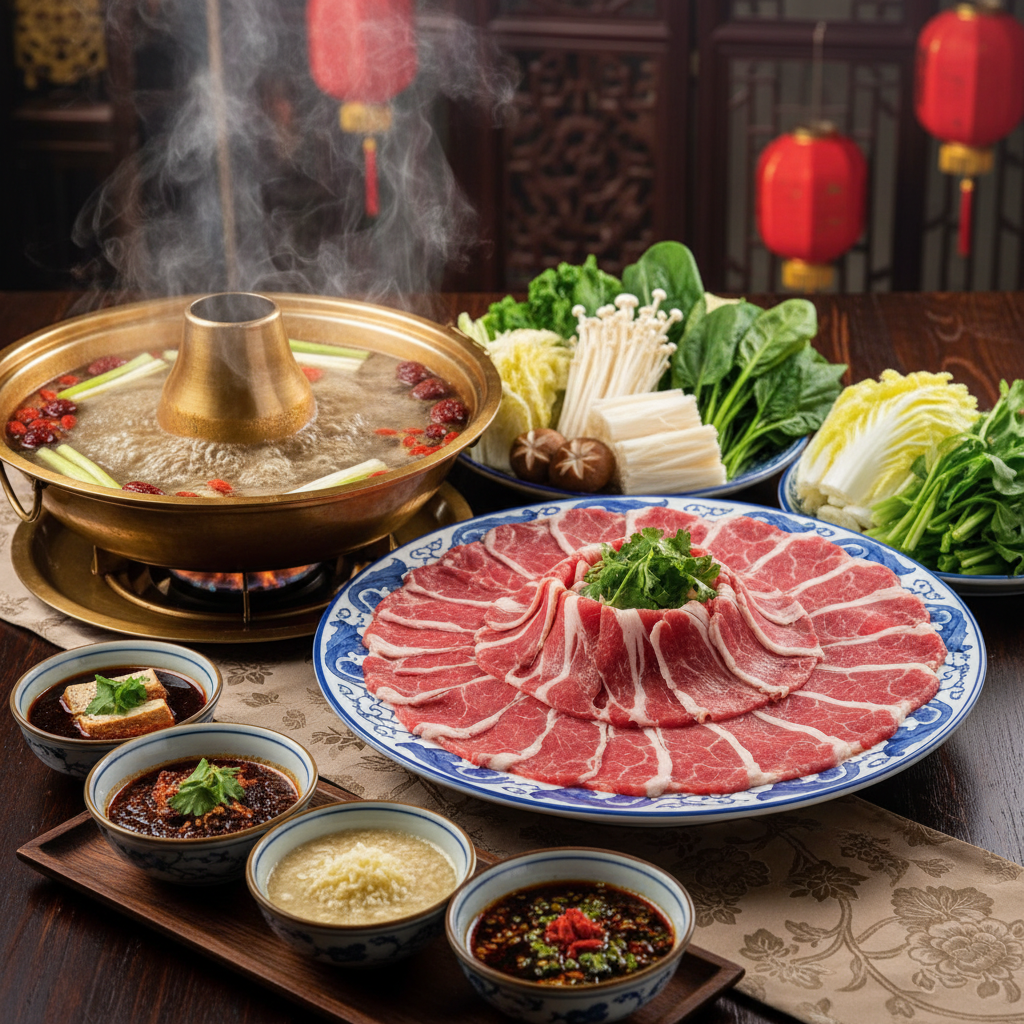
Shuan Yang Rou

Shuan Yang Rou

Shuan Yang Rou is a Chinese hot pot dish originating from Beijing, particularly popular in cold winters, but now available year-round. Its characteristic feature is thinly sliced lamb quickly cooked in boiling clear broth, then dipped in a special sauce.
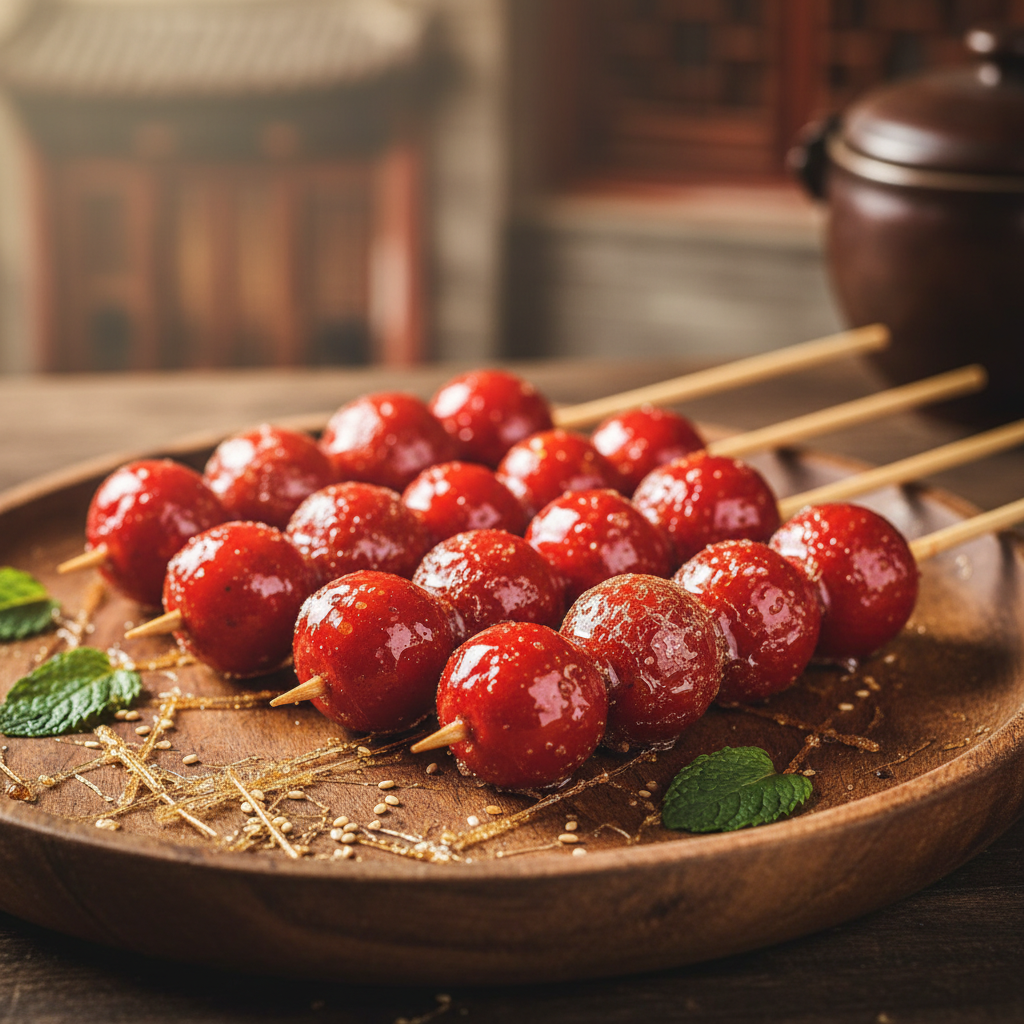
Tanghulu

Tanghulu

A traditional Chinese snack made of several hawthorn fruits (or other fruits) coated in malt syrup and skewered on a bamboo stick. It is typically made by skewering hawthorn fruits and then dipping them in heated syrup, which hardens at low temperatures. It is named for its gourd-like shape.
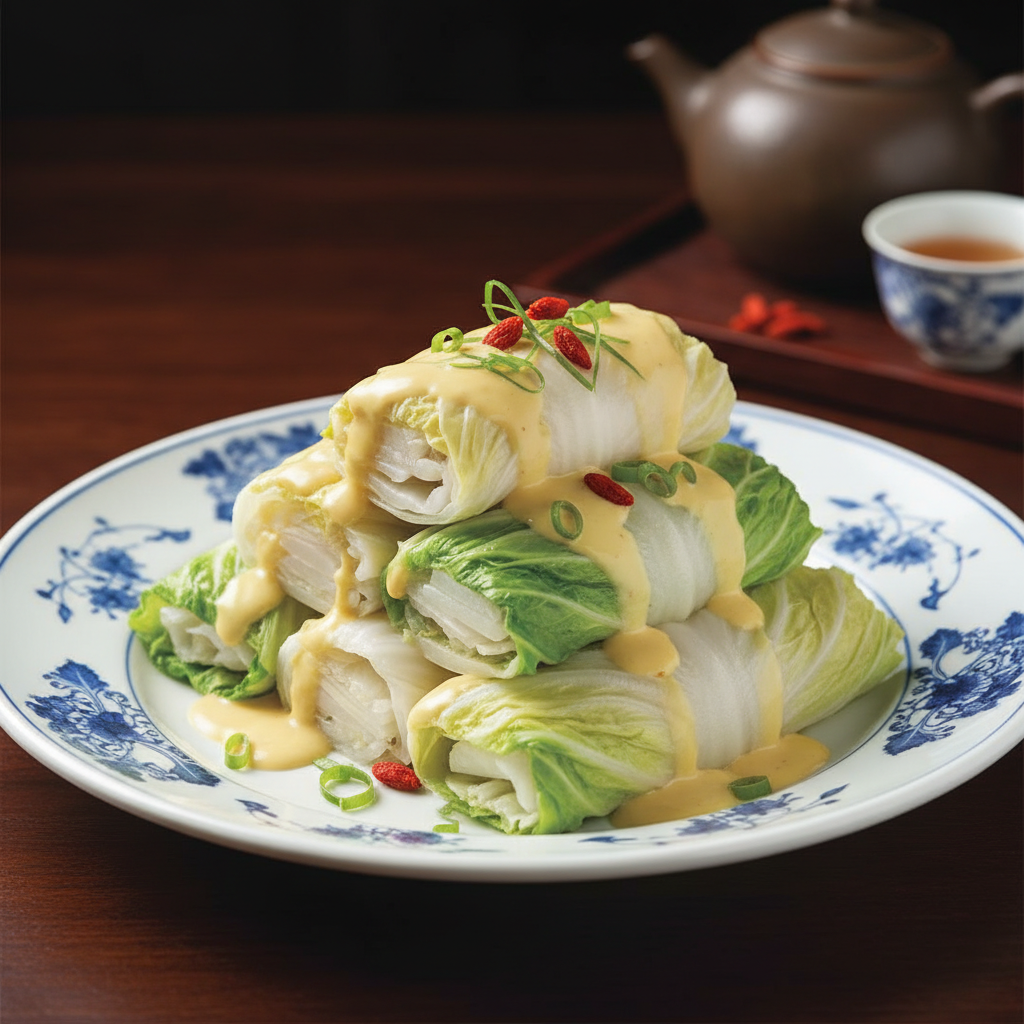
Jiemodun

Jiemodun

Jiemodun is a traditional Beijing-style snack, typically prepared and consumed in winter. It is made primarily from napa cabbage, blanched, pickled, and then mixed with mustard and other seasonings, resulting in a refreshing taste with the pungent kick of mustard.
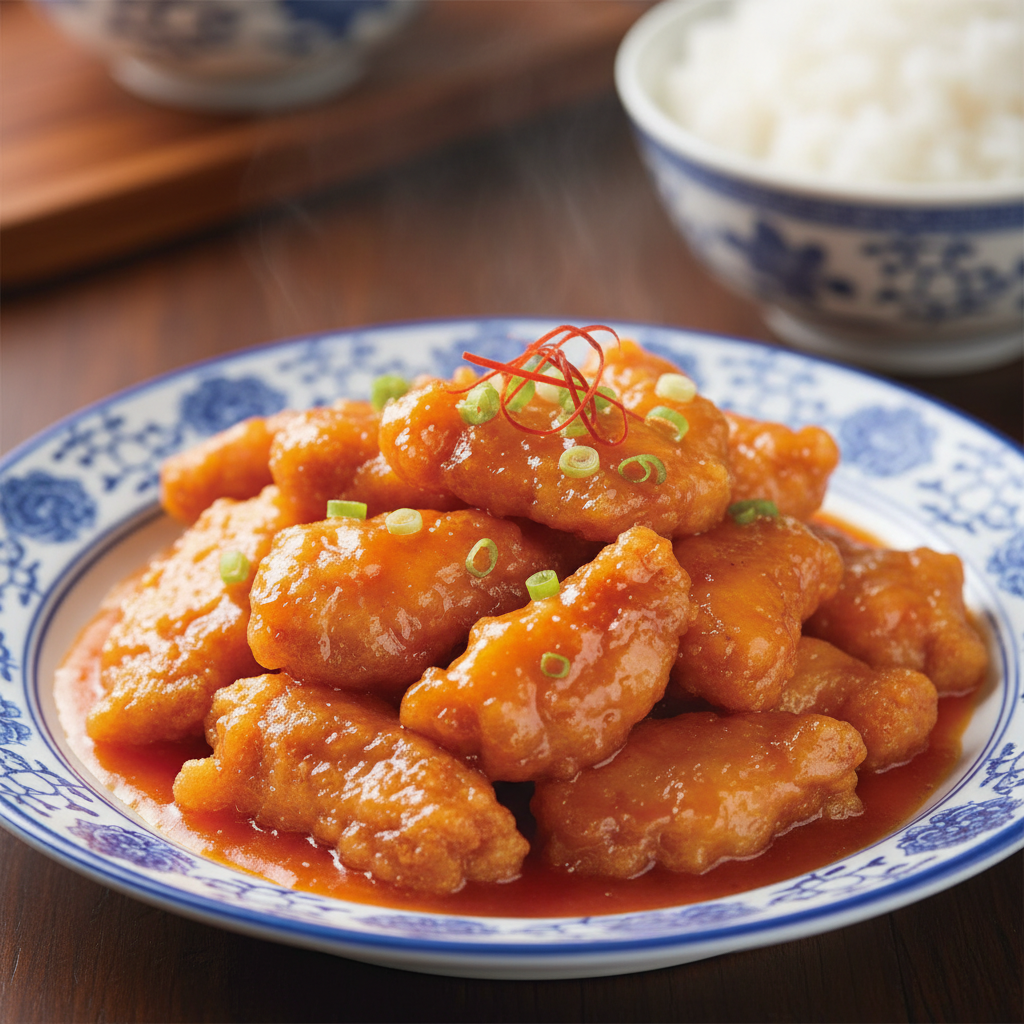
Sweet and Sour Pork Tenderloin

Sweet and Sour Pork Tenderloin

Sweet and Sour Pork Tenderloin is a classic Chinese dish, typically made from thinly sliced pork tenderloin coated in a starch batter, deep-fried twice until crispy, and then drizzled with or tossed in a special sweet and sour sauce. It has a crispy texture and a balanced sweet and sour taste.
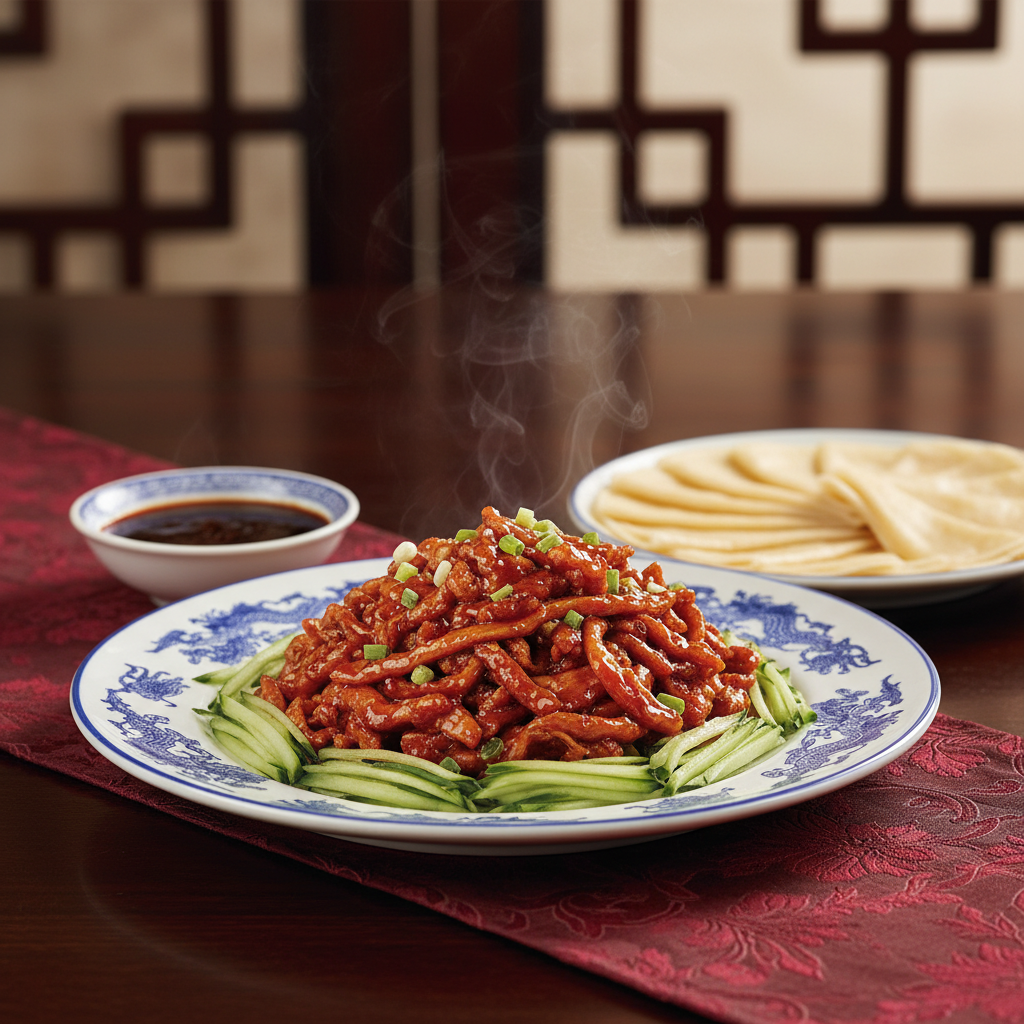
Jing Jiang Rou Si

Jing Jiang Rou Si

Jing Jiang Rou Si, also known as Shredded Pork with Sweet Bean Paste, is a traditional Beijing famous dish. Its main ingredient is pork loin, stir-fried and seasoned with soy sauce or sweet bean paste. This dish is usually served with shredded green onion whites and tofu skin, using the tofu skin to wrap the shredded pork and green onion, or it can be served with thin pancakes. Some recipes may use hoisin sauce.
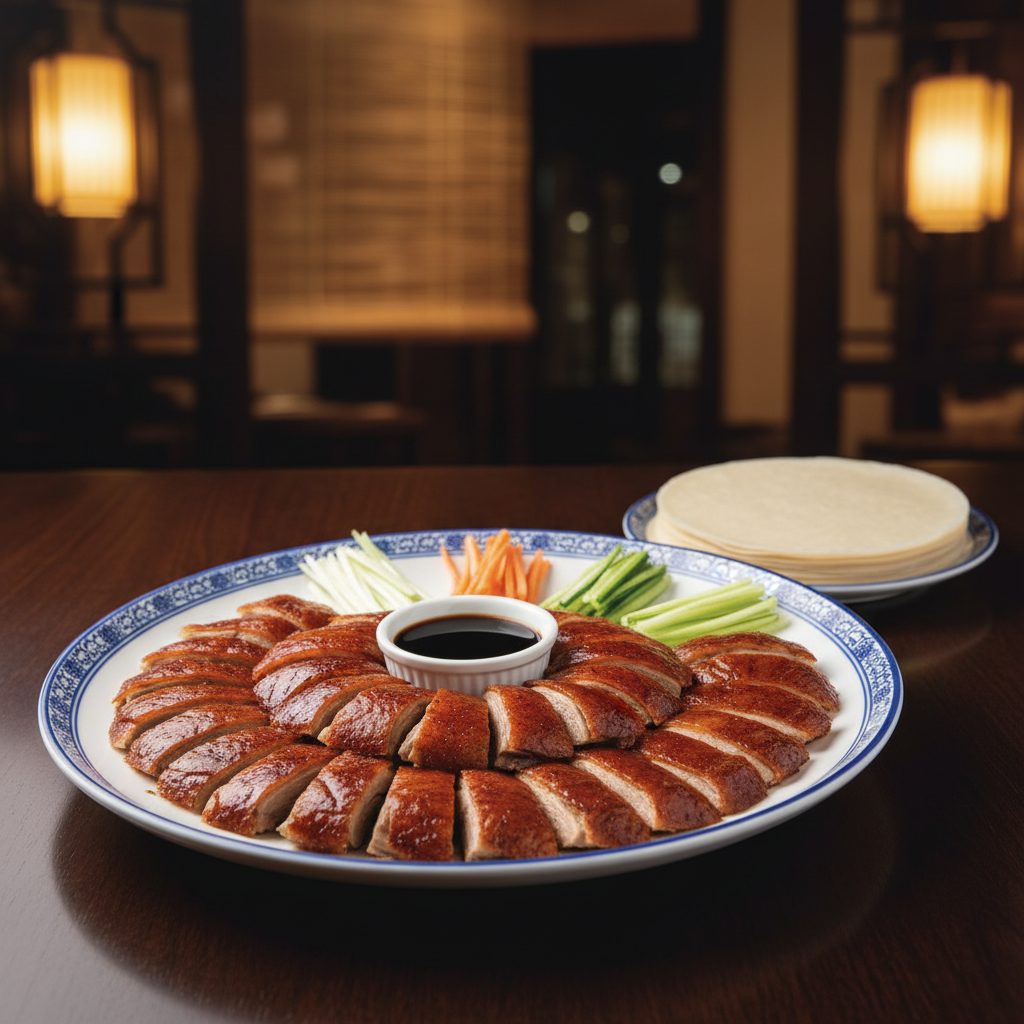
Peking Duck

Peking Duck

Peking Duck is a dish originating from Beijing, with a history dating back to the Ming Dynasty. This dish is characterized by tender meat and thin, crispy skin. The authentic method involves the chef carving most of the duck skin and a small amount of meat slices in front of the diners.

Stir-fried Mixed Vegetables

Stir-fried Mixed Vegetables

Chao He Cai is a home-cooked dish from northern China, typically made by stir-frying a mix of various vegetables (such as bean sprouts, chives, spinach, vermicelli, shredded meat, etc.). It has a light and refreshing taste and is rich in nutrients.

Lǘdagun

Lǘdagun

Lǘdagun is a traditional Manchu snack from China, which later became popular in Beijing. It is named 'Lǘdagun' because its outer layer is sprinkled with soybean flour, making it look like a donkey rolling on yellow earth.

Roasted Duck Bun

Roasted Duck Bun

A type of bun with a flour wrapper, filled with minced or diced roasted duck meat. It combines the traditional bun-making process with the unique flavor of Beijing roasted duck, usually offering a fresh and savory taste with the distinctive sauce flavor of roasted duck.

Aiwowo

Aiwowo

Aiwowo is a traditional Beijing dessert. Its outer skin is made from steamed glutinous rice flour, and the filling can include sweet ingredients such as sugar, sesame, almonds, plums, and yam. It resembles a snowball in appearance and is usually garnished with hawthorn on top to add a sweet and sour flavor.

Crispy Fried Meatballs

Crispy Fried Meatballs

Gan Zha Wan Zi (Crispy Fried Meatballs) is a traditional Beijing famous dish, belonging to the Beijing cuisine family. It uses minced pork as the main ingredient, which is seasoned, formed into balls, and then deep-fried in oil until golden and crispy. The characteristic of this dish is its crispy exterior and tender interior, with a rich and savory taste. It often appears as a home-style dish or a banquet dish.

Pea Cake

Pea Cake

Pea Cake is a traditional Chinese snack or dessert. It is very popular among the Han Chinese people and was later introduced to the Forbidden City during the Qing Dynasty. Pea Cake has been famous in Beijing since the Ming Dynasty, becoming one of Beijing's traditional snacks. It is a ginger-yellow or saffron-colored paste-like pastry, with a slightly sweet, light, and refreshing taste. The main ingredients are yellow peas or yellow pea flour, water, and sugar. Pea Cake is a classic spring product, which used to be common at Spring Festival temple fairs, but is now sold year-round in restaurants across China.

Zhajiangmian

Zhajiangmian

Zhajiangmian is a noodle dish originating from northern China, made with thick wheat noodles topped with zhajiang (a sauce based on fermented soybean paste). Ingredients may include fresh or pickled vegetables, beans, meat, tofu, or eggs. Beijing Zhajiangmian is the most famous, listed as one of China's Top Ten Noodles.