undefined City View

Travel Guide

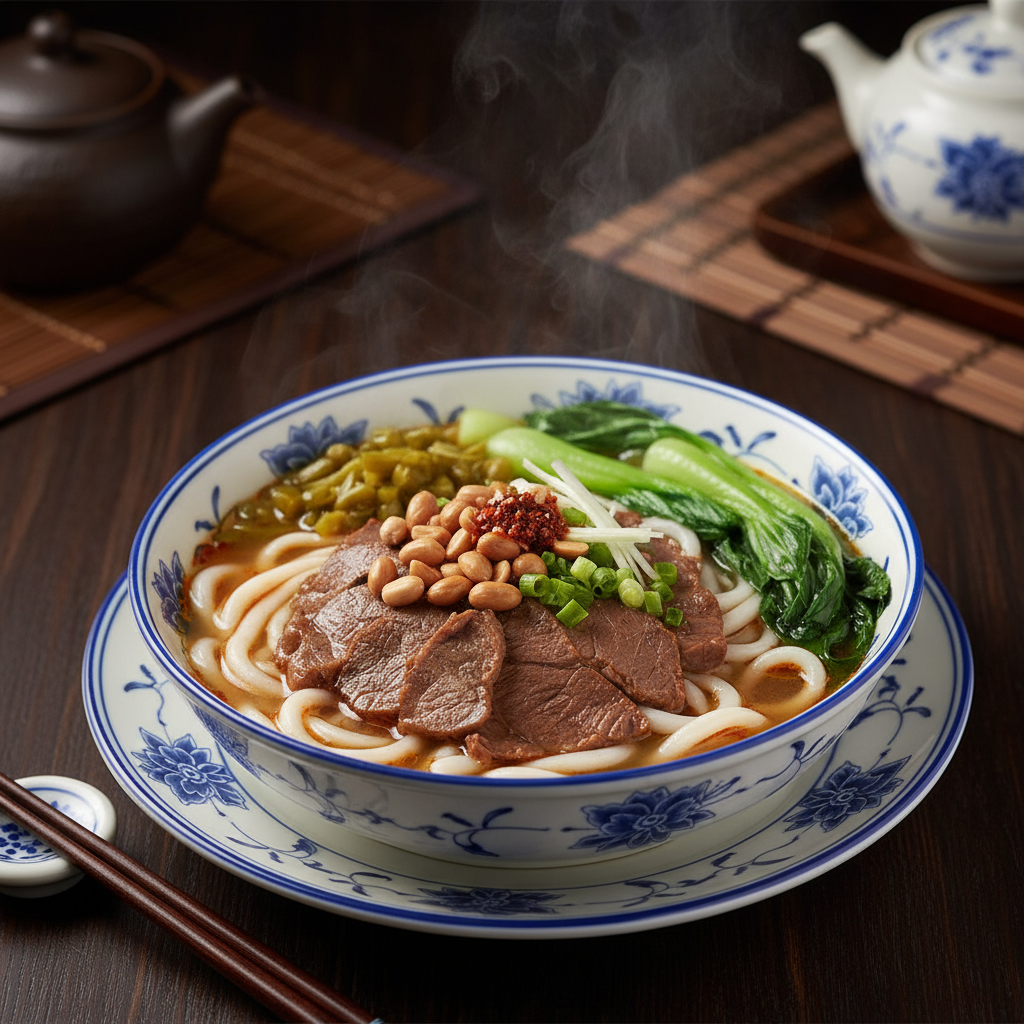
Guilin is a prefecture-level city located in the northeast of Guangxi Zhuang Autonomous Region, China. It is famous for its unique karst landform scenery and is known as 'the best landscape under heaven'. Its name means 'forest of sweet osmanthus' and is named after the abundance of sweet osmanthus in the area. Guilin is one of the most popular tourist destinations in China and was among the first National Historical and Cultural Cities announced by the State Council. Guilin rice noodles are a famous local breakfast staple.

Best Time to Visit

Spring and Autumn

Daily Budget

¥400-800 ($60-120) per day

Getting Around

Airplane, Train, Car, Bus, Taxi, Ride-hailing

Suggested Stay

3-4 days

Must-Visit Attractions

Longji Rice Terraces Scenic Area

Longji Rice Terraces Scenic Area

The Longji Rice Terraces are located in Longsheng Various Nationalities Autonomous County, Guilin City, Guangxi Zhuang Autonomous Region, and are a typical representative of terraced fields in the world. They boast a large-scale and magnificent group of terraced fields, winding from the foot of the mountain to the top. Small mountains resemble snails, and large mountains are like towers, layered one upon another, with varying heights. The Longji Rice Terraces are mainly divided into several major scenic spots, such as Ping'an Zhuang Rice Terraces, Jinkeng Dazhai Yao Rice Terraces, and Longji Ancient Zhuang Village Rice Terraces, showcasing the wisdom and diligence of the Zhuang and Yao people. The scenery varies throughout the four seasons: in spring, when water is poured, there are layers of silver belts; in summer, the rice waves roll, a lush green; in autumn, the rice ears are golden, a scene of harvest; in winter, the snow is white, and the landscape is wrapped in silver, forming a series of beautiful pictures, making it an excellent destination for photography, sightseeing, and hiking.

Jingjiang Prince City & Duxiu Peak

Jingjiang Prince City & Duxiu Peak

Jingjiang Prince City (also known as Jingjiang Prince Mansion), commonly known as the Prince City, is located in Guilin City and was built between 1372 and 1392 during the Ming Dynasty, near Duxiu Peak. It was originally the residence of Zhu Shouqian, the grand-nephew of Zhu Yuanzhang. Zhu Shouqian was granted the title of Prince Jingjiang by Zhu Yuanzhang, and his palace was established in Jingjiang. The Prince City took more than 20 years to build and has a history of more than 630 years, making it older than the Forbidden City in Beijing. From the completion of the Prince Mansion to the end of the Ming Dynasty, a period of 257 years, 12 generations of 14 princes resided here. Sun Yat-sen stayed here during the Northern Expedition in 1921. In the winter of 1925, it was converted into Zhongshan Park and is now a campus of Guangxi Normal University. The carved railings and marble steps of the Prince Mansion are still well preserved. In its 600-year history, the Prince City has been burned down many times, but it remains the best-preserved Prince City in China. Notably, the carved railings and marble steps still exist. The Chinese government designated the site as a national key cultural relics protection unit in 1993. Today, the site is occupied by Guangxi Normal University but remains open to the public as a tourist attraction, combining Guilin's natural environment, history, traditional architecture, and local culture. Jingjiang Prince City is magnificent, with grand city walls, and was once the "inner city" where the princes and their families lived. There are 4 halls, 4 pavilions, and 40 other buildings around the main building. The total area is 19.78 hectares (0.08 square miles). The layout of the Prince Mansion, from south to north, is: Mausoleum, Chengyun Hall, and Chengyun Gate; from east to west, is: Altar of Land and Grain and Ancestral Temple. Other buildings are built around the main building. All the buildings in Jingjiang Prince City are decorated with red walls and yellow tiles, which is a typical color scheme for Chinese palaces. There is a 1500-meter (4900 ft) long city wall, built with square bluestones. The city wall is 557.5 meters (1829 ft) long from north to south and 336 meters (1102 ft) wide from east to west. The city wall is 7.92 meters (26.0 ft) high and 5.5 meters (18 ft) thick. There are four gates in four directions, named "Tiren" (East Gate), "Duanli" (Zhengyang Gate), "Zunyi" (West Gate), and "Guangzhi" (Hougong Gate). The layout inside the city strictly follows the regulations of the Ming Dynasty. All buildings are arranged along the axis of Duxiu Peak, from south to north: Duanli Gate (entrance gate), Chengyun Gate (palace gate), Chengyun Hall (administrative building), bedroom, imperial garden, and Guangzhi Gate (back gate). The auxiliary buildings on both sides of the axis are symmetrically distributed. The local government is committed to combining Guilin's natural environment, history, traditional architecture, and local culture. Now it is a tourist destination. Duxiu Peak is located in Jingjiang Prince City, adjacent to the Li River. It is a tourist attraction featuring Duxiu Peak and covering the entire Jingjiang Prince City. It perfectly combines natural scenery and historical sites and has been known as the "city within a city" since ancient times. Jingjiang Prince City Scenic Area is the highest-level tourist resource in Guilin.

Liangjiang Sihu Scenic Area, Guilin

Liangjiang Sihu Scenic Area, Guilin

Liangjiang Sihu refers to the Li River, Taohua River, Rong Lake, Shan Lake, Gui Lake, and Mulong Lake, which together constitute the urban water system of Guilin and are now open as tourist attractions. Historically, these rivers and lakes were not interconnected, and some, such as the area around Gui Lake, were heavily silted up. After more than a decade of renovation, including large-scale natural lake dam construction and landscaping, this interconnected urban water system, Liangjiang Sihu, was completed in 2001.

Elephant Trunk Hill Scenic Area

Elephant Trunk Hill Scenic Area

Elephant Trunk Hill Scenic Area is the emblem of Guilin and a symbol of Guilin's landscape. It is named for its mountain shape resembling a giant elephant drinking water from the river. The mountain is composed of limestone formed 360 million years ago, and the miraculous craftsmanship of nature has created this unique landscape. There is a round cave running through the mountain from north to south, which is called "Water Moon Cave" because of its shape resembling the moon in the water, and it is an excellent location for viewing the night moon over the Li River. Elephant Trunk Hill intersects with the surrounding Peach Blossom River and Li River, forming a beautiful picture.

Yulong River Scenic Area

Yulong River Scenic Area

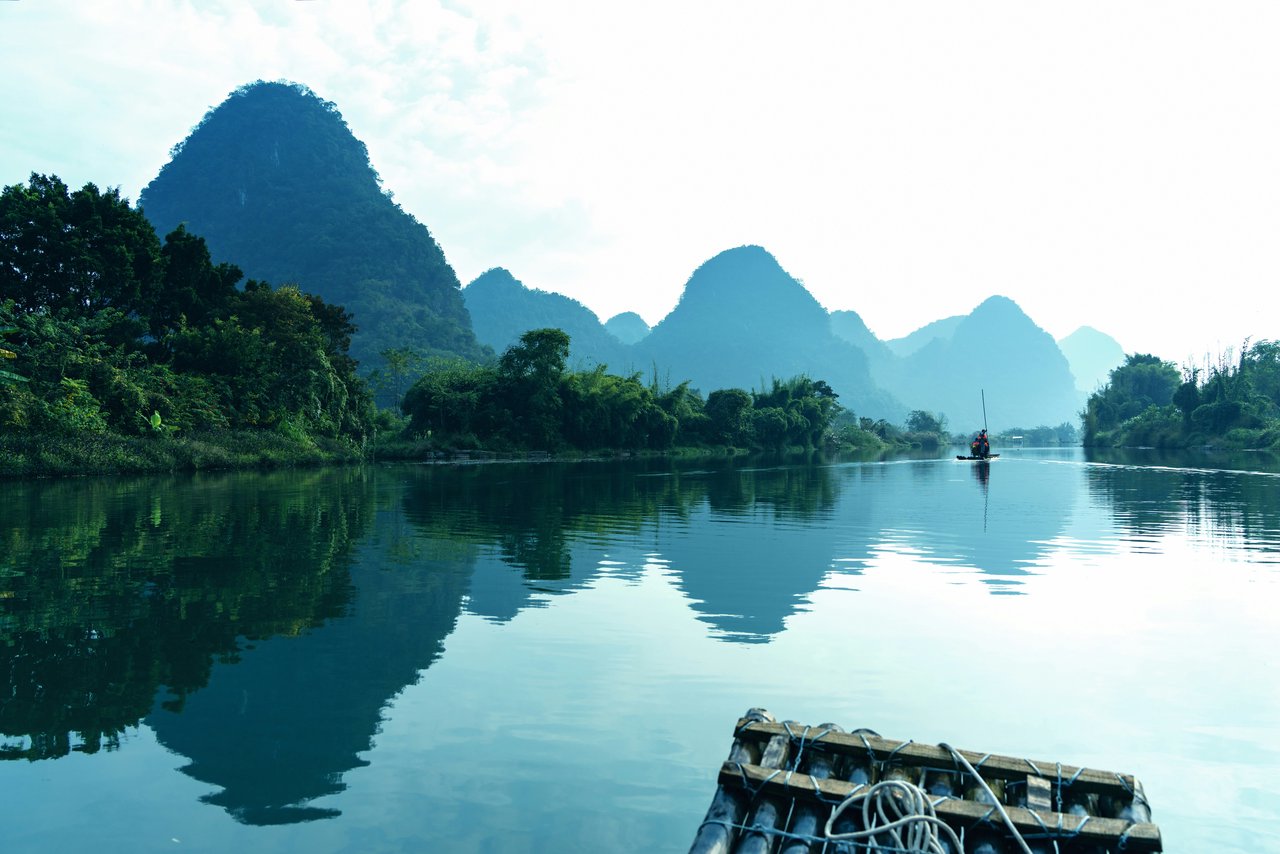
Yulong River Scenic Area is located in Yangshuo County, Guilin City, Guangxi Zhuang Autonomous Region, and is the longest tributary of the Li River in Yangshuo. It is known as the "Little Li River" for its beautiful natural scenery and unique pastoral landscape. The river is crystal clear, surrounded by green hills on both sides, reflected by verdant bamboo, and dotted with rice fields and orchards, forming beautiful Chinese landscape paintings. There are no motorized boats on the Yulong River. Tourists mainly enjoy the scenery along the way by taking bamboo rafts, experiencing tranquility and leisure. In addition, cycling along the river is also a popular activity, allowing you to deeply experience the local rural life and customs. This is an excellent place to relax and get close to nature.

Jinkeng Dazhai Red Yao Rice Terraces

Jinkeng Dazhai Red Yao Rice Terraces are an important part of the Longji Rice Terraces, known for their magnificent terraced landscape and unique Red Yao ethnic culture. Here, layers of terraces wind from the foot of the mountain to the top, with smooth lines, grand scale, and different scenery in each season. Visitors can enjoy the magnificent sunrise and sunset, the misty clouds, experience the customs of the Red Yao people, and feel the charm of agricultural culture. Among them, the "Pavilion" is a famous viewpoint.
Ping'an Zhuang Terraced Fields Scenic Area

Ping'an Zhuang Terraced Fields Scenic Area

Ping'an Zhuang Terraced Fields are an important part of the Longji Terraced Fields Scenic Area, located in Longji Town, Longsheng Various Nationalities Autonomous County, Guilin City. These terraced fields are built on mountainsides, layer upon layer, extending from the river valley to the top of the mountain, with an altitude between 600 and 800 meters. When water is poured in the spring, the fields are like mirrors, reflecting the sky; in summer, the rice is green; in autumn, the rice is golden; and in winter, it may be covered with snow. Ping'an Zhuang Terraced Fields have a long history, with most of the terraced fields built about 650 years ago, and are famous for their unique "Nine Dragons and Five Tigers" and "Seven Stars Accompanying the Moon" viewpoints.

Yangshuo West Street

Yangshuo West Street

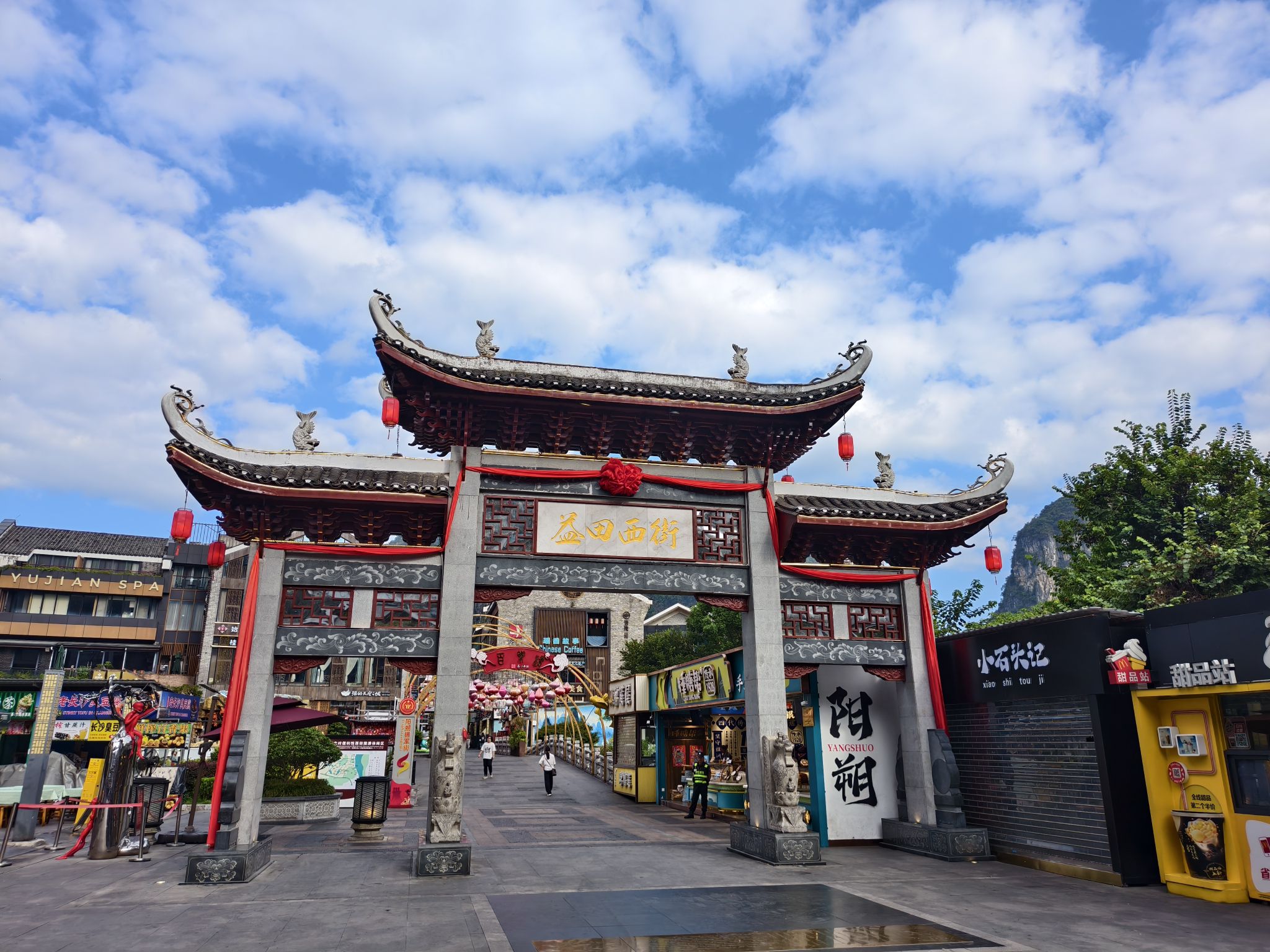
Yangshuo West Street, located in Yangshuo County, Guilin City, is an ancient street with a history of more than 1400 years. It is famous for its unique karst landforms, Li River scenery, and the integration of Chinese and Western cultures. West Street is the core of Yangshuo tourism, attracting a large number of domestic and foreign tourists. Chinese and English signs can be seen everywhere on the street, and many locals can speak some English. It not only has a rich history and culture, but also many climbing spots, such as Moon Hill, Low Mountain, Shuangmen, Frog, Egg, Bamboo Forest and Wine Bottle Cliff. At the same time, West Street is also a vibrant commercial street with a variety of shops, restaurants and bars, making it an ideal place to experience Yangshuo's nightlife.

Li River Scenic Area

Li River Scenic Area

The Li River originates in Xing'an County, Guilin City, and is a tributary of the Xijiang River in the Pearl River system. The 83-kilometer water journey from Guilin to Yangshuo is the most essential section of the Li River, known as the "Hundred-Mile Gallery". Along the way, there are famous attractions such as Elephant Trunk Hill, Nine Horses Fresco Hill, and Yellow Cloth Shoal Reflection, making it a world-renowned scenic tourist destination.

Reed Flute Cave

Reed Flute Cave

Reed Flute Cave, also known as the "Palace of Natural Art," is a landmark tourist attraction in Guilin. It is named for the reed grass growing outside the cave, which can be made into flutes. The cave is filled with stalactites, stalagmites, and other rock formations. There are more than 70 ink inscriptions and travel notes in the cave, the oldest of which can be traced back to the Tang Dynasty (792 AD). The cave was rediscovered in the 1940s by a group of refugees fleeing the Japanese army. Today, the cave is artificially illuminated with colorful lights, forming unique landscapes such as the Crystal Palace, Fish Tail Peak, and Dragon Pagoda.
Sun and Moon Twin Towers

Sun and Moon Twin Towers

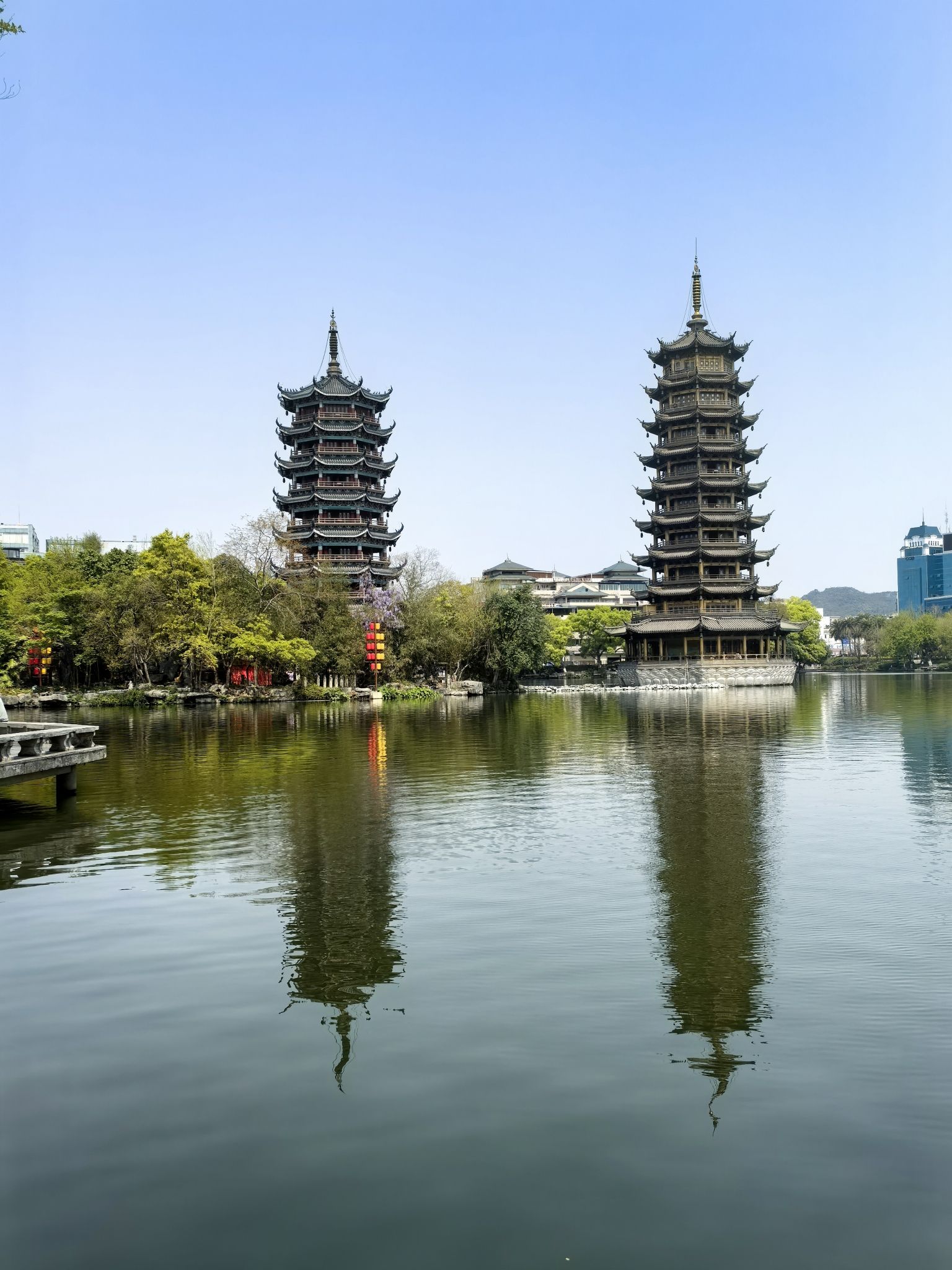
The Sun and Moon Twin Towers are located in Guilin, Guangxi, China, and are twin pagodas. They were originally built in the moat of Guilin during the Tang Dynasty and rebuilt in 2001 based on historical records as the core scenic spot of the Sun and Moon Twin Towers Cultural Park. The park is themed on the unity of Buddhism, Confucianism, and Taoism. The Moon Tower is built on an island in Shan Lake, while the Sun Tower is built in the lake. The Sun Tower has an octagonal base, is covered with bronze, has nine floors, and is 41 meters (135 feet) high. The Sun Tower is the tallest bronze tower in the world and one of the few pagodas in the world with an elevator. The Moon Tower also has an octagonal base, is covered with glazed tiles, has seven floors, and is 35 meters (115 feet) high. They appeared as the ninth pit stop in the fourteenth season of The Amazing Race in 2009.

Yaoshan Scenic Area, Guilin

Yaoshan Scenic Area, Guilin

Yaoshan Scenic Area in Guilin is a famous national AAAA-level scenic spot in Guilin City, located in the eastern suburbs of Guilin City, 8 kilometers away from the city center. Yaoshan is 909.3 meters above sea level and is the highest peak in Guilin City, so you can overlook the entire panorama of Guilin City from the top of the mountain. The scenery on the mountain is different in the four seasons. In spring, azaleas are all over the mountains, in summer, the trees are lush, in autumn, the maple leaves are like fire, and in winter, there is occasional snow. The scenic area has historical and cultural relics such as Yaodi Temple, Bailu Temple, Tianci Longevity Garden, and Jingjiang Wang Mausoleum, as well as modern cableways to facilitate tourists to go up and down the mountain. It is a tourist destination integrating natural scenery, historical culture and leisure vacation.

Shangri-La

Shangri-La

The Guilin Shangri-La Scenic Area is located in Yangshuo County, Guilin City. It is a comprehensive tourist attraction integrating natural scenery, ethnic customs, pastoral architecture, and ecological agriculture. The scenic area is based on Tao Yuanming's "Peach Blossom Spring" and showcases the ideal artistic conception of "Shangri-La". Visitors can take a boat trip to enjoy the pastoral scenery on both sides, the karst landscape, and the song and dance performances of ethnic minorities. There are also distinctive buildings such as wind and rain bridges and drum towers in the scenic area, allowing visitors to experience the rich ethnic culture. This is an excellent place to experience the pastoral scenery of Guilin.

Daxu Ancient Town

Daxu Ancient Town

Daxu Ancient Town is located in Lingchuan County, Guilin City, Guangxi Zhuang Autonomous Region, within the Lijiang River Scenic Area. It is an ancient town with a history of thousands of years. The ancient town preserves a well-preserved complex of Ming and Qing dynasty architecture, featuring stone streets, ancient docks, and old houses, all imbued with ancient charm. It was once the first of the four ancient towns in Guangxi, known for its prosperous trade and as an important waterway wharf on the Lijiang River. Tourists can experience local folk culture, taste local snacks, and feel the slow pace of life here.

Longji Rice Terraces Scenic Area - Huangluo Yao Village

Longji Rice Terraces Scenic Area - Huangluo Yao Village

Huangluo Yao Village, located in Longsheng Various Nationalities Autonomous County, Guilin, Guangxi, is a famous "Long Hair Village", known for the tradition of hair preservation passed down through generations by the Red Yao women. The Red Yao ethnic group lives here, and they are called "Red Yao" because of their red clothing as the main feature. The village retains unique ethnic culture and traditional customs, such as the exquisite "flower clothing" making and traditional Spring Festival rituals. Tourists can experience the rich Red Yao culture, enjoy long hair performances, and feel the unique ethnic customs.

Moon Hill Scenic Area

Moon Hill Scenic Area

Moon Hill is a landmark landscape in Yangshuo, named for the huge natural arch-shaped hole on the top of the mountain, which resembles a bright moon. Visitors can climb to the moon cave on the top of the mountain to enjoy the karst pastoral scenery of Yangshuo.

Xingping Ancient Town

Xingping Ancient Town

Xingping Ancient Town is one of the oldest towns along the Li River, with a history of over 1700 years. It is known for its well-preserved traditional architecture, unique karst landforms, and as the location featured on the back of the 20 RMB note. It is an important hub for exploring the stunning scenery of the Li River, where visitors can experience the rustic fishing village charm and beautiful landscape paintings.

Silver Cave Scenic Area

Silver Cave Scenic Area

Silver Cave is a typical karst cave that runs through twelve mountain peaks. The stalactites in the cave are white, crystal clear, and as bright as silver, hence the name. It enjoys the reputation of "World Cave Wonder". The cave brings together stalactites grown in different geological ages, which are crystal clear, in various shapes, lifelike, and constitute magnificent pictures. The main attractions include "Snow Mountain Waterfall", "Musical Stone Screen", "Jade Pool Wonderland", and "Ten Thousand Buddhas Worshiping the Ancestors", which are breathtaking.

Impression Sanjie Liu

Impression Sanjie Liu

"Impression Sanjie Liu" is a large-scale landscape performance, using the Li River in Yangshuo, Guilin, China as the stage, and twelve karst peaks and the vast Li River water as the background. It is co-produced by famous directors Zhang Yimou, Wang Chaoge, and Fan Yue. The performance is themed on the legend of the Zhuang ethnic singer Sanjie Liu, cleverly integrating Guilin's landscape, Sanjie Liu's ballads, ethnic customs, and fishing lights. Through sound, light, and electricity technology and the wonderful performances of hundreds of live actors, it presents the audience with a shocking visual and auditory feast. It not only demonstrates the cultural charm of ethnic minorities in Guangxi, but also praises the harmonious coexistence of man and nature.

Nine Horses Painting Mountain Scenic Area

Nine Horses Painting Mountain Scenic Area

Nine Horses Painting Mountain is a famous scenic spot in the Li River Scenic Area, located in Xingping Town, Yangshuo County, Guilin City, Guangxi Zhuang Autonomous Region. It is a huge stone wall with nine vivid horses of different shapes appearing on the wall, hence the name. Legend has it that those who can see nine horses from the painting mountain are destined to be top scholars. This is one of the iconic attractions in the essence of the Li River landscape. Taking a Li River cruise is the best way to view the Nine Horses Painting Mountain, making people feel like they are in a flowing ink painting.

Liu Sanjie Grand View Garden

Liu Sanjie Grand View Garden

Liu Sanjie Grand View Garden is located in Guilin, Guangxi Zhuang Autonomous Region, and is a AAAA-level scenic spot with the theme of Liu Sanjie culture. The park has a variety of ethnic customs performances and buildings, such as Dong Drum Tower, Zhuang Song Fair, etc. Tourists can enjoy the authentic Liu Sanjie ballads and experience the unique charm of ethnic minorities in Guangxi.

Seven Star Park

Seven Star Park

Seven Star Park is the largest comprehensive park in Guilin, located on the east bank of the Li River. It is named after the seven peaks in the park (Putuo Mountain, Crescent Mountain, Camel Mountain, etc.) that are arranged like the Big Dipper. The park features beautiful natural scenery, rich cultural landscapes, and unique karst landforms, making it a representative of Guilin's landscape. Major attractions include Seven Star Cave, Camel Mountain, Flower Bridge, and Guihai Forest of Steles.

Guanyan Scenic Area of Li River

Guanyan Scenic Area of Li River

Guanyan Scenic Area of Li River is located in Caoping Township, the middle section of Li River in Guilin City, and is a national AAAA-level tourist attraction. This is a typical karst landform, famous for its magnificent underground caves, peculiar stalactites and underground river landscapes. Tourists can take sightseeing trains, elevators, boats or slides to visit the caves in a variety of ways, experience the fun of three-dimensional land, water and air tours, and is one of the essences of Guilin's landscape.

Julongtan (Dragon Pool)

Julongtan (Dragon Pool)

Julongtan (Dragon Pool) is a famous underground river cave scenic spot in Yangshuo, Guilin, known for its various karst landform landscapes such as stalactites, stalagmites, and stone curtains. The cave has flowing water all year round and a fantastic scenery. It is an excellent place to appreciate the magical craftsmanship of nature and is known as the "Underground Art Palace".

Camel Crossing the River

Camel Crossing the River

Camel Crossing the River is a famous natural landscape on the Li River. It is named for its unique mountain shape that resembles a camel wading across the river. It is one of the classic representatives of Guilin's unparalleled landscape.

Yangshuo Tianlai Butterfly Spring

Yangshuo Tianlai Butterfly Spring

Yangshuo Tianlai Butterfly Spring Scenic Area is located in Maliu Bay, Ten-Mile Gallery, Yangshuo Town. It is a national AAAA-level tourist attraction integrating sightseeing, entertainment, and leisure. The scenic area features various karst landforms such as Butterfly Cave, Sacred Turtle Rock, and waterfalls, as well as unique Dong village cultural performances. Visitors can enjoy beautiful natural scenery, experience minority cultures, and participate in entertainment projects like the Butterfly Spring slide.

Ten-Mile Gallery

Ten-Mile Gallery

The Guilin Yangshuo Ten-Mile Gallery is located at Moon Hill in Yangshuo. It is called the Yangshuo Ten-Mile Gallery because of its beautiful scenery along the way, like a poem or a painting. The main attractions include Moon Hill, Big Banyan Tree, Totem Ancient Trail, Butterfly Spring, Jianshan Temple, etc. It is a good place for cycling and sightseeing.

Guilin Museum

Guilin Museum

Guilin Museum is located in Lingui District, Guilin City. It is a comprehensive museum integrating history, art, and nature. The museum has a rich collection, covering historical relics, ethnic customs, and natural specimens from prehistoric times to modern times in the Guilin area. It is an important window to understand the history, culture, and natural landscape of Guilin. The museum has a unique architectural style and a beautiful environment, making it a good place for citizens and tourists to relax, learn, and study.

Li River Cormorant Fishing Performance

Li River Cormorant Fishing Performance

Cormorant fishing is a traditional fishing technique on the Li River in Guilin, now mainly presented to tourists as a unique cultural performance. Fishermen train cormorants to catch fish and use ropes to prevent them from swallowing large fish, eventually taking the captured fish from the cormorants' mouths. This ancient technique is performed in the shallow waters of the Li River, showcasing a harmonious way of life between humans and nature, and is a unique way to experience the Guilin style.

Longsheng Hot Spring Tourist Resort

Longsheng Hot Spring Tourist Resort

Longsheng Hot Spring Tourist Resort is located in Jiangdi Township, Longsheng Various Nationalities Autonomous County, Guilin City, Guangxi Province. It is a AAAA-level tourist attraction integrating hot spring health preservation, leisure vacation, and sightseeing. The hot spring water is rich in various minerals and is beneficial to human health. The resort is surrounded by mountains and has a beautiful environment, making it a good place to relax.

Lijiang Gudong Scenic Area - Gudong Waterfall Scenic Area

Lijiang Gudong Scenic Area - Gudong Waterfall Scenic Area

Gudong Waterfall Scenic Area is located in Daxu Town, Guilin City, and is a national AAAA-level scenic spot. Here, there are clear streams and multi-level waterfalls. Visitors can experience the fun of climbing waterfalls barefoot and feel the freshness and magnificence of nature. The scenic area has dense forests and fresh air, making it an ideal place for summer vacation, leisure, and getting close to nature.

Guilin Zizhou Island Scenic Area

Guilin Zizhou Island Scenic Area

Zizhou Park is a famous scenic spot in Guilin, located on the east bank of the Li River, facing Elephant Trunk Hill across the river. The park is known for its natural landscape and rich historical and cultural relics.

Nanxi Mountain Park

Nanxi Mountain Park

Nanxi Mountain Park is located in Xiangshan District, Guilin City. It is an urban park mainly featuring natural mountain and water scenery, named after Nanxi Mountain within the park. The park has a beautiful environment, beautiful peaks, and is open all year round. It is an important tourist attraction in Guilin City and has been rated as a national AAAA-level tourist attraction.

Xianggong Mountain

Xianggong Mountain

Xianggong Mountain is located in Yangshuo, Guilin, on the west bank of the Li River. It is an excellent viewing point to overlook the beautiful scenery of the Li River, especially known for its sunrise, sea of clouds, and light and shadow effects. It is a must-visit place for photography enthusiasts and tourists.

Yulong Bridge

Yulong Bridge

Yulong Bridge is an ancient stone bridge with a history of over 400 years, located on the Yulong River in Yangshuo County, Guilin, Guangxi. The Yulong River is a tributary of the Li River, known for its clear waters and the beautiful karst mountains and rivers on both banks. Yulong Bridge is one of the popular starting points for bamboo rafting on the Yulong River, where tourists can take a bamboo raft and enjoy the pastoral scenery and quaint villages along the way. Due to the shallow water and the absence of motorized boats, the Yulong River is ideal for swimming and leisure activities.

Diecai Hill

Diecai Hill

Diecai Hill is located in the center of Guilin and is a classic representative of Guilin's landscape. The mountain is composed of limestone, named "Diecai" (Folded Colors) because its rock layers are stacked on top of each other, with colorful textures, like colorful satin. The scenery here is beautiful, and climbing to the top offers a panoramic view of Guilin city and the winding Li River, making it an excellent place to admire the scenery of Guilin. The mountain has attractions such as Wind Cave, Wangjiang Pavilion, and Nayun Pavilion, as well as many cliff carvings, with a profound historical and cultural heritage.

Big Banyan Tree Scenic Area

Big Banyan Tree Scenic Area

The Big Banyan Tree Scenic Area in Yangshuo County, Guilin, is located next to the Guiyang Highway and is named after an ancient banyan tree in the park that is over 1,400 years old. This banyan tree is the place where Brother Aniu and Liu Sanjie fell in love in the movie "Liu Sanjie". It is one of Yangshuo's iconic attractions and a great place for local residents and tourists to relax and sightsee. The scenic area is surrounded by mountains and rivers, with a beautiful environment full of pastoral poetry.

Fubo Hill

Fubo Hill

Fubo Hill is located in Guilin, Guangxi Province. It is a famous mountain with beautiful scenery, leaning against the water and mountains. The solitary peak is tall and graceful, half inserted into the river and half resting on the land, with the reputation of "Fubo Scenic Spot". There are attractions such as Huanzhu Cave, Sword Testing Rock, Thousand Buddha Rock, Coral Rock, and Tingtao Pavilion on the mountain. It is an excellent place to enjoy the landscape of Guilin and one of the classic tourist attractions in Guilin.

Totem Ancient Trail

Totem Ancient Trail

Totem Ancient Trail is located in Yangshuo, Guilin. It is a scenic spot showcasing primitive tribal culture and totem beliefs. Through live performances and scene reproduction, tourists can experience the unique ancient ethnic customs.

Jinshui Cave

Jinshui Cave

Jinshui Cave, located in the Shili Gallery scenic area of Yangshuo, Guilin, is a typical karst cave. The cave features stalactites, stalagmites, stone pillars, and underground river landscapes in various shapes. Visitors can admire the wonders of nature in the cave, experience the cool and humid cave environment, and some areas may also offer cave exploration or rafting projects, making it a unique attraction to experience the landscape of Guilin.

Xishan Park

Xishan Park

Guilin Xishan Park is located in Xiufeng District, Guilin City. It is a comprehensive park featuring natural landscapes and cultural attractions. The park has overlapping mountains and clear lakes, with beautiful karst landforms. The park has attractions such as Xifeng Pavilion, Guanyin Peak, and Guilin West Lake, as well as the historically significant Xishan Grottoes. It is a good place for citizens to relax and tourists to sightsee.

Guilin Botanical Garden

Guilin Botanical Garden

Guilin Botanical Garden, also known as Guangxi Institute of Botany, is a botanical garden integrating scientific research, popular science and sightseeing. The garden is planted with a variety of plants, which is a good place to learn about plant diversity and leisure sightseeing, and has cultivation records of plants such as 'Cycas ferruginea'.

Must-Try Local Food

Guilin Rice Noodles

Guilin Rice Noodles

Guilin Rice Noodles are a local specialty snack from the Guilin region of Guangxi, China, known for their unique rice noodles, braised sauce, and toppings. The rice noodles are smooth, springy, and chewy, the braised sauce is fragrant and rich, and served with various toppings such as char siu (BBQ pork), crispy pork, peanuts, and sour bamboo shoots, offering a rich taste. It is a popular choice for locals' daily breakfast and main meals.
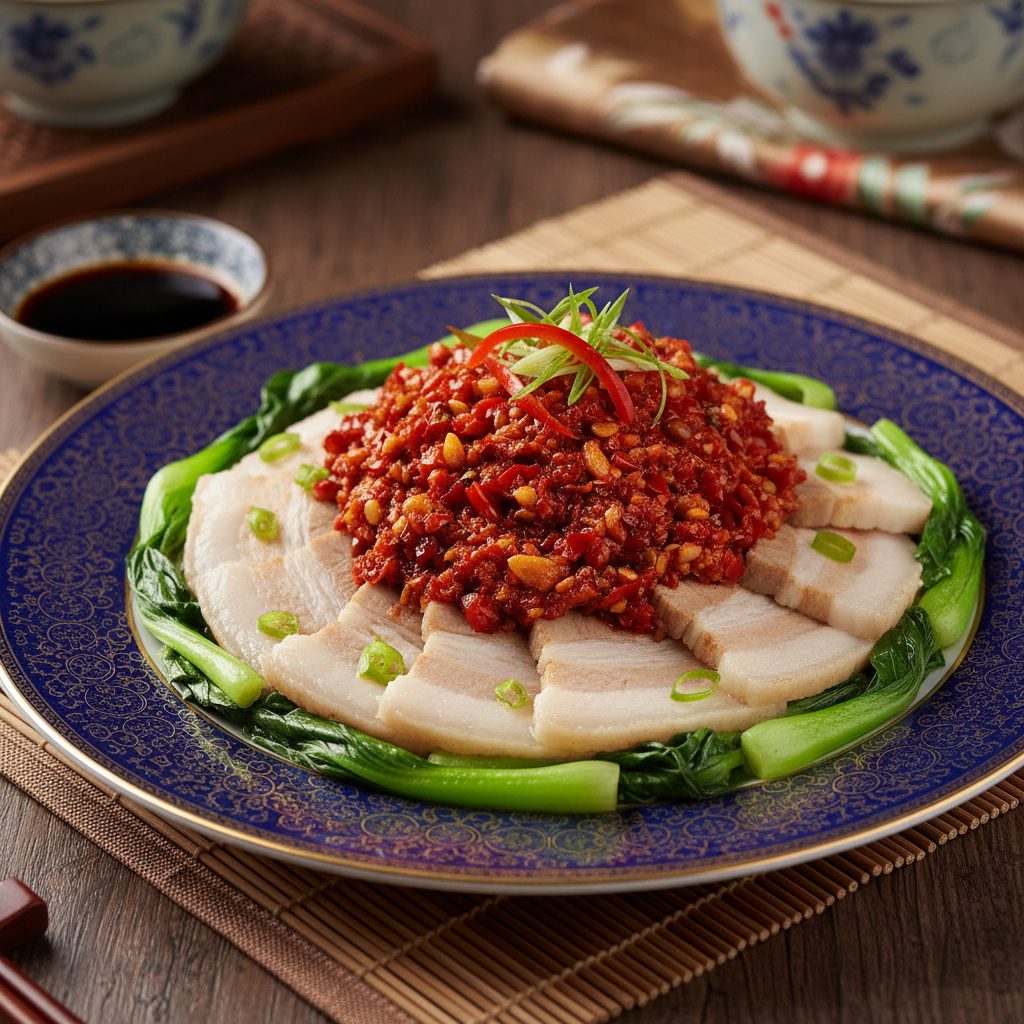
Guilin Chili Sauce

Guilin Chili Sauce

Guilin Chili Sauce is a traditional specialty of the Guilin region in Guangxi, renowned for its unique spicy and aromatic flavor. It is typically made from high-quality chili peppers and garlic as main ingredients, meticulously prepared through multiple processes. It is one of Guilin's "Three Treasures" and is deeply loved by locals and tourists alike.
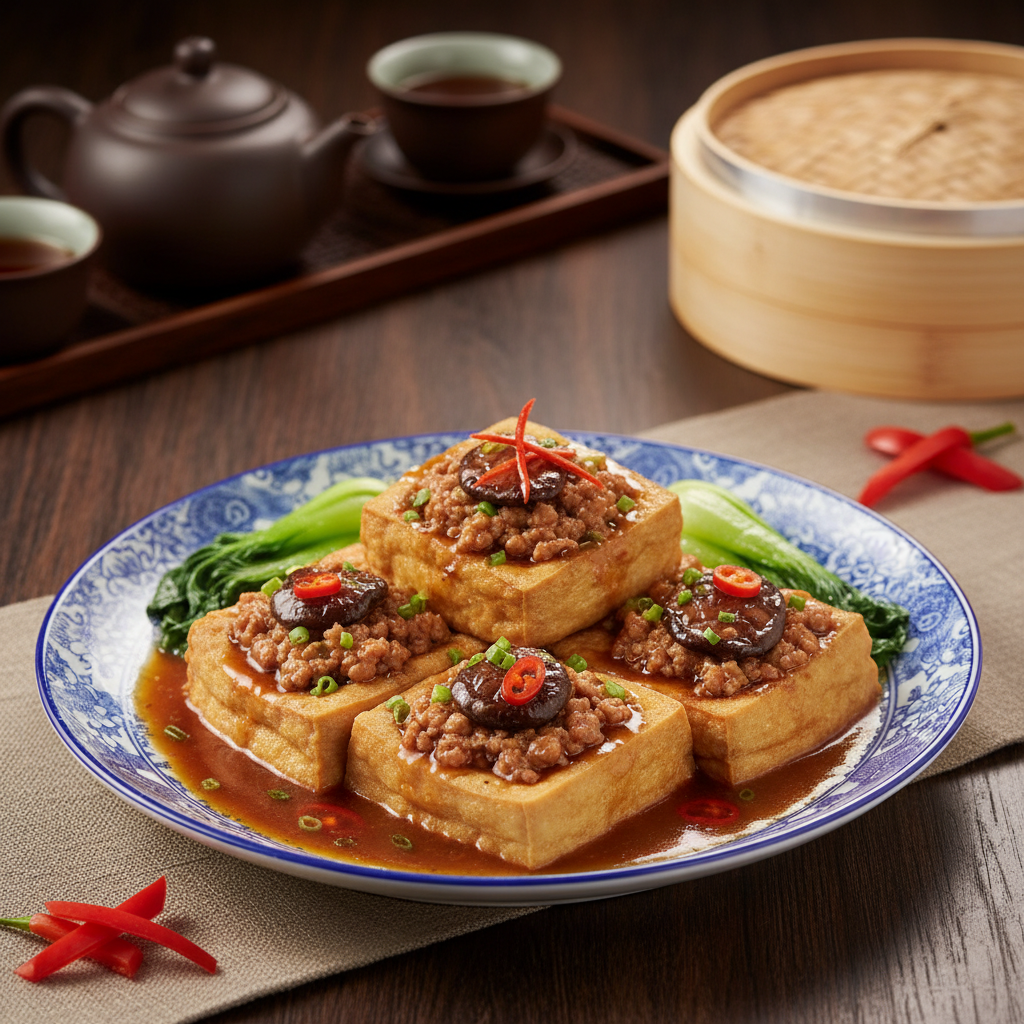
Yong Tau Foo

Yong Tau Foo

Yong Tau Foo is a Hakka dish primarily consisting of tofu stuffed with minced meat or fish paste. Besides tofu, variations of this dish also include vegetables and mushrooms stuffed with minced meat or fish paste. Yong Tau Foo can be eaten in various ways: dry with a dipping sauce, or as a soup dish.
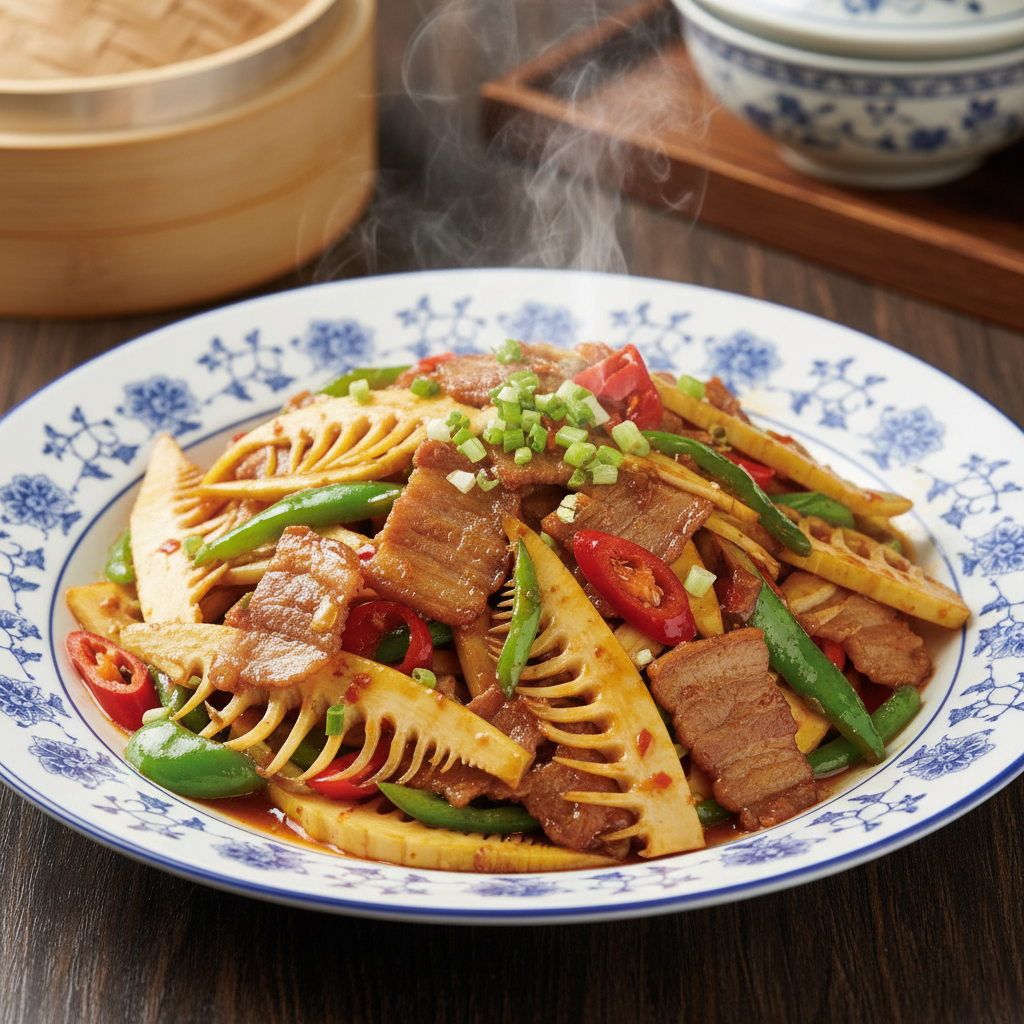
Stir-fried Pork with Sour Bamboo Shoots

Stir-fried Pork with Sour Bamboo Shoots

A home-style stir-fry, made primarily with sour bamboo shoots and pork, cooked with simple seasonings. The unique sourness of the bamboo shoots blends with the savory flavor of the pork, creating a rich taste.
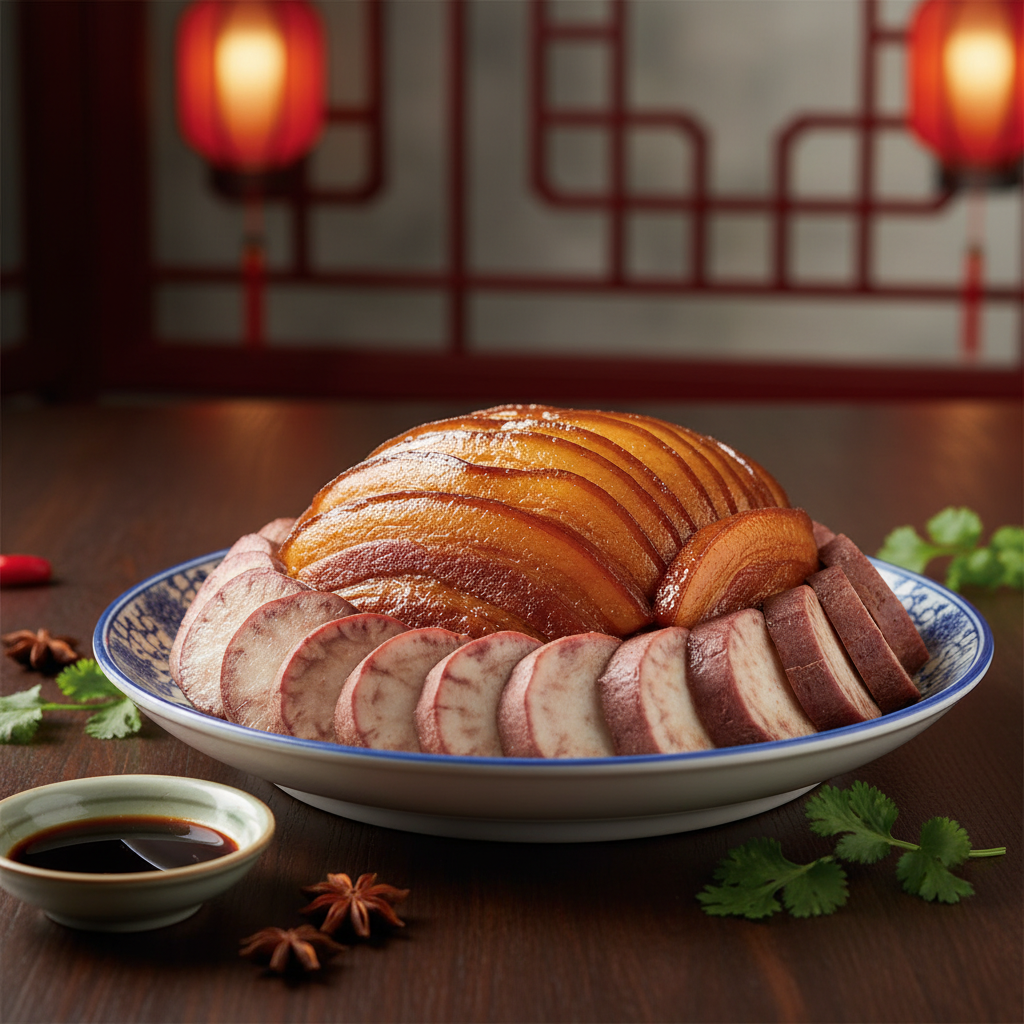
Lipu Taro with Braised Pork Belly

Lipu Taro with Braised Pork Belly

Lipu Taro with Braised Pork Belly is a famous Guangxi dish, made primarily with Guangxi Lipu taro and pork belly. The pork belly is steamed, sliced, and then arranged alternately with slices of Lipu taro. It is then steamed with a special sauce. This dish has a bright red color, soft and tender taro, delicious and succulent pork that is rich but not greasy. The taro absorbs the meat juices, making it soft, glutinous, and uniquely flavorful.
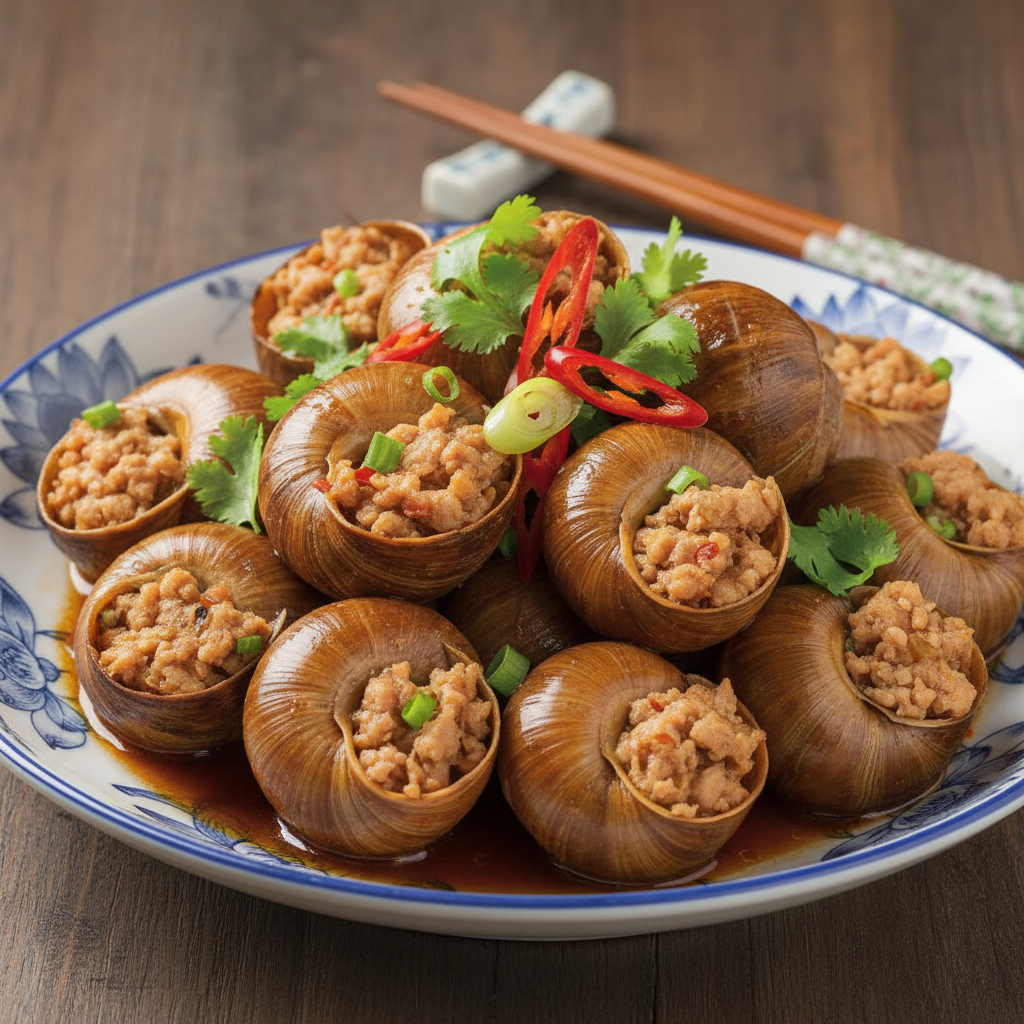
Stuffed Field Snails

Stuffed Field Snails

Stuffed Field Snails is a Hakka specialty dish. It uses field snails as the main ingredient, where the snail meat is removed, minced, and mixed with fillings such as pork, shiitake mushrooms, and water chestnuts. This mixture is then stuffed back into the snail shells, and braised in a flavorful broth. Its characteristics include tender and delicious snail meat, rich filling, savory broth, and a unique flavor.

Bamboo Rice

Bamboo Rice

Bamboo rice is a traditional food from southern China, Southeast Asia, and some ethnic minority regions. It is typically made by filling fresh bamboo tubes with glutinous rice or other types of rice, along with ingredients such as meat, vegetables, or beans, adding water, and then roasting it over a fire. The fresh aroma of the bamboo permeates the rice, giving it a unique bamboo fragrance.

Yangshuo Stuffed Eggplant

Yangshuo Stuffed Eggplant

Yangshuo Stuffed Eggplant is a traditional specialty dish from Yangshuo, Guilin, Guangxi. It uses locally grown eggplants, which are hollowed out or cut open and then filled with a mixed stuffing primarily made of pork. The dish is then cooked through pan-frying, braising, and other processes. This dish boasts an attractive color, with tender and flavorful eggplant, delicious meat filling, and a rich sauce. It is a beloved local home-style dish and a delicacy for entertaining guests.

Ginger Candy

Ginger Candy

'Ginger Candy' is the name for fans of Hong Kong singer Keung To. Keung To is a Hong Kong singer and actor, and a member of the Hong Kong boy group Mirror. He rose to fame after winning ViuTV's reality talent competition 'Good Night Show - King Maker' in 2018.

Gongcheng Oil Tea

Gongcheng Oil Tea

Gongcheng Oil Tea is a specialty food from Gongcheng Yao Autonomous County, Guilin City, Guangxi Zhuang Autonomous Region. It is a unique tea beverage and an important part of the daily life of the local Yao people.