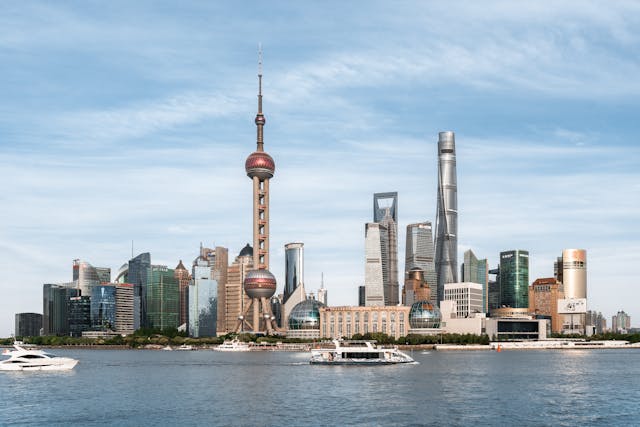
Shanghai is a municipality directly under the central government of China and also the most populous urban area. The city is located on the southern estuary of the Yangtze River on China's coast, with the Huangpu River flowing through it. As of 2023, the city center has a population of approximately 24.87 million, ranking second in the world, while the urban area has a population of 29.87 million, making it the most populous urban area in China. As of 2022, the Greater Shanghai metropolitan area had a nominal GDP of nearly 13 trillion RMB (1.9 trillion USD). Shanghai is one of the world's major financial, commercial and economic, scientific research, technological, manufacturing, transportation, tourism and cultural centers. The Port of Shanghai is the busiest container port in the world.
Spring and Autumn
¥400-800 ($60-120) per day
Subway, Bus, Taxi, Ride-hailing, Ferry
3-5 days
Shanghai Tower is a 128-story, 632-meter (2,073 ft) megatall skyscraper in Lujiazui, Pudong, Shanghai. It is the tallest building in China and the third-tallest in the world. Since 2015, it has been the world's tallest and largest LEED Platinum-certified building. It boasts the world's fastest elevators, reaching a top speed of 20.5 meters per second (74 km/h; 46 mph). Designed by international design firm Gensler and owned by the Shanghai Municipal Government, the building is the tallest of the first three adjacent super-tall buildings in Pudong, the other two being the Jin Mao Tower and the Shanghai World Financial Center. Its tiered design is intended to improve energy efficiency, providing nine separate zones for office, retail, and leisure use. The Council on Tall Buildings and Urban Habitat has called it "one of the most sustainable tall buildings in the world."
The Oriental Pearl Radio & Television Tower is located in Lujiazui, Pudong, Shanghai. It is 468 meters high and is one of Shanghai's iconic landmarks. It was once the tallest independent structure in China, and its unique design was inspired by the Tang Dynasty poet Bai Juyi's "Pipa Song". The tower has multiple sightseeing floors, a revolving restaurant, the Shanghai City History Development Exhibition Hall, a high-altitude VR roller coaster, and a space hotel, making it a famous tourist attraction integrating sightseeing, dining, shopping, entertainment, and accommodation.
The Memorial Hall of the Site of the First National Congress of the Communist Party of China is located at 374 Huangpi South Road, Shanghai, and is the birthplace of the Communist Party of China. From July 23 to early August 1921, the First National Congress of the Communist Party of China was secretly held here, announcing the establishment of the Communist Party of China. The memorial hall preserves the historical buildings of the site of the First National Congress of the Communist Party of China, and through rich exhibitions, it shows the history of the founding of the Communist Party of China, the course of struggle, and the important role of Shanghai as the birthplace of the Party. This is an important red tourism attraction and patriotic education base.
The Bund is a waterfront area and a protected historical district in central Shanghai. The area centers on a section of Zhongshan Road (East Zhongshan No. 1 Road) within the former Shanghai International Settlement, along the west bank of the Huangpu River in the eastern part of Huangpu District. The riverside area faces the modern skyscrapers of Lujiazui in Pudong. The Bund usually refers to the buildings and docks on this section of the road, as well as some adjacent areas. This area has a significant European influence, and many buildings are styled in a way that is most similar to the architectural styles of European cities, especially Gothic, Baroque, Neoclassical, Romanesque, Art Deco, and Renaissance. In addition, some of Shanghai's top restaurants are also located there. From the 1860s to the 1930s, it was the wealthy and powerful center of foreign institutions in Shanghai, operating as a treaty port protected by law.

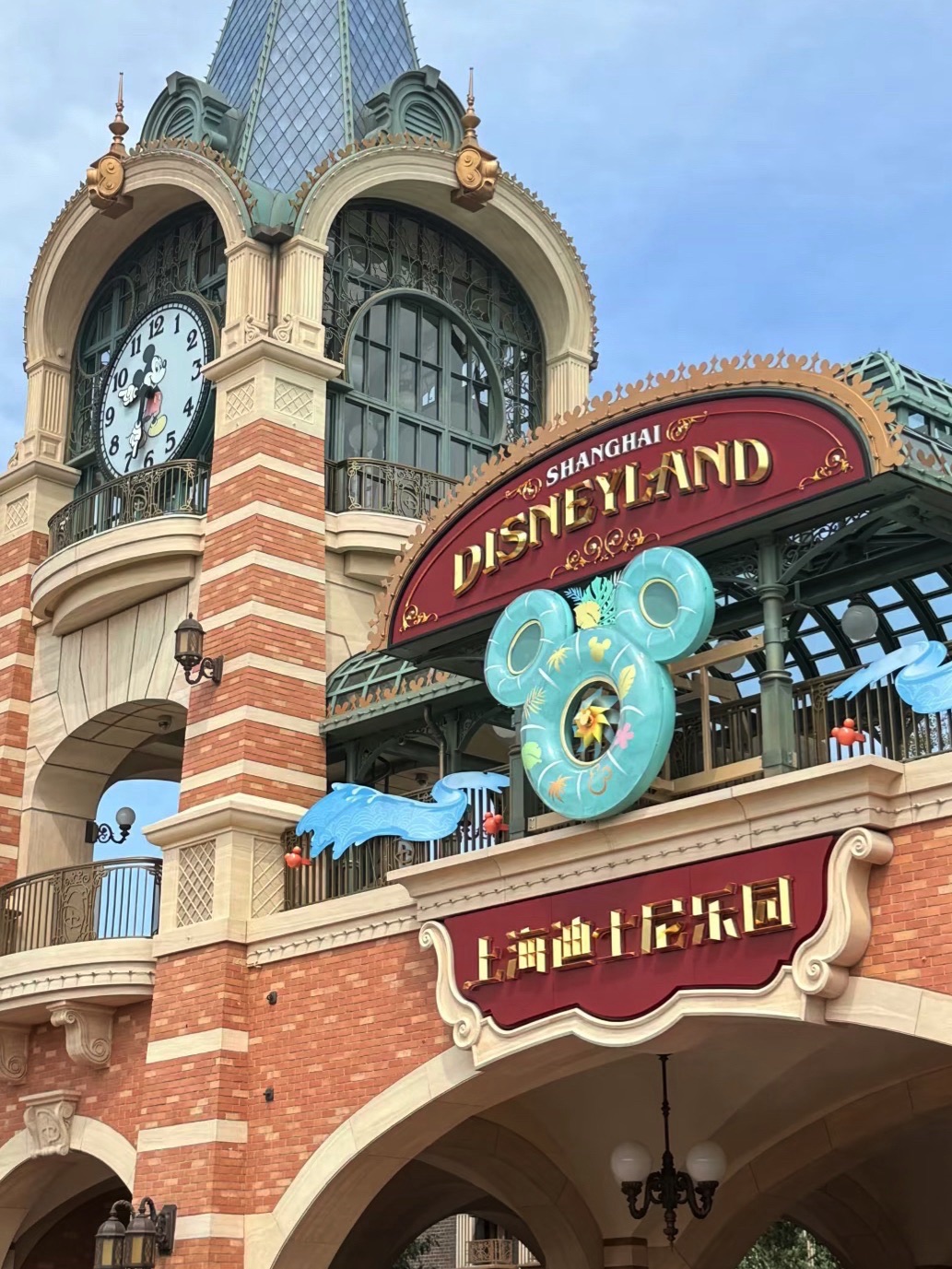
Shanghai Disneyland Park is located in Chuansha New Town, Pudong New Area, Shanghai, China, and is part of the Shanghai Disney Resort. The park is operated by Disney Experiences and Shanghai Shendi Group through a joint venture between The Walt Disney Company and Shendi. Construction of the park began on April 8, 2011, and it officially opened on June 16, 2016. The park covers an area of 3.9 square kilometers (1.5 square miles) and cost 24.5 billion RMB, with Shendi Group holding 57% of the shares and Disney holding the remaining 43%. Currently, the park has eight themed areas: Mickey Avenue, Gardens of Imagination, Fantasyland, Treasure Cove, Adventure Isle, Tomorrowland, Toy Story Land, and Zootopia. In 2023, the park received 14 million visitors, making it the fifth largest theme park in the world.
The Peace Hotel is a hotel in Shanghai, China, located on the Bund, overlooking the surrounding area. The hotel consists of two different buildings. The North Building, namely Sassoon House, was originally the Cathay Hotel and is now the Fairmont Peace Hotel under Fairmont Hotels and Resorts. The South Building was originally the Palace Hotel and is now an artist studio and residence called the Swatch Art Peace Hotel. Both buildings face the Bund but are separated by Nanjing Road. The Peace Hotel North Building was the first high-rise building built by Victor Sassoon and one of the earliest skyscrapers in the Eastern Hemisphere. Sassoon bought an entire block in a prominent location on the Bund before building it. When completed, Sassoon House was fifty feet taller than the second tallest building on the Bund. It was designed by Palmer and Turner Architects and has a reinforced concrete structure. Construction began in 1926 and was completed in 1929. The Cathay Hotel had high standards of luxury and modern facilities, such as indoor plumbing, which made it more popular than other nearby hotels such as the Majestic Hotel owned by the Kadoorie family and the Astor House Hotel. The Cathay Hotel had a floor of rooms called "National Suites", each decorated in a different exotic style. According to writer Jonathan Kaufman, the Japanese suite had tatami mats, the Indian suite had Indian rugs and cushions, and the Chinese suite had Chinese furniture and ceramics. The building covers an area of 4,617 square meters and provides 36,317 square meters of building area. The building is ten stories high, with the tenth floor being a penthouse where Victor Sassoon once lived. The North Building is 77 meters high to the roof line and 83 meters high to the spire. The architects followed a consistent Art Deco style, from the exterior design to the interior decoration. Most of the building is finished with granite, while the ninth floor and roof are finished with terracotta. The east facade (facing the Huangpu River and the Bund) has a steep conical roof about 10 meters high. The pyramid-shaped roof is covered with copper, which has now corroded to a light green color. Before 1949, banks and shops leased the ground floor space. This space became the Shanghai branch of Citibank in 2002. The fourth to ninth floors were once the Cathay Hotel. After liberation in 1949, some offices were used by the Municipal Finance Committee. In 1952, the building was taken over by the municipal government. In 1956, it became a hotel again, named "Peace Hotel". During the Cultural Revolution, the hotel was used by the Gang of Four, most notably Zhang Chunqiao, who set up the headquarters of the Shanghai Commune here. The hotel's old jazz band recently became the basis for the film "As Time Goes By", directed by Uli Gaulke. Its rooftop terrace restaurant overlooks the Pudong New Area across the Huangpu River. This hotel also became the inspiration for Vicki Baum's 1937 novel "Shanghai '37", which was also known as "Hotel Shanghai" and "Nanjing Road". In 2007, the hotel closed for a three-year renovation inside and out, including guest rooms, the lobby, and dining and entertainment venues. The North Building reopened in 2010 and was renamed the Fairmont Peace Hotel Shanghai. The hotel now offers 270 rooms.
The Soong Ching Ling Memorial Residence is located at 1843 Middle Huaihai Road, Xuhui District, Shanghai. It was the residence of Soong Ching Ling, Honorary President of the People's Republic of China, during her lifetime in Shanghai. The residence is a Western-style pseudo-three-story garden villa with red tiles and white walls, where she lived for 15 years. After Soong Ching Ling passed away in Beijing in 1981, this place was converted into the Soong Ching Ling Memorial Residence in Shanghai, which was opened to the public in 1988 to showcase Soong Ching Ling's life and her outstanding contributions to the Chinese revolution and construction. The museum displays a large number of precious cultural relics, photographs, and documents. The living room, dining room, bedroom, and other rooms are arranged as they were during Soong Ching Ling's lifetime, allowing people to feel her simple and noble lifestyle. The residence also has an exhibition on Soong Ching Ling's life, which comprehensively introduces her glorious life. The entire residence is surrounded by lush trees and beautiful gardens, creating a quiet environment. It is an important place to learn about Soong Ching Ling and commemorate the great person's demeanor.

The Shanghai World Financial Center (SWFC) is a supertall skyscraper located in the Pudong New Area of Shanghai. It was designed by Kohn Pedersen Fox and developed by Mori Building Company, with Leslie E. Robertson Associates as the structural engineer and China Construction Eighth Engineering Division and Shanghai Construction (Group) General Company as the main contractors. It is a mixed-use skyscraper comprising offices, a hotel, conference rooms, observation decks, and ground-floor shopping malls. The Park Hyatt Shanghai is the hotel component of the building, featuring 174 rooms and suites occupying the 79th to 93rd floors, and was the highest hotel in the world when completed. It is currently the third-highest hotel in the world, after the Ritz-Carlton, Hong Kong (located on the 102nd to 118th floors of the International Commerce Centre). On September 14, 2007, the skyscraper was topped out at a height of 492 meters (1,614.2 ft), making it the second-tallest building in the world at the time of its completion (the tallest at the time being Taipei 101), the tallest building in the world by roof height, and the tallest building in China. The SWFC opened to the public on August 28, 2008, with its observation decks opening on August 30. The observation decks offer views from 474 meters (1,555 ft) above the ground. The SWFC's design has received accolades, and it was named the best-completed skyscraper of the year by architects in 2008. In 2013, the SWFC's height was surpassed by the adjacent Shanghai Tower, which is the tallest building in China as of 2023. The Shanghai World Financial Center, Shanghai Tower, and Jin Mao Tower together form the world's first group of three adjacent supertall skyscrapers.
Yu Garden or Yuyuan Garden is a vast Chinese garden located in the northeast of the Old City of Huangpu District, Shanghai, next to the City God Temple. It is adjacent to Yu Garden Tourist Mart, Huxinting Teahouse, and Yu Garden Shopping Mall. Yu Garden was built in 1559 during the Ming Dynasty by Pan Yunduan for his father Pan En to enjoy his old age. It was named "Yu Garden", meaning "Pleasing the Elderly". The garden has more than 40 attractions including pavilions, towers, rockeries, and ponds. It is now a national key cultural relics protection unit. One of the core attractions in the garden is the Jade Exquisite, a porous 3.3-meter-high, 5-ton Taihu stone.
Shanghai Ocean Aquarium is located in Shanghai, China, and is a public aquarium. Designed by Advanced Aquarium Technologies, it features a 168-meter-long underwater tunnel, one of the longest in the world, taking visitors through coastal reefs, open ocean, kelp caves, shark bays, and coral reefs. The aquarium has several exhibition areas, including the China Zone, South America Zone, and Africa Zone, showcasing a rich variety of aquatic life.
The Shanghai Grand Theatre is located in the northern part of People's Square, Huangpu District, Shanghai, at the intersection of People's Avenue and North Huangpi Road. This building, which combines the design concepts of French architect Jean-Marie Charpentier and the East China Architectural Design & Research Institute, has staged various performances since its opening on August 27, 1998, including operas, musicals, ballets, symphonies, chamber music, and Chinese operas. The theater has a total construction area of 62,803 square meters, consisting of 8 floors above ground and 2 floors underground. It houses three main theaters: the Grand Theater, the Buick Theatre, and the Experimental Small Theater. It is also equipped with complete supporting facilities such as a ticket center, ballet rehearsal hall, orchestra rehearsal hall, VIP lounge, exhibition hall, souvenir shop, coffee bar, banquet hall, and parking lot, making it one of Shanghai's cultural and artistic centers.
Jin Mao Tower, also known as the Jinmao Building or Jin Mao Building, is an iconic skyscraper located in Lujiazui, Pudong, Shanghai, China, with a height of 420.5 meters (1,380 feet) and a total of 88 floors (93 floors if the spire is included). It contains a shopping center, office space, and the Grand Hyatt Shanghai hotel starting from the 53rd floor; it was once the tallest hotel in the world when it was completed. Together with the Oriental Pearl Radio & Television Tower, the Shanghai World Financial Center, and the Shanghai Tower, it forms the Lujiazui skyline seen from the Bund. The postmodern form of the Jin Mao Tower, whose complexity increases with height, draws on elements of traditional Chinese architecture (such as tiered pagodas), gently receding as it rises to form a rhythmic pattern. Like the Petronas Towers in Malaysia, the proportions of the building revolve around the number 8, which is associated with prosperity in Chinese culture.

Wukang Road, formerly known as Route Ferguson, is a historically significant street in Xuhui District, Shanghai, located in the western part of the former French Concession. It is renowned for its unique historical architecture, sycamore trees, and rich cultural atmosphere, and was designated as one of Shanghai's landmarks, recognized as a 'Famous Chinese Historical and Cultural Street' in 2011. The street is lined with diverse architectural styles including Mediterranean, French Renaissance, English, and Art Deco, and was once home to many celebrities, such as the literary giant Ba Jin and Honorary President of the People's Republic of China, Soong Ching-ling. Today, it is dotted with cafes and boutiques, making it an excellent place to experience the old Shanghai style and feel the Shanghai culture. The tourist information center is located at 393A Wukang Road.
The Shanghai Museum is a large museum of ancient Chinese art, located in People's Square, Huangpu District, Shanghai. It is renowned for its rich collection of ancient Chinese art treasures, including bronzes, ceramics, calligraphy, furniture, jade, ancient coins, paintings, seals, sculptures, and ethnic crafts. The museum was founded in 1952 and rebuilt at its current location in 1996. The architectural design is unique, with a circular top and a square base, symbolizing the ancient Chinese cosmological concept of 'round sky and square earth'.
Jing'an Temple is a historic Esoteric Buddhist temple located on West Nanjing Road in Shanghai. It was originally built in 247 AD during the Three Kingdoms period and later moved to its current location in 1216. The temple was destroyed during the Cultural Revolution and rebuilt in 1983, with continuous expansion in the following decades, including the Jing'an Pagoda completed in 2010. The temple houses a 6.2-meter-high camphor wood Guanyin statue and the largest 3.8-meter seated jade Buddha statue in China, as well as other precious cultural relics and artworks.
Nanjing Road Pedestrian Street is located in the center of Shanghai and is one of the busiest shopping streets in China, stretching approximately 5.5 kilometers and attracting over 1 million visitors daily. It consists of East Nanjing Road and West Nanjing Road, with East Nanjing Road being the main commercial pedestrian area, extending from the Bund to People's Square. It is home to numerous shops, restaurants, and historical buildings, making it an excellent place to experience the urban charm of Shanghai.
Shanghai Natural History Museum is one of the largest natural science museums in China. It was founded in 1956 and moved to its new location in Jing'an Sculpture Park in 2015. The museum has more than 240,000 collections, including more than 62,000 animal specimens, 135,000 plant specimens, 700 Stone Age specimens, and 1,700 mineral specimens. The museum also houses rare species that cannot be found elsewhere in China, such as the Yellow River Mammoth, the Giant Salamander, the Giant Panda, and the Yangtze Alligator. The largest exhibit is a 140 million-year-old skeleton of the Mamenchisaurus hochuanensis dinosaur, which is four stories high. The museum also houses two mummies and several human embryos.

The Shanghai Museum East Branch is located at 1952 Century Avenue, Pudong New Area, Shanghai. It is a branch of the Shanghai Museum, with a construction area of 113,200 square meters, nearly twice the size of the People's Square Museum. The East Branch has six floors above ground and two floors underground, with a height of approximately 45 meters and an exhibition area of approximately 33,600 square meters. The construction of the museum officially started on September 27, 2017, and it began to open to the public in February 2024, exhibiting precious cultural relics such as ancient Chinese bronzes, sculptures, and calligraphy. It also features special exhibition halls such as the Zhao Puchu Calligraphy Art Gallery.

Xintiandi, Shanghai is an urban tourist attraction with Shanghai's historical and cultural features, blending Chinese and Western elements. Based on Shanghai's unique Shikumen architectural district, it has been transformed into a leisure pedestrian street integrating dining, commerce, entertainment, and culture. It brings together many international fashion brands, theme restaurants, bars, cinemas, and art galleries, making it an ideal place to experience the combination of Shanghai's urban fashion and historical charm.
Expo Museum Shanghai is the first Expo-themed museum in China that is independently selected, designed, and built. It is a major cultural project invested and constructed by the Shanghai Municipal People's Government. The museum comprehensively showcases the history of the Shanghai World Expo, as well as the wonderful journey and development of the World Expo since the first London World Expo in 1851. The museum houses a large number of precious cultural relics and materials related to the World Expo.
Shanghai Science and Technology Museum is a large comprehensive natural science museum in Shanghai and a national 5A tourist attraction. With the theme of "Nature, Man, and Technology", it has multiple exhibition areas covering various fields such as biodiversity, crustal exploration, the information age, and the robot world, aiming to improve public scientific literacy.
1933 Old Millfun is located in Hongkou District, Shanghai, and is a comprehensive park integrating catering, retail, and creative office space. Its unique architectural style originates from the Shanghai Municipal Council Slaughterhouse in the 1930s, designed by the famous British designer Balfours. The main building adopts a box frame structure with a "beam-free floor", supplemented by umbrella-shaped columns, cattle passages, and covered corridors, presenting a unique combination of Gothic architecture and industrial style, and is known as "Shanghai's industrial heritage landmark." Today, it gathers many creative brands, fashion shops, characteristic restaurants, and art exhibitions. It is an important part of Shanghai's cultural and creative industry, and also a popular tourist attraction and photo check-in spot.
The China Art Museum, also known as the Shanghai Art Museum, is a municipal art museum in Shanghai. It is a non-profit institution funded by the Shanghai Municipal Administration of Culture and Tourism. The museum is located in the former China Pavilion of the 2010 Shanghai World Expo. It houses a collection of approximately 14,000 artworks, mainly modern Chinese art. Permanent exhibitions include "The Moon over the Sea - The Source of Modern and Contemporary Chinese Art", tracing the development of modern and contemporary Chinese art; "Special Exhibition Hall of Famous Artists", showcasing the works of seven famous modern Chinese artists; and artworks showcasing the historical and cultural development of Shanghai. In addition, there is the exhibition "Splendid China - Chinese Art in the New Century in Progress", exhibiting artworks of the 21st century.

The West Bund Museum is located at 2600 Longteng Avenue, Xuhui District, Shanghai, and is an important part of the Shanghai West Bund Cultural Corridor. It is dedicated to the exhibition, collection, research, and public education of contemporary art. It is the first cooperative project of the Centre Pompidou in Asia and an important platform for international cultural exchange in Shanghai.
Jade Buddha Temple in Shanghai, also known as Jade Buddha Temple, is a famous Buddhist temple located in Putuo District, Shanghai, China. The temple houses two jade Buddha statues, one is a seated statue and the other is a reclining statue, brought back from Myanmar by the eminent monk Huigen from Mount Putuo. The Jade Buddha Temple has a unique architectural style, blending traditional Chinese palaces and modern architectural elements. It is an important Buddhist activity center and tourist attraction in Shanghai.
Qibao Ancient Town, located in Minhang District, Shanghai, is a historical district with traditional Chinese architectural style, and has now become a popular tourist attraction. The ancient town has small bridges and flowing water, quaint buildings, museums and various local snacks. This was once the former residence of the painter and sculptor Zhang Chongren, who was also the prototype of Chang Changren in The Adventures of Tintin. The ancient town is famous for its cricket culture (there is a "Cricket Cottage"), and the entire area is a pedestrian street.
Shanghai City God Temple, officially named Shanghai City God Temple, is a Chinese folk religion and Taoist temple located in the old city of Shanghai. It is designed to commemorate the elevation of Shanghai to the status of a city, and enshrines three gods revered as the City Gods of Shanghai. The temple originated from the Jinshan God Temple in 1403 and reached its peak during the Daoguang period. In 1994, the temple resumed its temple functions and underwent a comprehensive restoration between 2005 and 2006. Today, the City God Temple, together with the nearby Yu Garden and surrounding streets, forms a large catering and retail pedestrian area.

Shanghai Circus World is a large, permanent indoor circus performance venue located in Shanghai, China, covering an area of 22,500 square meters. Its main facility is the Acrobatic Field, which has 1,638 seats. Since its premiere in September 2005 at Shanghai Circus World, the 100-minute show "ERA - Intersection of Time" has been continuously performed here. The performance is presented with the aid of multimedia technologies such as visuals, original live music, sound effects, olfactory effects, air conditioning, and lighting. It is unique and comparable to the tradition of Broadway musicals, a stunning acrobatic show combining traditional Chinese art and modern technology (including performance elements from the Han Dynasty (206 BC - 220 AD)). Performers harmoniously integrate Chinese acrobatics, martial arts, and dance with music, sound effects, lighting, and other special effects (including water screens). It tells the story of China's evolution from ancient times to the present and delves into China's ancient culture and civilization, including an introduction to the ancient Chinese compass "Si Nan," divination, and magic. Performers use porcelain jars and pottery urns as stage props to outline Chinese ceramic culture, giving the audience a deeper understanding of the country's name "China." The show also showcases modern achievements such as the Shanghai Donghai Bridge, maglev trains, and China's first manned space mission, Shenzhou V.
The Bund Source is the origin of the Shanghai Bund and the source of modern urban civilization in Shanghai. Located at the confluence of the Suzhou River and the Huangpu River, it boasts 15 classic historical buildings, including the former British Consulate, The Peninsula Hotel, Yifeng Building, and Guanglu Building, and is an important part of the Bund historical and cultural district. It not only has rich historical sites, but also brings together diverse business formats such as fashion, art, culture, and dining, making it a unique landmark to experience the blend of Shanghai's history and modernity.
Shanghai Astronomy Museum is a branch of the Shanghai Science and Technology Museum, located in the Lingang New Area of Pudong New District. It is the world's largest astronomy museum in terms of building area. With the design concept of "Connecting People and the Universe", it leads visitors to explore the mysteries of the universe and stimulate interest in science through unique architectural design, advanced exhibition technology and rich exhibits. The museum has three theme exhibition areas: "Home", "Universe" and "Journey", as well as special exhibition areas such as "Chinese Exploration of the Sky", "Curious Planet" and "Exploration Classroom", and has 8K ultra-high-definition multi-functional dome theater, digital star map, solar tower and other facilities.
Madame Tussauds Shanghai is located on the 10th floor of New World City on West Nanjing Road, Shanghai. It opened on May 1, 2006, and is the second Madame Tussauds in Asia after Hong Kong. The museum displays wax figures of many Chinese and Western celebrities, including movie stars, athletes, and political leaders. It takes about six months to make a wax figure, completed by a team of about 20 artists, and the cost of each wax figure is estimated at HKD 1 million.
M50 Creative Park (50 Moganshan Road) is a contemporary art district in Shanghai, bringing together more than 100 artist studios, all of which are open to the public. Often compared to New York's SoHo district and Beijing's 798 Art District, it has become a popular cultural attraction for tourists from home and abroad. M50 Creative Park was formerly the Chunming Wool Mill, initiated in 2000 by artist Xue Song. Its low rents for abandoned industrial spaces attracted artists such as Ding Yi, Qu Fengguo, and Wang Xingwei. Today, the park's old factories and warehouses have been transformed into art galleries, artist studios, design agencies, and other visual arts and cultural enterprises of varying sizes. The land and buildings are still owned by the Shenda Group, a state-owned textile group that has ceased production.
Longhua Temple (English: Longhua Temple) is the largest ancient temple in Shanghai. It was built in the Three Kingdoms period (242 AD) and has a history of more than 1,700 years. It is the oldest and largest Buddhist temple in Shanghai. The temple preserves the architectural style of the Song Dynasty. The main axis is lined with the Maitreya Hall, the Heavenly King Hall, the Grand Hall, the Three Saints Hall, the Abbot's Room, the Sutra Library and other halls, as well as the famous Longhua Pagoda. The temple covers an area of more than 20,000 square meters, and the Longhua Pagoda is 40.4 meters high. It is an important Buddhist cultural heritage and tourist attraction in Shanghai.
Tianzifang is a tourist art and craft area developed from a renovated traditional residential area in the Shanghai French Concession. It is now home to boutiques, bars and restaurants. The area consists of a maze of alleys off Taikang Road, known for its small craft shops, cafes, trendy art studios and narrow alleys. It has become a popular tourist destination in Shanghai and a model of Shikumen architectural preservation. It is sometimes compared to Xintiandi, although most of the houses in the latter have been demolished and rebuilt, rather than renovated.
Zhujiajiao Ancient Town, located in Qingpu District, Shanghai, is an ancient water town with a history of over 1700 years. Here, you'll find small bridges over flowing water and ancient buildings standing in rows. Archaeological discoveries can be traced back 5000 years. The ancient town has 36 stone bridges and numerous rivers, preserving a large number of historical buildings from the Ming and Qing dynasties, such as residences, shops, banks, and post offices, showcasing the unique Jiangnan water town style. It is an ideal place to experience the water town culture and history of suburban Shanghai.
Fuxing Park is located in the former French Concession of Shanghai, near Nanchang Road, and was once the largest park in Shanghai. The park was planned and built by the French in 1909, covering an area of about 10 hectares, and adopts the French garden style. There are lakes, fountains, pavilions and flower beds in the park. In the early morning, the park is full of people dancing, playing cards, playing mahjong and practicing Tai Chi, showing the daily life of Shanghai citizens. The park was formerly known as Gujiazhai Park and Daxing Park, and was renamed Fuxing Park in the mid-20th century. It underwent a comprehensive restoration in 2008.
Waibaidu Bridge, known in English as Garden Bridge, is China's first all-steel riveted bridge and the only surviving T-shaped truss bridge in China. It is located at the confluence of the Suzhou River and the Huangpu River, adjacent to the Bund, connecting Huangpu District and Hongkou District. The bridge opened to traffic on January 20, 1908, and has become one of Shanghai's landmarks with its rich history and unique design, and is known as Shanghai's urban landmark bridge. On February 15, 1994, the Shanghai Municipal People's Government listed it as an outstanding historical building.
The Shanghai Urban Planning Exhibition Center is located on People's Square in Shanghai, adjacent to the Municipal Government Building. It was the first urban planning exhibition hall in China, after which similar exhibition halls became common in major cities and new towns throughout China. The exhibition center is a six-story building with two basement levels, showcasing Shanghai's urban planning and development. The highlight of the exhibition is a large-scale model of the entire city of Shanghai, showing existing buildings and approved future buildings. Other exhibits cover Shanghai's history and planning development, including smaller scale models focusing on specific areas such as the Bund. The exhibition center also has space for various themed temporary exhibitions. The exhibition center was built in 2000 and was the first urban planning exhibition hall in China, designed to showcase planning models and design drawings to promote development and enhance civic pride. The building was designed by Ling Benli, an architect from the East China Architectural Design & Research Institute (ECADI), and forms a harmonious balance with the Shanghai Grand Theatre on the other side of People's Square. The exhibition center is 43 meters (141 feet) high and features white aluminum panel cladding and a symbolic membrane structure roof. The centerpiece of the exhibition is a huge scale model of the city of Shanghai, showing all existing and approved buildings. Visitors can view the model from the side or from a gallery that surrounds the model, enjoying the view from above. The model is designed to represent the entire city, including all planned developments. In addition, there is a small theater with a 360-degree screen. The room plays a video that gives the impression that the audience is traveling through the future of Shanghai, watching famous attractions, including some of the 2010 Shanghai World Expo pavilions.
Yuyuan Road Historical and Cultural Block is located in Changning District, Shanghai, and is a distinctive street with a profound history and cultural heritage. It not only has a wall of fame recording many historical figures, but also retains a large number of historical buildings with different styles, such as the Shanghai Changning District Children's Palace, which was once the former residence of Wang Boqun. Strolling along Yuyuan Road, you can feel the strong historical atmosphere and unique Shanghai style. It is an important window to understand the modern history and architectural art of Shanghai.
The Shanghai Jewish Refugees Museum is located on the site of the historic Ohel Moshe Synagogue and was established to commemorate the Jewish refugees who took refuge in Shanghai during World War II. Through rich historical materials, precious cultural relics and touching stories, it showcases the special years that the people of Shanghai and Jewish refugees experienced together. It is an important window to understand this history and a witness to the victory of the World Anti-Fascist War.

Sinan Mansions is the only project in downtown Shanghai that aims to preserve and protect a large area of garden villas. It boasts 51 historic garden villas and is a witness to modern Shanghai history. It integrates humanities, history, and art, bringing together boutique hotels, specialty restaurants, fashion shops, and office spaces, making it a unique cultural and leisure landmark in Shanghai.

Hengshan Road, formerly known as Avenue Pétain, is a street in the French Concession of Shanghai. This tree-lined boulevard was the center of Shanghai's main residential area for most of the 20th century, connecting the heart of the French Concession with the Catholic district of Xujiahui. Since the 1990s, many mansions along the road have been converted into bars, nightclubs and restaurants, making it an important center for Shanghai's nightlife. Since 2016, many bars on Hengshan Road have closed or moved to other new and more popular entertainment areas in the city.
Shanghai Postal Museum is the only provincial-level postal museum in China. It is located at No. 395 Tiantong Road, Hongkou District, Shanghai. Relying on the Shanghai General Post Office Building, which was built in 1924, it is a museum integrating postal history, culture and technology. The museum displays the development history of China Post, the evolution of stamps, postal tools and related cultural relics, and is an important window to understand the history of China Post.

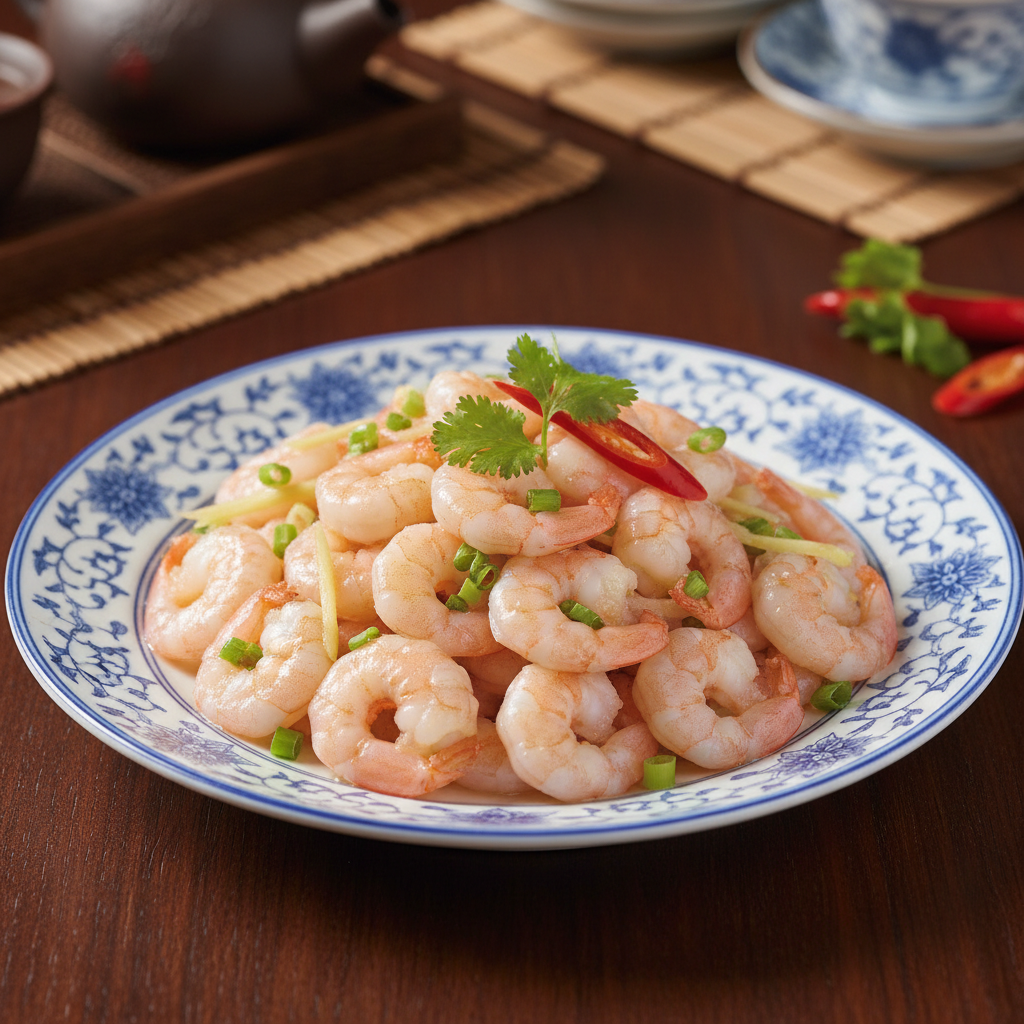
Stir-fried River Shrimp is a home-style dish made primarily with fresh river shrimp, simply stir-fried.
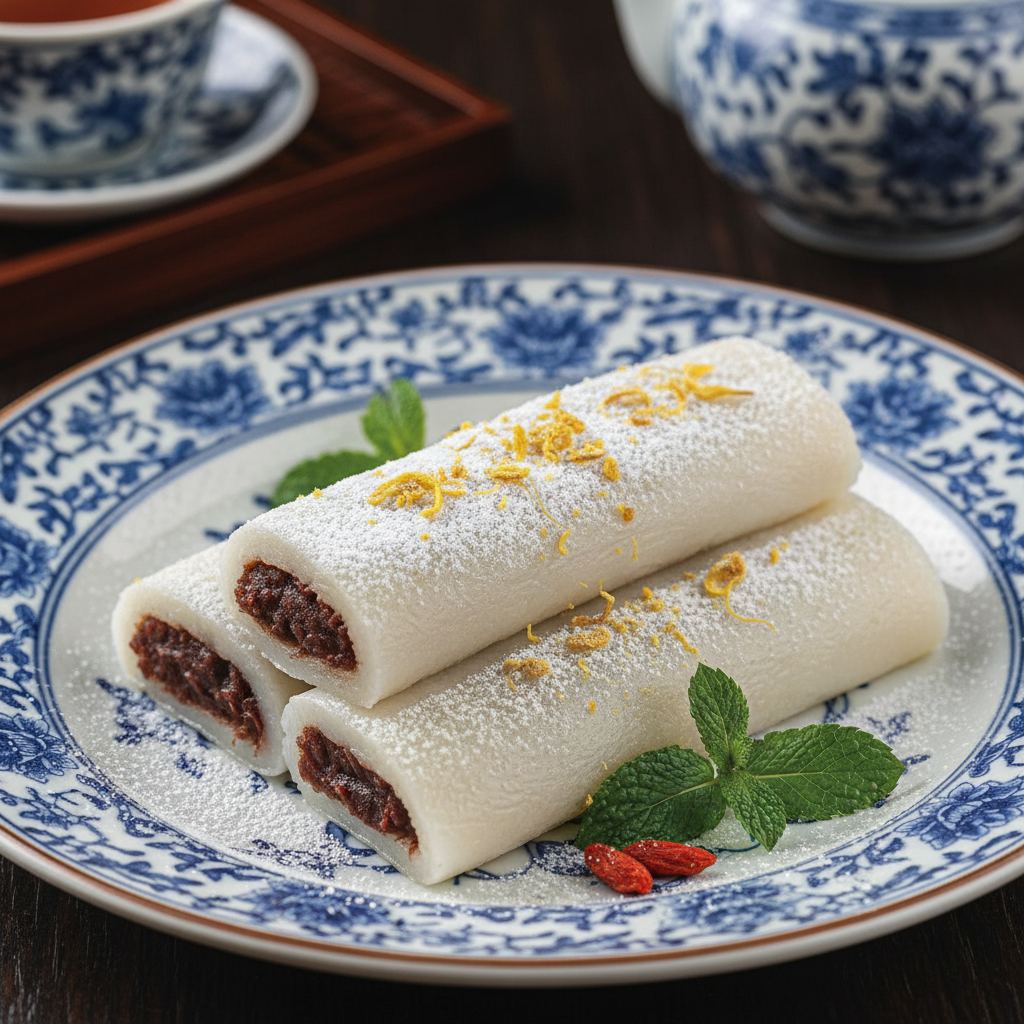
A traditional pastry from the Jiangnan region, primarily made from glutinous rice and shaped into long strips.
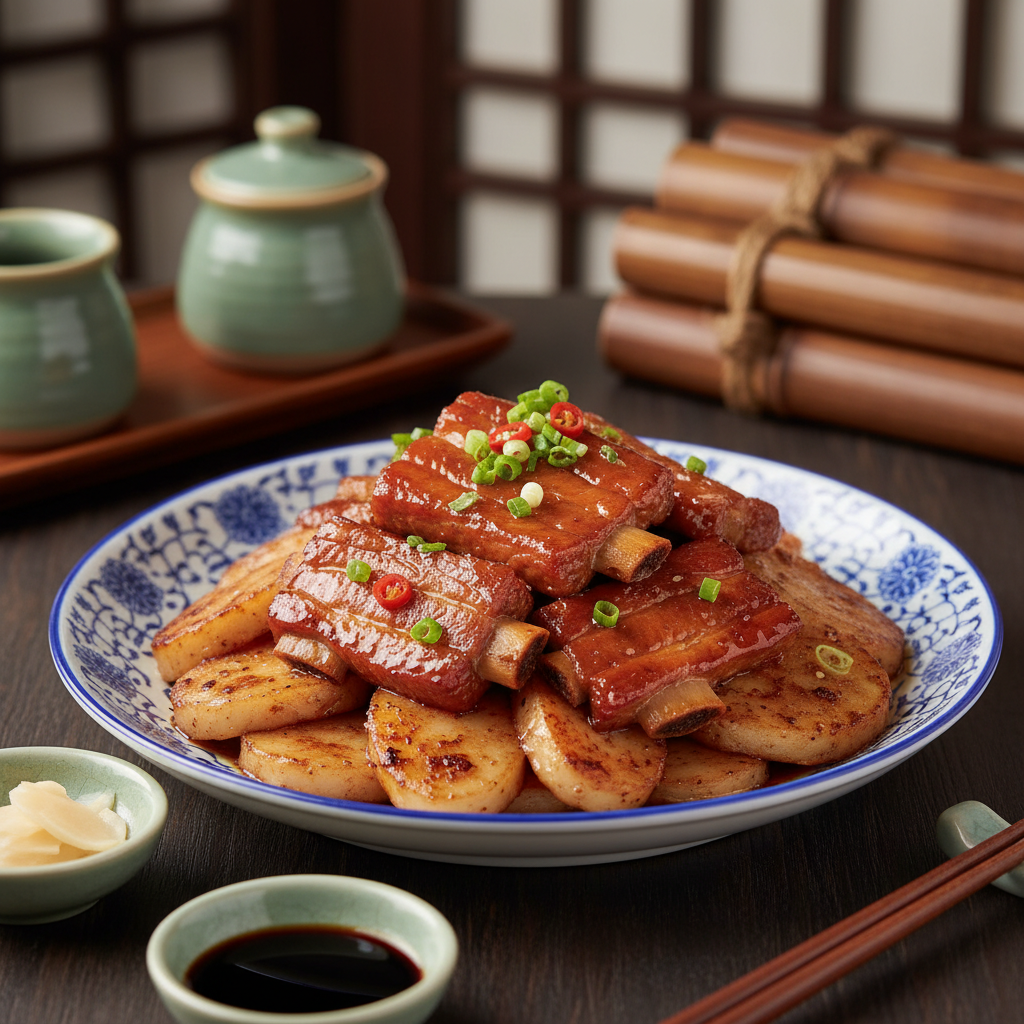
Pork Ribs with Rice Cakes is a specialty snack from Shanghai, featuring crispy golden fried pork ribs cooked together with soft and chewy rice cakes.
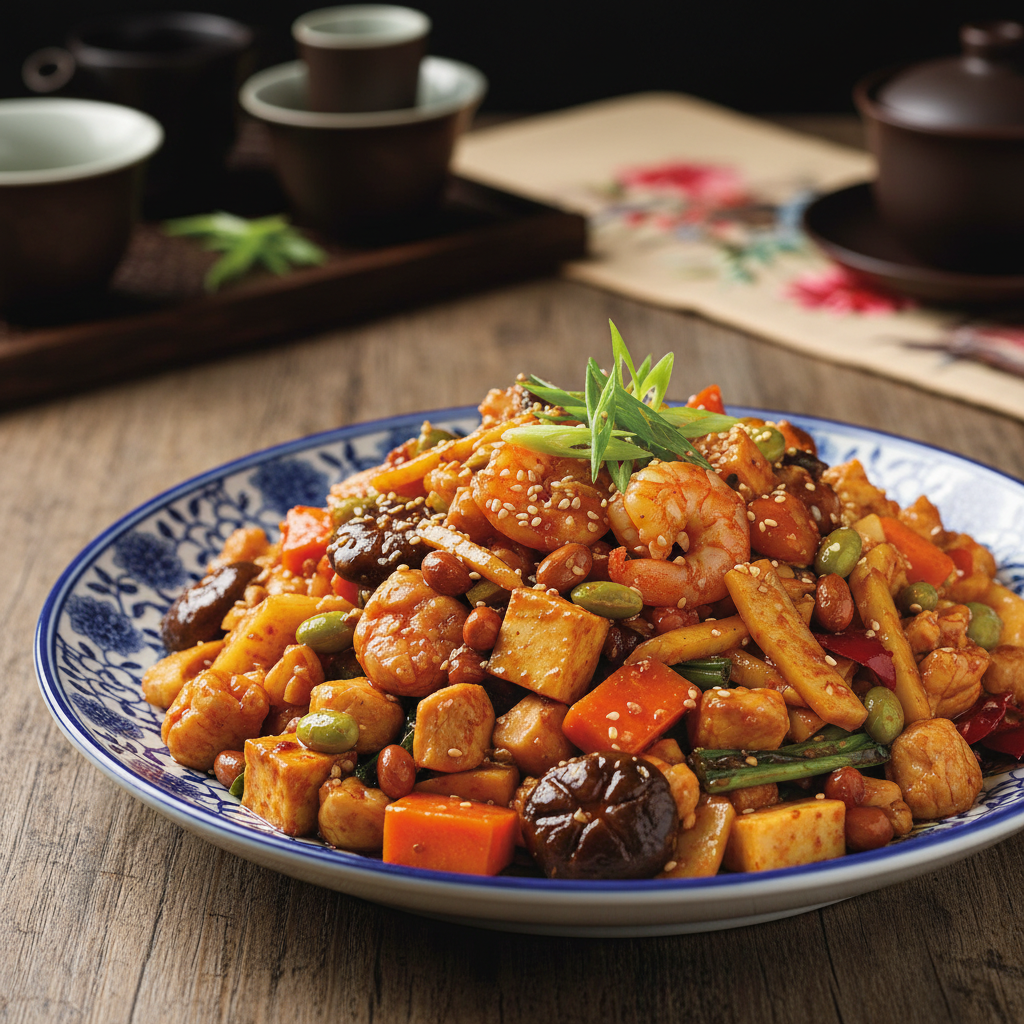
Babao Lajiao (Eight-Treasure Spicy Sauce) is a famous Shanghai local dish, known for its rich ingredients and unique fresh and spicy flavor. It typically consists of diced ingredients, eight or more, including diced chicken, diced pork, diced pork belly, shrimp, peanuts, diced winter bamboo shoots, diced shiitake mushrooms, diced dried tofu, etc., stir-fried with various sauces such as sweet bean paste, doubanjiang (broad bean paste), and chili sauce.
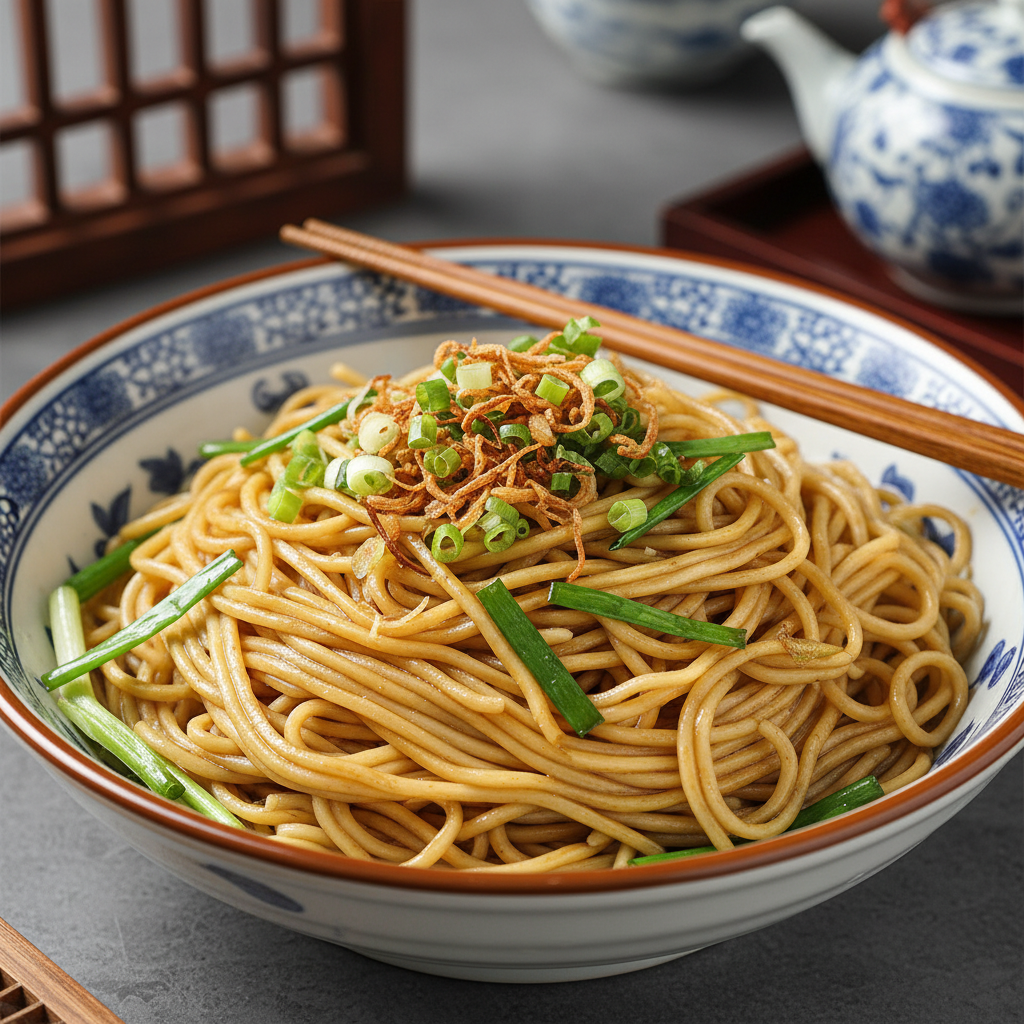
A classic Shanghainese local noodle dish, made with cooked thin noodles tossed with fragrant scallion oil and a special sauce. Simple to prepare, yet deeply loved for its unique scallion oil aroma.
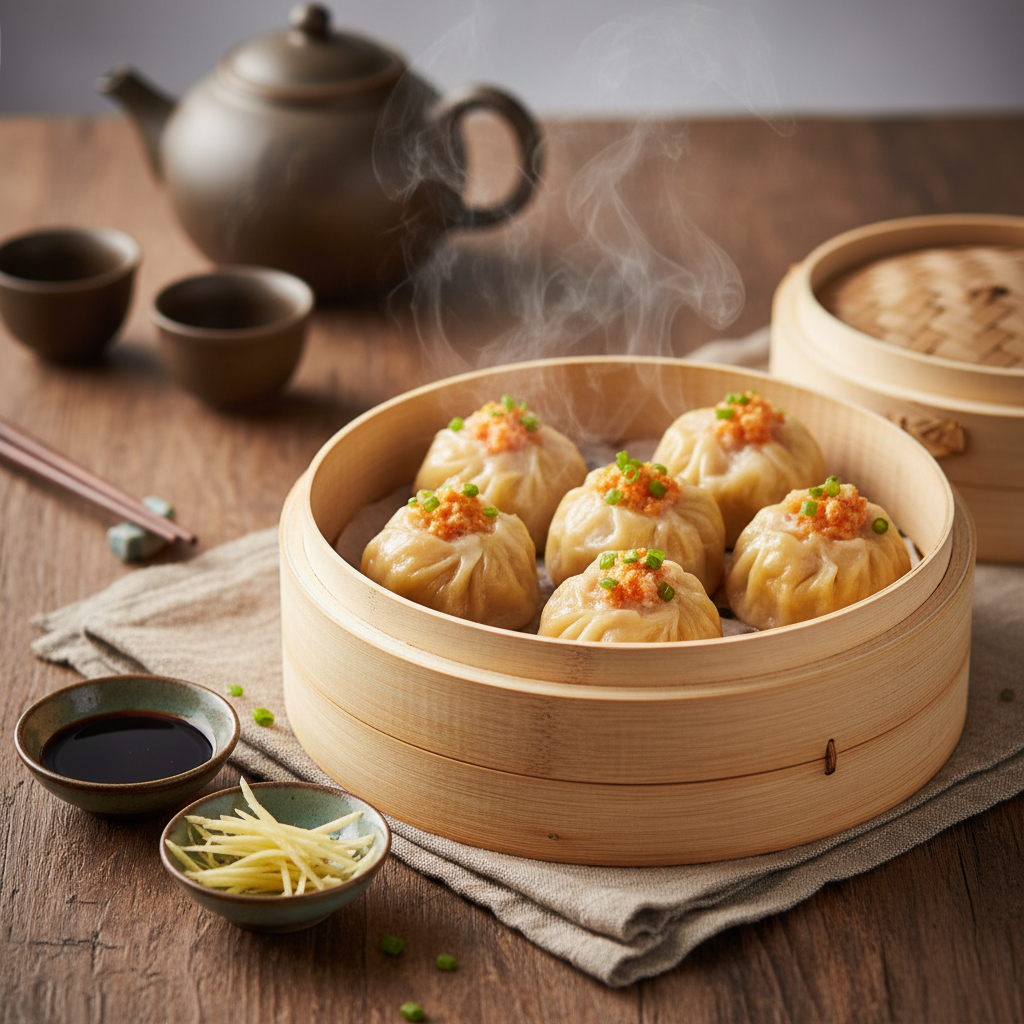
A famous Jiangnan dim sum, known for its paper-thin skin, delicious crab roe and pork filling, and rich broth contained within. Often served as breakfast, lunch, or a snack.

Shengjianbao is a type of small pan-fried bun, a specialty snack from Suzhou and Shanghai. It is typically filled with pork and gelatin, which melts into a savory soup during cooking. Local Shengjianbao in Shanghai usually has a thin, crispy skin, while those from other regions often have a thicker, bread-like skin. Shengjianbao originated and became popular in Suzhou in the early 20th century, and its popularity later spread to the Yangtze River Delta. Since the early 1920s, it has been one of the most common breakfast foods in Shanghai.

Shanghai Fried Noodles is a dish made with Shanghai-style noodles, typically stir-fried with sliced beef, bok choy, and onions, or pork and Chinese chives. This dish is a staple of Shanghai cuisine and is often served in dumpling restaurants.

A traditional Chinese cold dish, typically made by deep-frying fish pieces (such as grass carp or black carp) until golden and crispy, then soaking them in a special marinade made from soy sauce, sugar, spices, and a small amount of smoked seasoning. It has a rich sweet and savory taste with a unique smoky flavor.

Xiaolongbao is a type of traditional Chinese soup dumpling steamed in small bamboo steamers. Originating from Changzhou, Jiangsu Province, it is one of the iconic dishes of Jiangnan cuisine.

Fresh Meat Mooncake is a specialty snack from Shanghai and its surrounding areas in China, belonging to a type of mooncake. Unlike traditional mooncakes, Fresh Meat Mooncake uses pork as its main filling, with a crispy crust and a savory, juicy filling, offering a unique taste.

Hongshao Rou is a classic Chinese dish, primarily made with pork belly, cooked with ginger, garlic, spices, chili, sugar, star anise, light soy sauce, dark soy sauce, and rice wine. The pork is stewed until the fat and skin become gelatinous, resulting in a tender, melt-in-your-mouth texture, with a rich, sweet, and slightly sticky sauce.

Jiuniang Yuanzi is a traditional Chinese dessert, primarily made from jiuniang (sweet fermented glutinous rice) and small glutinous rice balls. It has a sweet taste with a subtle alcoholic flavor and the refreshing aroma of rice wine. It is usually served hot, especially popular in winter.