undefined City View

Travel Guide

Chengdu, abbreviated as "Rong", is the capital of Sichuan Province, a sub-provincial city, and an important central city in Southwest China. It is known for its long history, splendid culture, and the reputation of "Land of Abundance". Chengdu is the fourth most populous city in China and the only city in China other than municipalities directly under the central government with a population of over 20 million. UNESCO awarded Chengdu the title of "City of Gastronomy" in 2011, and it is also the hometown of giant pandas in China.

Best Time to Visit

Spring and Autumn

Daily Budget

¥400-800 ($60-120) per day

Getting Around

Subway, Bus, Taxi, Ride-hailing, Shared bicycle

Suggested Stay

3-5 days

Must-Visit Attractions

Chengdu Research Base of Giant Panda Breeding

Chengdu Research Base of Giant Panda Breeding

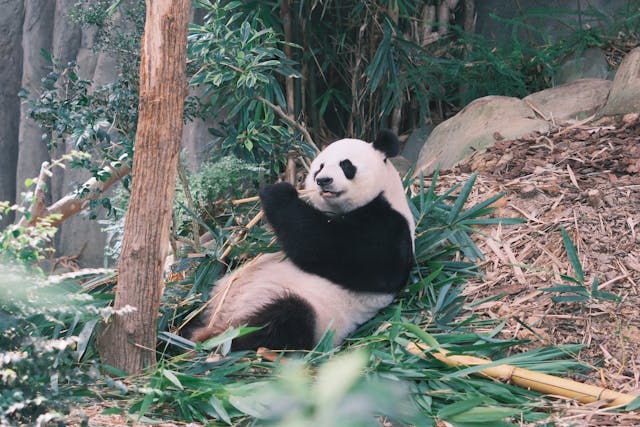
The Chengdu Research Base of Giant Panda Breeding (referred to as Chengdu Panda Base) is a non-profit research institution funded by the government for the breeding of giant pandas, red pandas, and other rare animals, located in Chengdu, Sichuan, China. The base was established in 1987, starting with 6 giant pandas rescued from the wild. By 2008, it had successfully bred 124 giant pandas, and the captive giant panda population had grown to 83. Its goal is to "become a world-class research institution, conservation education center, and international educational tourism destination." In February 2024, the institution made international headlines for banning a 53-year-old male tourist from throwing unidentified objects into the giant panda enclosure, and the tourist was banned from entering the park for life.

Mount Qingcheng Scenic Area

Mount Qingcheng Scenic Area

Mount Qingcheng is a famous Taoist mountain located in Dujiangyan City, Chengdu, Sichuan Province, China, and is known as "Qingcheng is the most secluded place in the world." It is one of the birthplaces of Taoism in China and one of the important Taoist holy sites in China. The 36 peaks in the mountain are surrounded by clouds and mist all year round, with beautiful scenery. In 2000, Mount Qingcheng and the Dujiangyan Irrigation System were jointly listed as World Cultural Heritage sites. There are many Taoist palaces and temples here, such as Jianfu Palace, Chaoyang Cave, and Shangqing Palace, making it a tourist destination integrating natural scenery and historical culture.

Kuanzhai Alley Scenic Area

Kuanzhai Alley Scenic Area

Kuanzhai Alley is one of the three major historical and cultural conservation areas in Chengdu, consisting of three parallel old-fashioned streets and courtyard settlements: Kuan Alley, Zhai Alley, and Jing Alley. It is a microcosm of old Chengdu life, integrating Bashu culture, leisure food, characteristic residences, and modern creativity. It is an excellent place to experience Chengdu's slow life and historical features.

Chunxi Road

Chunxi Road

Chunxi Road is a pedestrian shopping street located in Chengdu, the capital of Sichuan Province, China. It has over 700 shops, including large shopping malls, department stores, supermarkets, street stalls and boutiques, as well as modern cafes and public squares. Chunxi Road is adjacent to the Yanshikou business district and is currently served by Chengdu Metro Lines 2 and 3.

New Century Global Center

New Century Global Center

The New Century Global Center is a multifunctional building complex located in Tianfu New District, Chengdu, Sichuan Province, China. It is the third largest building in the world by floor area. It is 100 meters high and occupies a 500-meter by 400-meter base, with a total construction area of 1,700,000 square meters. The building houses a shopping center of nearly 400,000 square meters, offices, conference rooms, a university complex, two commercial centers, hotels, an IMAX cinema, a 'Mediterranean village', pirate ships, and an Olympic-standard ice rink. The core part is 'Paradise Island Ocean Park', which includes a 5,000-square-meter artificial beach with huge screens that can display sunrise and sunset scenes. The center is connected to Jincheng Plaza Station on Chengdu Metro Line 1.

Dujiangyan Irrigation System Scenic Area

Dujiangyan Irrigation System Scenic Area

The Dujiangyan Irrigation System Scenic Area is located in Dujiangyan City, Chengdu, Sichuan Province. It is a magnificent water conservancy project that began construction in 256 BC (Qin Dynasty). As an irrigation and flood control project, it is still in use today and is the world's largest water conservancy project characterized by diversion without a dam. The Dujiangyan Irrigation System was listed as a World Heritage Site in 2000. It is a famous scenic spot and tourist attraction, showcasing the extraordinary wisdom of the ancient Chinese people.

Jianchuan Museum Cluster

Jianchuan Museum Cluster

The Jianchuan Museum Cluster is located in Anren Town, Dayi County, Sichuan Province, China, about an hour's drive from the provincial capital, Chengdu. It consists of 26 museums showcasing the largest private collection of artifacts collected in China over the past 60-70 years. The museum was founded by local real estate billionaire Fan Jianchuan. The museum complex covers an area of 500 acres (2.0 square kilometers) and houses more than 8 million artifacts, 121 of which are listed as national first-class cultural relics. It is the largest museum cluster in China, organized around four themes: the War of Resistance Against Japan, the Red Era, the Wenchuan Earthquake, and Chinese Folk Culture. Major pavilions include the Unyielding Prisoner of War Museum, the Frontal Battlefield Museum, the Museum of Crimes Committed by the Japanese Invaders, the Wenchuan Earthquake Memorial Hall, and the Three-Inch Golden Lotus Culture Museum.

People's Park

People's Park

People's Park (Chengdu) is located in the center of Chengdu, the capital of Sichuan Province, China. It is an urban park. It was founded in 1911, then named Shaocheng Park, and was the city's first public park. The Monument to the Martyrs of the Xinhai Autumn Protection Railway Movement in the park is listed as a major historical and cultural site in China. The park covers an area of 112,639 square meters and is the largest green space in the center of Chengdu. It has an artificial lake, multiple gardens, the Monument to the Martyrs of the Xinhai Autumn Protection Railway Movement, and the Heming Tea House with a century of history.

Jinli Ancient Street

Jinli Ancient Street

Jinli Ancient Street is located in Chengdu, Sichuan, with a history of over 1800 years, dating back to before the Qin Dynasty. In 2019, Jinli Ancient Street was selected by CNN Travel as one of the "World's Most Beautiful Streets". This street is about 550 meters long and is part of the Wuhou Temple. The architectural style is characterized by the Qing Dynasty, with the theme of the Three Kingdoms culture and traditional folk customs. There are many bars, inns, snack shops and souvenir shops in the district. Jinli Ancient Street was renovated in 2004. In 2005, it was named one of the "Top Ten Urban Commercial Pedestrian Streets in China", and in 2006, it was named "National Cultural Industry Demonstration Base" by the Ministry of Culture. In 2018, the annual number of tourists reached 18 million, especially during the Spring Festival, when more people come to visit the "Grand Temple Fair".

Xiling Snow Mountain Scenic Area

Xiling Snow Mountain Scenic Area

Xiling Snow Mountain Scenic Area is located in Dayi County, Chengdu City, Sichuan Province, China. It is an important part of the World Natural Heritage Site "Sichuan Giant Panda Sanctuaries", boasting rich biodiversity and being home to over 30% of the world's giant pandas. The scenic area is known as the "Snow Mountain in Southern China" and is famous for its unique snow scenery and skiing resources. It is also a national AAAA-level tourist attraction. This area is one of the richest in plant species, with 5,000 to 6,000 species.

Du Fu Thatched Cottage Museum, Chengdu

Du Fu Thatched Cottage Museum, Chengdu

Du Fu Thatched Cottage is the former residence of Du Fu, a poet of the Tang Dynasty in China, when he lived in Chengdu. It is known as the "Sacred Land" in the history of Chinese literature. In 759 AD, Du Fu came to Chengdu and built a thatched cottage by the Huanhua Stream, where he lived for four years and created more than 240 poems, including famous works such as "My Thatched Roof Was Torn Apart by the Autumn Wind" and "The Shu Prime Minister". The main buildings of the Thatched Cottage that exist today were built and rebuilt in the Ming and Qing Dynasties. The pavilions, corridors, bridges, streams, bamboo forests, plum gardens, etc. in the garden are well-arranged and the environment is beautiful. The main attractions include Du Gongbu Temple, Thatched Cottage Residence, Daya Hall, and Shaoling Thatched Cottage Stele Pavilion. Du Fu Thatched Cottage is a sacred place for Du Fu enthusiasts from all over the world to admire the poet, and it is also an important place to understand Chinese poetry culture.

Tianfu Square

Tianfu Square

Tianfu Square is located in the center of Chengdu and is a landmark square and important public space in Chengdu, Sichuan Province. It is often hailed as the "Heart of the City" of Chengdu and is surrounded by many important government agencies, cultural facilities, and commercial buildings. The square is dominated by the famous statue of Mao Zedong and features a large musical fountain, making it a popular spot for citizens to relax and entertain, hold festive events, and for tourists to visit and take photos. Tianfu Square is also an interchange hub for Chengdu Metro Lines 1 and 2, making it easily accessible.

Jinsha Site Museum

Jinsha Site Museum

The Jinsha Site is located in Qingyang District, Chengdu, Sichuan Province, China, and is one of the most important archaeological discoveries in China in the 21st century. The site is on the UNESCO World Heritage Tentative List and is a National Key Cultural Relics Protection Unit. In 2007, the Jinsha Museum was built to display the cultural relics and remains discovered here, including the Golden Sun Bird, golden masks, and kneeling stone figures. Among them, the Golden Sun Bird was identified as a national symbol by the National Cultural Heritage Administration of China. After the decline of the Sanxingdui civilization, the Jinsha Site became the capital of the ancient Shu Kingdom during the Shang or Western Zhou Dynasty, and disappeared around 500 BC to 200 BC due to political changes, earthquakes, or floods.

Dujiangyan Panda Valley

Dujiangyan Panda Valley

Dujiangyan Panda Valley, officially known as Chengdu Research Base of Giant Panda Breeding Dujiangyan Wild Release and Breeding Research Center, is a part of the Chengdu Research Base of Giant Panda Breeding, dedicated to the wild release and breeding research and protection of giant pandas and other rare animals. It boasts a beautiful natural environment, providing giant pandas with an environment close to wild life, and is an ideal place for tourists to learn about giant pandas up close and watch giant panda wild release training.

Chengdu Wuhou Shrine Museum

Chengdu Wuhou Shrine Museum

Chengdu Wuhou Shrine Museum is located in Wuhou District, Chengdu, Sichuan Province. It is the only temple in China dedicated to both a monarch and his ministers, and the most famous Three Kingdoms historical site museum. It is known for its profound historical and cultural heritage and exquisite garden art, and is an important place to understand the Three Kingdoms culture and admire the heroes of the Shu Han.

Chengdu Taikoo Li

Chengdu Taikoo Li

Sino-Ocean Taikoo Li Chengdu is a comprehensive development project located in Jinjiang District, Chengdu, adjacent to the Chunxi Road business district. It is a large-scale development project covering more than 265,000 square meters, including an open-plan, lane-oriented shopping center, a boutique hotel The Temple House with 100 rooms and 42 serviced apartments, and a Grade A office building Pinnacle One. Taikoo Li is located in the core commercial retail center of the city, with convenient transportation. You can take Chengdu Metro Line 2 and Line 3 to Chunxi Road Interchange Station. As part of the construction, Taikoo Li retained the 1600-year-old Daci Temple.

Wang Cong Temple

Wang Cong Temple

Wang Cong Temple is located in Pidu District, Chengdu City. It is a mausoleum temple dedicated to Du Yu, Emperor Wang, and Kai Ming, Emperor Cong, of the ancient Shu Kingdom. It is one of the important birthplaces of ancient Shu civilization, carrying rich historical and cultural connotations. It is a national scenic spot and a key cultural relics protection unit. The temple is full of ancient trees and has a quiet environment, making it an excellent place to learn about the history and culture of ancient Shu.

Wangjianglou Park

Wangjianglou Park

Wangjianglou Park is located in Wuhou District, Chengdu City, Sichuan Province. It is a cultural park with the theme of ancient buildings and garden scenery commemorating Xue Tao, a female poet of the Tang Dynasty. The park is full of lush bamboo forests and numerous ancient buildings, including Wangjianglou (Chongli Pavilion), Xue Tao Well, Xue Tao Memorial Hall, etc. It is one of the important historical and cultural attractions in Chengdu and is known as the "Bamboo Garden of Jin City".

Huanhuaxi Park

Huanhuaxi Park

Huanhuaxi Park is the largest urban forest park in Chengdu, known as the "urban green lung" of Chengdu. The park has natural and smooth streams, dense bamboo forests, various flowers and green plants, and the scenery is pleasant. There are also cultural attractions such as Du Fu Thatched Cottage and Sichuan Provincial Museum in the park. It is a comprehensive park integrating natural scenery, historical culture and leisure and entertainment. The park is open for free and is a good place for citizens to relax and walk, and for tourists to sightsee.

Eastern Suburb Memory

Eastern Suburb Memory

Eastern Suburb Memory is a diverse cultural park that integrates various cultural forms such as music, fine arts, drama, and photography. Formerly the state-owned Hongguang Electronic Tube Factory, it retains the appearance of a 1950s industrial factory area and is a new cultural landmark in Chengdu. The park has many art exhibitions, creative shops, cafes and restaurants, and is a gathering place for young people and art lovers.

Qingyang Palace

Qingyang Palace

Qingyang Palace is a famous Taoist temple in Chengdu, Sichuan, and one of the key Taoist temples in China. It was first built in the Zhou Dynasty, and most of the existing buildings were rebuilt during the Kangxi period of the Qing Dynasty. The main buildings in the palace include the Mountain Gate, Hunyuan Hall, Bagua Pavilion, Sanqing Hall, and Doumu Hall. It houses a rich collection of Taoist cultural relics and classics. Qingyang Palace is one of the largest, oldest, and best-preserved Taoist holy sites in Southwest China, and it is an important place for studying Chinese Taoist culture.

Sichuan University Museum

Sichuan University Museum

Sichuan University Museum is located at No. 19 Wangjiang Road, Chengdu, Sichuan Province. It is a comprehensive museum integrating collection, research and display. Its predecessor was the Sichuan Chinese and Western School. It has a long history and is one of the earliest museums established in Southwest China. The museum has a rich collection of cultural relics, covering cultural relics from the Paleolithic Age to modern times, including stone tools, pottery, bronzes, calligraphy and painting, and ethnic cultural relics, which have important historical, artistic and scientific value.

Shufeng Yayun

Shufeng Yayun

Shufeng Yayun Theater is a famous Sichuan Opera performance art center in Chengdu, located in the City Cultural Park on Qintai Road. It is an excellent place to experience authentic Sichuan traditional culture, especially classic performances such as Sichuan Opera face-changing, fire-spitting, and shadow puppetry. The theater retains the tradition of watching operas in old Chengdu teahouses, and audiences can enjoy the charm of Sichuan Opera art up close while enjoying covered teacups and snacks.

Chengdu Museum

Chengdu Museum

Chengdu Museum (also known as the Chengdu Museum New Hall) is located on the west side of Tianfu Square in Chengdu, Sichuan Province, China, adjacent to JinCheng Art Palace, Sichuan Art Museum, Sichuan Provincial Library, and Sichuan Science and Technology Museum. It is the largest comprehensive museum in Chengdu, China, with a collection of nearly 200,000 artifacts spanning from the Neolithic Age to the Republic of China period. The museum building was completed in 2016 and has a construction area of 65,000 square meters. It has six floors of exhibition halls displaying historical relics, puppets, shadow puppets, and wood carvings.

Anshun Bridge

Anshun Bridge

Anshun Bridge is located in Chengdu, Sichuan Province, spanning the Jin River. It is a historic covered bridge. Marco Polo mentioned an early version of this bridge in his 13th-century travelogues. Historically, Anshun Bridge (then known as Changhong Bridge) has been rebuilt several times, especially after collapsing in the 1981 flood. It was redesigned and rebuilt in 1996 as part of the Funan River Comprehensive Renovation Project and completed in August 2003. The new bridge integrates historical culture and commercial functions, with a popular restaurant on the bridge, making it an important landmark and dining and leisure venue in Chengdu.

International Intangible Cultural Heritage Expo Park

International Intangible Cultural Heritage Expo Park

Chengdu International Intangible Cultural Heritage Expo Park is a large expo park themed on intangible cultural heritage, aiming to showcase and inherit intangible cultural heritage from all over the world. The park has multiple exhibition halls and activity areas, making it an important place to understand and experience traditional culture.

Longquan Mountain Urban Forest Park

Longquan Mountain Urban Forest Park

Longquan Mountain Urban Forest Park is located in Chengdu, Sichuan Province. It is a large urban forest park with ecological protection, leisure tourism, and cultural experience as its main functions. It is an important place for Chengdu citizens to get close to nature and outdoor activities.

Wenshu Monastery

Wenshu Monastery

Wenshu Monastery, also known as Wenshu Temple, is a Buddhist temple located in Qingyang District, Chengdu, Sichuan Province, China. It is said to have been founded in the Sui Dynasty, and after several name changes, it was finally named Wenshu Monastery in the 20th year of the Kangxi reign of the Qing Dynasty (1681). Since 1983, it has been designated by the State Council of China as a national key Buddhist temple in the Han Chinese area. The temple has main buildings along the central axis, including the Hall of Heavenly Kings, the Hall of Three Great Masters, the Grand Hall of Great Heroes, the Dharma Hall, and the Sutra Library.

Wenshu Fang

Wenshu Fang

Wenshu Fang is located in Qingyang District, Chengdu, adjacent to Wenshu Monastery. It is a distinctive cultural block integrating leisure, tourism, dining, and shopping. It is mainly composed of Western Sichuan-style residential buildings, showcasing the historical features and urban culture of old Chengdu. The block has many teahouses, restaurants, handicraft shops, and specialty snacks, making it a great place to experience Chengdu's slow life and taste authentic cuisine. Wenshu Fang also often hosts various folk cultural activities, attracting many tourists and local residents.

Jiuyan Bridge

Jiuyan Bridge

Jiuyan Bridge is a historic bridge spanning the Jin River in Chengdu. It is known for its unique architectural style and the vibrant bar street beneath the bridge, making it a popular landmark for nightlife and entertainment in Chengdu.

Daci Temple

Daci Temple

Daci Temple, located in Chengdu, Sichuan, is a Buddhist temple with a long history dating back to the Wei and Jin Dynasties in the 3rd century AD. During the Tang Dynasty, the eminent monk Xuanzang was ordained here. Emperor Xuanzong of Tang personally inscribed the plaque "Dasheng Ci Temple" and ordered its reconstruction. The temple has been repeatedly rebuilt throughout history, and was destroyed by fire in the tenth year of the Xuande period of the Ming Dynasty (1435), and later rebuilt during the Shunzhi period of the Qing Dynasty. It was listed as a municipal-level cultural relics protection unit in Chengdu in 1981 and as a provincial-level cultural relics protection unit in 2007. Today, Daci Temple is integrated with the surrounding Chengdu Sino-Ocean Taikoo Li commercial district, and is a cultural landmark in the center of Chengdu where you can find tranquility in the bustling city.

Luodai Ancient Town

Luodai Ancient Town

Luodai Ancient Town is located in Longquanyi District, Chengdu City, Sichuan Province. It is a famous Hakka cultural town in western China and a national AAAA-level tourist attraction. The ancient town retains relatively complete traditional Hakka architecture and integrates the style of western Sichuan dwellings. It is an ideal place to learn about Hakka culture, taste Hakka cuisine, and experience Hakka customs. The ancient town has historical buildings such as the Huguang Guild Hall, Jiangxi Guild Hall, and Guangdong Guild Hall, as well as unique Hakka cuisine.

Huanglongxi Ancient Town

Huanglongxi Ancient Town

Huanglongxi Ancient Town, located in Shuangliu District, Chengdu, is one of China's famous historical and cultural towns. It preserves a well-preserved Ming and Qing architectural style, with small bridges and flowing water, simple and elegant. Tourists can stroll through the ancient streets, taste local snacks, and feel the rich Western Sichuan folk customs.

Qintai Road

Qintai Road

Qintai Road is a famous antique commercial street in Chengdu. It is based on the love story of Sima Xiangru and Zhuo Wenjun, and mainly deals in gold and silver jewelry, as well as teahouses and restaurants. The whole street is simple and elegant, full of Han and Tang charm.

Dayi County Liu's Manor Museum

Dayi County Liu's Manor Museum

Dayi Liu's Manor Museum, also known as Liu's Manor, is a large landlord manor complex located in Anren Town, Dayi County, Chengdu City, Sichuan Province, China. It is also a museum mainly featuring landlord manor architecture, folk customs, and red culture. The manor architecture is magnificent, with a rigorous layout, combining Chinese and Western styles. It is an important physical material for studying the rural economy, politics, culture, and folk customs of Chinese semi-feudal and semi-colonial society. The clay sculpture "Rent Collection Courtyard" in the manor is one of its important exhibits, known for its profound social significance and artistic value.

Jiezi Ancient Town

Jiezi Ancient Town

Jiezi Ancient Town is located in Chongzhou City, Chengdu, Sichuan Province. It is an ancient town with a history of more than 1,000 years and a national AAAA-level tourist attraction. The ancient town is surrounded by mountains and rivers, with beautiful scenery, and is a component of the Qingcheng Mountain-Dujiangyan World Cultural Heritage. It preserves a well-preserved Ming and Qing architectural complex with a unique Sichuan West residential style. The ancient town has many historical sites such as ancient temples, ancient pagodas, ancient streets, and ancient trees, as well as rich water culture and special snacks. It is a good place to experience the customs of western Sichuan.

Tomb of Wang Jian

Tomb of Wang Jian

The Tomb of Wang Jian, also known as Yongling Mausoleum, is the tomb of Wang Jian (847-918), the founding emperor of the Former Shu Kingdom during the Five Dynasties and Ten Kingdoms period. It is currently the only ancient imperial tomb in China where the coffin chamber is found above ground. The tomb mound is circular, with the burial chamber located below the center, divided into three rooms. The coffin is placed in the middle room, and there is a seated stone statue of Wang Jian in the rear chamber. The tomb was excavated by archaeologists Feng Hanji and others between 1940 and 1943, yielding a large number of precious cultural relics and being listed as a cultural relics protection unit in Sichuan Province. The tomb is located in Jinniu District, Chengdu City, Sichuan Province, and is an important site for understanding the history and culture of the Five Dynasties and Ten Kingdoms period.

Chengdu Songxianqiao Antique and Art City

Chengdu Songxianqiao Antique and Art City

Chengdu Songxianqiao Antique and Art City is a famous antique and art trading market in Chengdu. It gathers many merchants dealing in antiques, calligraphy and paintings, porcelain, jade and other kinds of art. It is an important place for collectors and tourists to find treasures, appreciate and exchange.

Lao Gui Lake Park

Lao Gui Lake Park

Lao Gui Lake Park is located in Xindu District, Chengdu. It is a historical and cultural garden themed on Osmanthus culture and the former residence of Yang Shen'an, the top scholar in the imperial examination of the Ming Dynasty. The park features beautiful lakes and mountains, towering ancient trees, and is especially famous for its Osmanthus flowers. Every autumn, the park is filled with blooming Osmanthus, and the fragrance is intoxicating. The park has Yang Shen'an Ancestral Hall, Gui Lake, as well as many pavilions and rock carvings. It is an urban park integrating natural scenery, historical culture, leisure and entertainment, and is also a national-level scenic spot.

Chengdu Planning Exhibition Hall

Chengdu Planning Exhibition Hall

Chengdu Planning Exhibition Hall is an important window to showcase the achievements of Chengdu's urban planning and construction. Through rich exhibits and multimedia interactions, it introduces the past, present, and future of Chengdu to citizens and tourists.

Must-Try Local Food

Kung Pao Chicken

Kung Pao Chicken

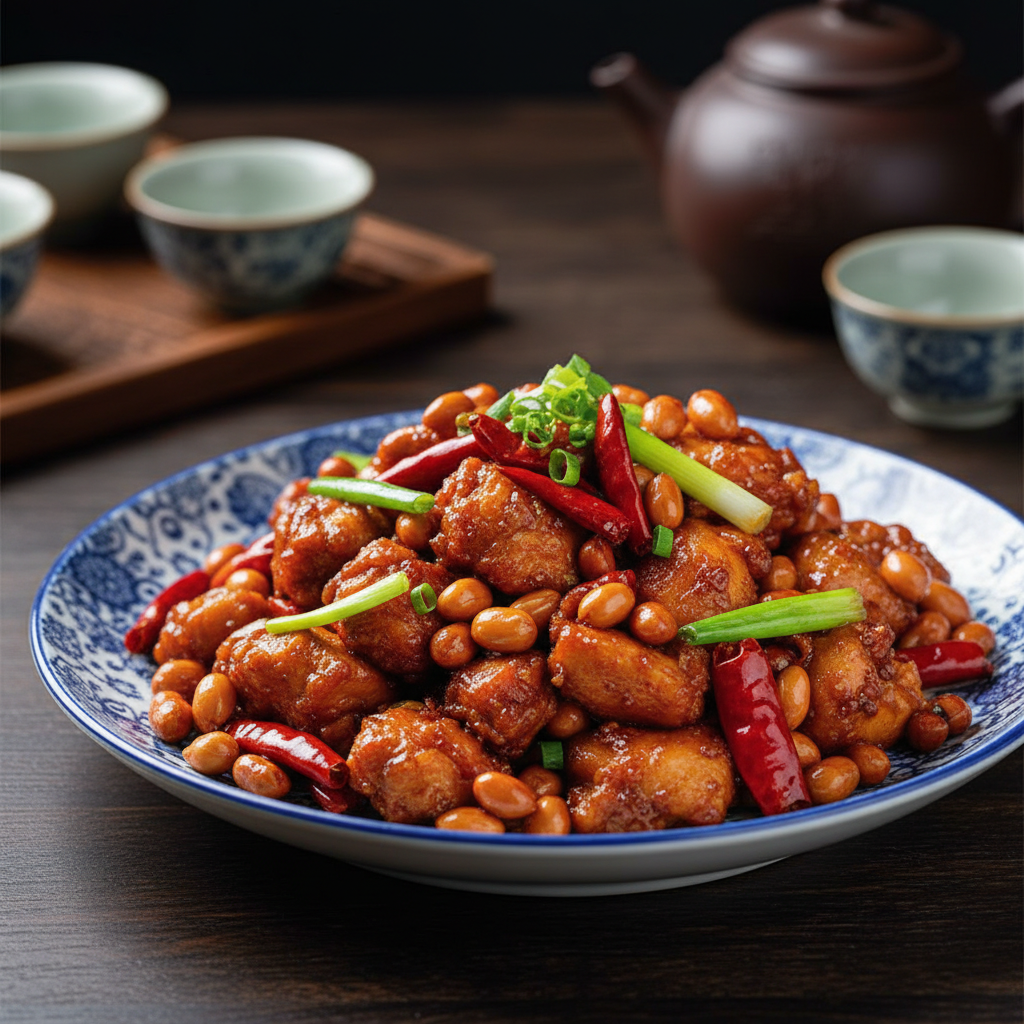
Kung Pao Chicken is a famous Chinese dish made with diced chicken, peanuts, vegetables, and chili peppers stir-fried together, embodying the spicy, numbing, and fragrant flavors of Sichuan cuisine. Its popularity has spread throughout China, giving rise to many regional variations.
Twice-Cooked Pork

Twice-Cooked Pork

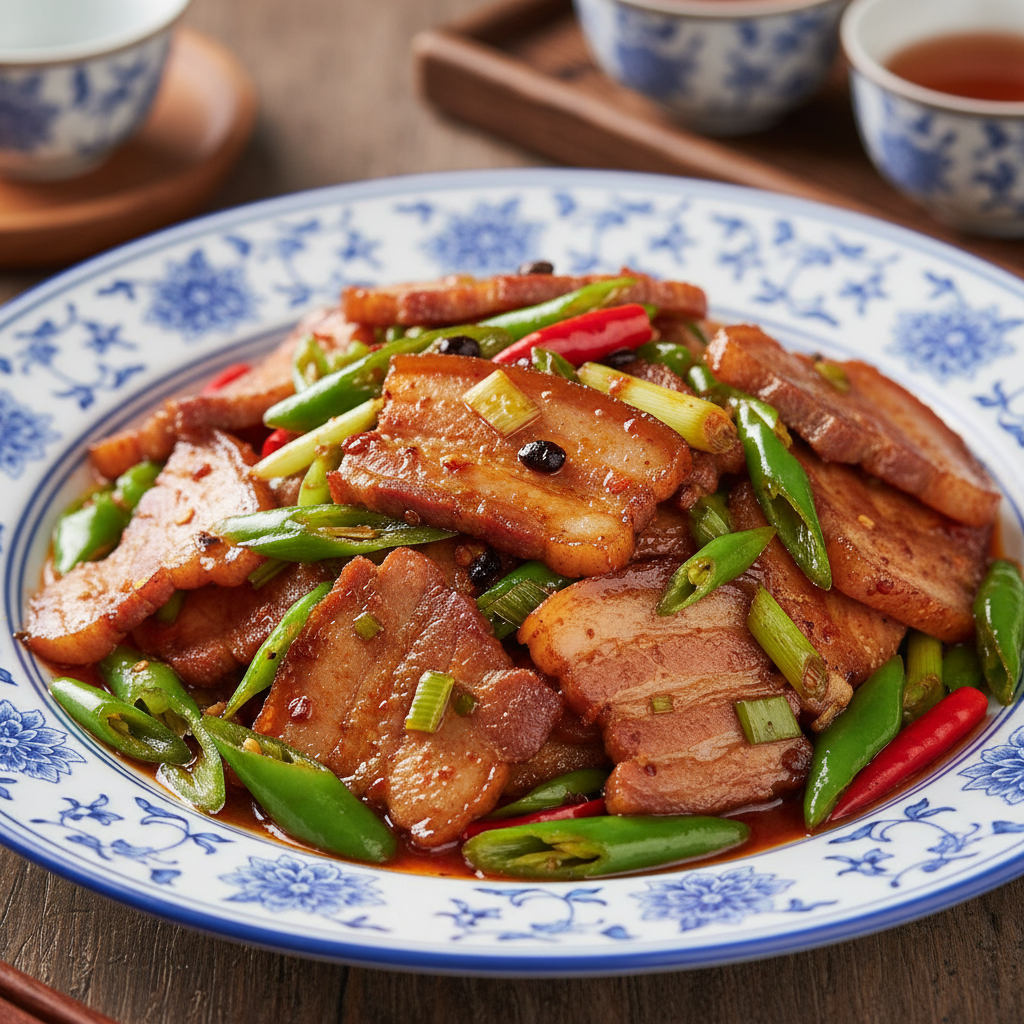
Twice-Cooked Pork (Hui Guo Rou) is a classic and famous dish in Sichuan cuisine, meaning 'meat returned to the pot'. It primarily uses pork as the main ingredient, prepared with a unique cooking method of first boiling and then stir-frying. The characteristics of this dish are its rich but not greasy fat, tender but not dry lean meat, bright red color, and mellow flavor, usually with a spicy, numbing, and savory taste. It is an essential dish for every household in Sichuan during festivals and holidays.
Zhong Shui Jiao

Zhong Shui Jiao

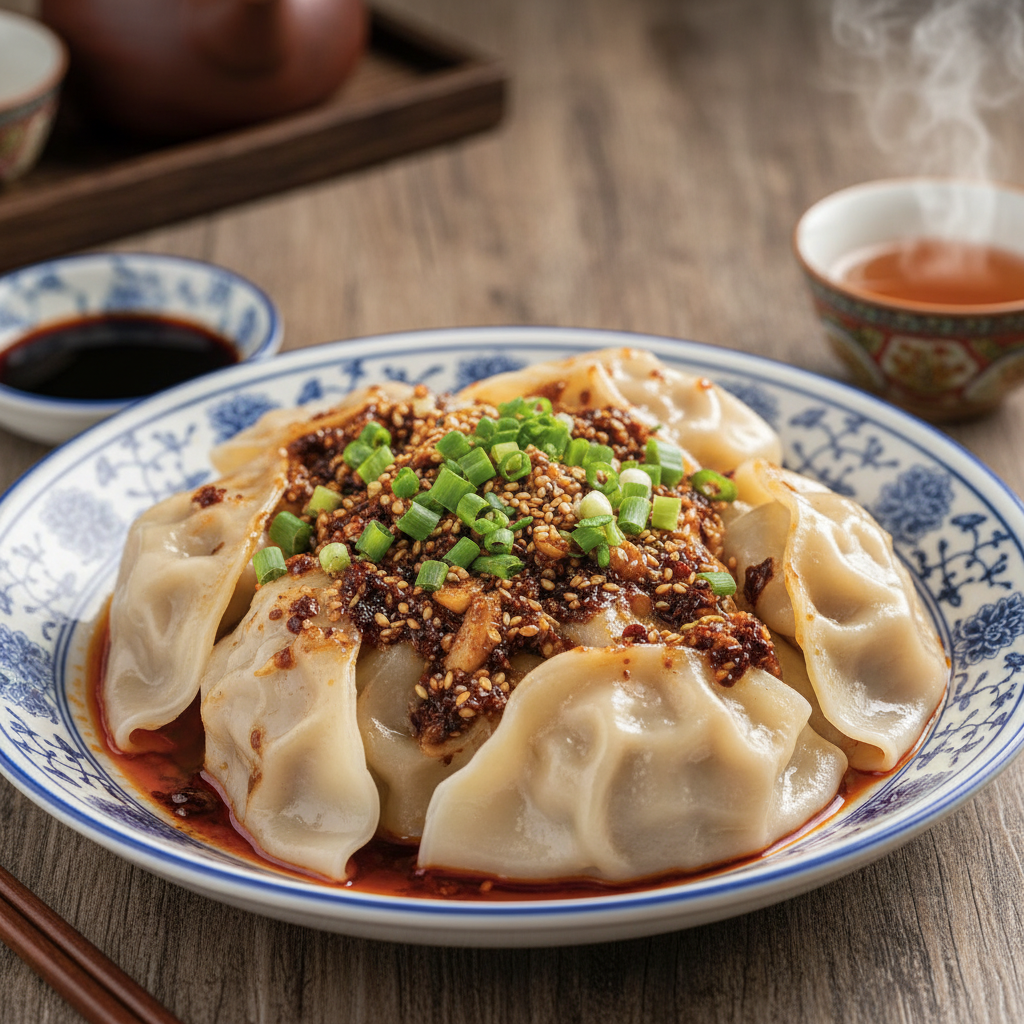
Zhong Shui Jiao is a famous traditional snack from Chengdu, Sichuan, known for its unique red oil seasoning and delicious pork filling. The dumplings have thin wrappers and generous fillings. After cooking, they are drizzled with a special red oil sauce, offering a spicy, savory, fresh, and aromatic taste, with a balanced sweet and salty flavor, making for a unique culinary experience.
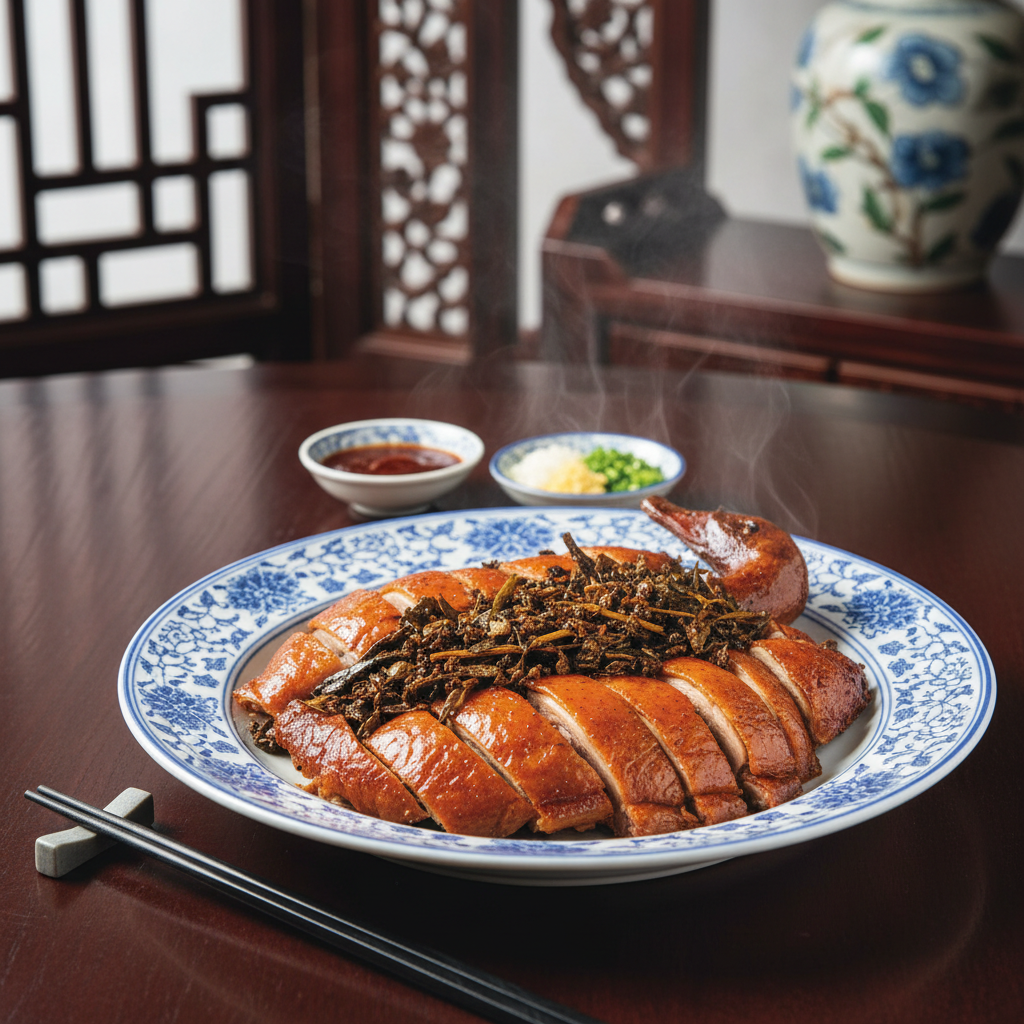
Smoked Tea Duck

Smoked Tea Duck

Zhangcha Duck is a classic Sichuan dish, primarily made from duck, prepared through multiple steps including marinating, smoking, steaming, and deep-frying. Its unique characteristic comes from being smoked with tea leaves and camphor leaves, which imparts a distinctive tea aroma and smoky flavor to the duck meat. This dish is complex to prepare and is often served at banquets or festive celebrations.
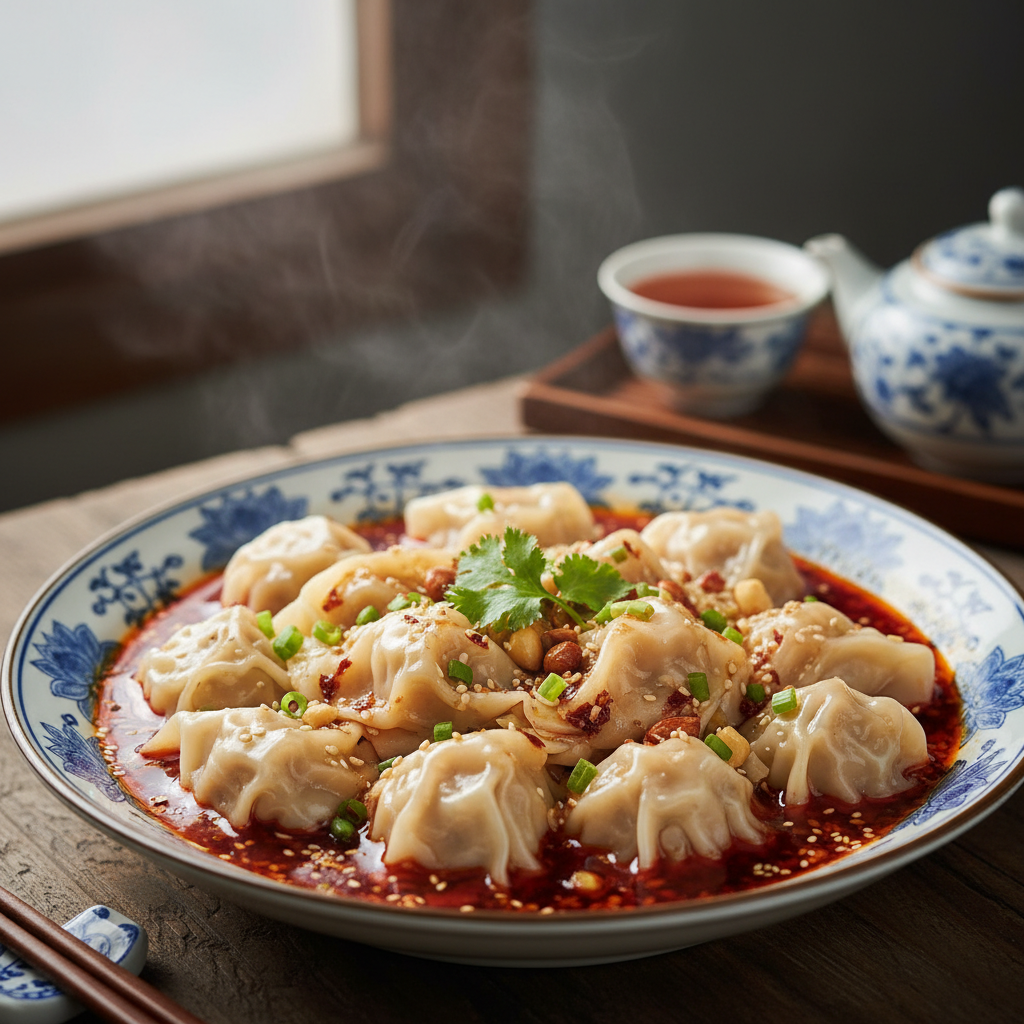
Long Chaoshou

Long Chaoshou

Long Chaoshou is a traditional snack from Chengdu, known for its thin wrapper, tender filling, delicious broth, and smooth, refreshing taste. With its unique preparation techniques and flavor, it has become a classic noodle dish in the Sichuan cuisine family.
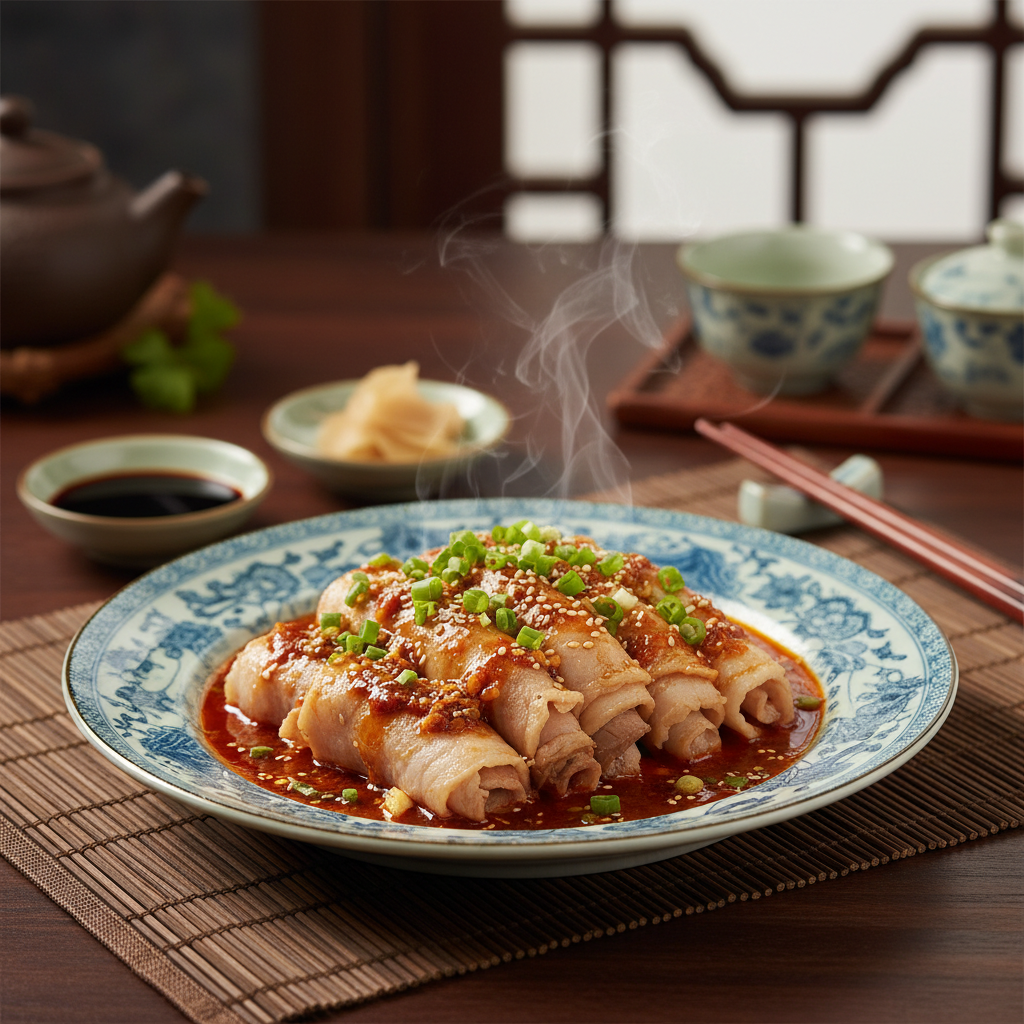
Sichuan Boiled Pork with Garlic Sauce

Sichuan Boiled Pork with Garlic Sauce

Sichuan Boiled Pork with Garlic Sauce is a traditional and famous dish in Sichuan cuisine, beloved for its unique flavor and texture. It primarily uses pork as the main ingredient, which is boiled, sliced, and then drizzled with a special garlic sauce. The taste is refreshing, fatty but not greasy, with a rich garlic aroma, and a spicy, numbing, and savory flavor.

Dandan Noodles

Dandan Noodles

Dandan noodles are a Chinese noodle dish originating from Sichuan. This dish is characterized by a spicy sauce, typically containing preserved vegetables (such as zhacai or yacai), chili oil, Sichuan peppercorns, minced meat, and chopped scallions, served over noodles. Dandan noodles can be eaten dry-mixed or as a noodle soup.

Mapo Tofu

Mapo Tofu

A traditional Sichuan dish, made primarily with tofu, cooked with ground beef, doubanjiang, and other seasonings. It has a spicy, numbing, and savory flavor, and is one of the classic representatives of Sichuan cuisine.

Bo Bo Chicken

Bo Bo Chicken

Bo Bo Chicken is a traditional famous snack originating from Leshan, Sichuan. It involves skewering various ingredients (such as chicken, vegetables, soy products, etc.) with bamboo sticks and soaking them in a spicy and numbing sauce primarily made with rattan pepper oil and chili oil, served cold or warm. Its characteristics are a numbing, spicy, fresh, and fragrant flavor with a rich texture.

Tian Shui Mian

Tian Shui Mian

Tian Shui Mian is a specialty snack from Chengdu, Sichuan Province, belonging to the Sichuan cuisine family. Its noodles are thick and chewy, paired with a variety of special seasonings such as sweet soy sauce, sesame paste, and chili oil, resulting in a unique flavor that is spicy, sweet, savory, and fresh, with a balanced saltiness.

Chuanbei Liangfen

Chuanbei Liangfen

Chuanbei Liangfen is a famous traditional snack from Nanchong City, Sichuan Province. It is primarily made from cold jelly (liangfen) prepared with pea or mung bean starch, mixed with a variety of seasonings such as special chili oil, soy sauce, vinegar, and minced garlic. It offers a spicy, savory, fresh, cool, and smooth taste, making it an excellent appetizer for summer.

Lai Tangyuan

Lai Tangyuan

Lai Tangyuan is a traditional famous snack from Chengdu, Sichuan, known for its soft, delicate skin and sweet, delicious filling. It is typically made from selected glutinous rice ground into flour, wrapped around sweet fillings such as sesame, peanuts, and walnuts, and served with its original broth after cooking. It is a dessert beloved by locals.

Steamed Pork with Rice Flour

Steamed Pork with Rice Flour

Steamed Pork with Rice Flour is a traditional Chinese dish, made by steaming skin-on pork belly, rice flour, and other seasonings. It has a soft, glutinous, and aromatic taste, with the rice flour absorbing the fat and flavor of the meat, creating a unique flavor.

Guaiwei Chicken

Guaiwei Chicken

Guaiwei Chicken is a distinctive cold dish from the Sichuan region, renowned for its unique 'strange flavor'. Its complex and versatile flavor profile combines numbing, spicy, sweet, salty, sour, umami, and aromatic notes, offering rich layers and a unique texture.

Fuqi Feipian

Fuqi Feipian

Fuqi Feipian is a famous Sichuan dish, typically served cold or at room temperature, made from thinly sliced beef and beef offal. Common ingredients in modern versions include beef heart, beef tongue, and beef tripe, seasoned with a generous amount of various spices, including Sichuan peppercorns. True to its Sichuan roots, it is known for its numbing and spicy flavor.