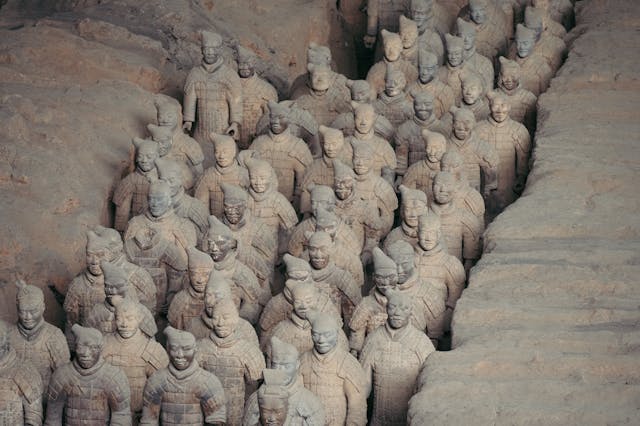
Xi'an is the capital of Shaanxi Province, the third most populous city in western China, and the most populous city in the northwest region. It has a long history and served as the capital of several important dynasties in China under the name Chang'an. It is one of the Four Great Ancient Capitals of China. Xi'an is also one of the starting points of the Silk Road and is home to world cultural heritage sites such as the Terracotta Army of Qin Shi Huang.
Spring and Autumn
¥400-800 ($60-120) per day
Subway, Bus, Taxi, Ride-hailing
3-5 days
The Terracotta Army Museum of Qin Shi Huang is located in Lintong District, Xi'an City, Shaanxi Province. It is the burial pit of the mausoleum of Qin Shi Huang, the first feudal emperor of China, and is known as the "Eighth Wonder of the World." The terracotta warriors unearthed here are in various forms and lifelike, and are important physical materials for studying the military, culture, and art of the Qin Dynasty.
The Mausoleum of the First Qin Emperor is the mausoleum complex of Qin Shi Huang, the first emperor of the Qin Dynasty, located in Lintong District, Xi'an, Shaanxi Province. It was built from 246 to 208 BC, lasting 38 years. The layout of the mausoleum is modeled after Xianyang, the capital of the Qin Dynasty, and is divided into inner and outer cities. The tomb chamber has not yet been excavated. Archaeological excavations have mainly focused on the burial pits around the mausoleum, including the famous Terracotta Army.
The Giant Wild Goose Pagoda is located in the southern part of Xi'an, Shaanxi Province, China. It is a magnificent Buddhist pagoda, originally built in 652 AD during the Tang Dynasty. It initially had five stories, and was rebuilt to seven stories in 704 AD during the reign of Wu Zetian. The existing brick exterior walls were added during the Ming Dynasty. The pagoda was mainly used to preserve the Buddhist scriptures and statues brought back from India by the Tang Dynasty monk Xuanzang. The Giant Wild Goose Pagoda is 64 meters high, and you can overlook the panoramic view of Xi'an from the top. It is located in the Da Ci'en Temple and was listed as a World Heritage Site in 2014 as part of the "Silk Roads: the Routes Network of Chang'an-Tianshan Corridor".
Xi'an City Wall, also known as Xi'an Ming City Wall, is the largest and most complete ancient city wall existing in China. It was built in the Hongwu period of the Ming Dynasty, based on the imperial city of the Tang Dynasty, and fully embodies the style of ancient Chinese city construction. The total circumference of the city wall is 13.74 kilometers, including a moat, drawbridge, gate tower, arrow tower, main tower, corner tower, watchtower, parapet, and crenellations, forming a complete set of military facilities. Since 1961, the Xi'an City Wall has been listed as a national key cultural relics protection unit and is also a national AAAAA-level tourist attraction, demonstrating the complete characteristics of city wall architecture in Chinese feudal society and serving as an important physical material for studying Chinese history and ancient architectural art. Visitors can cycle and stroll on the city wall, feeling the weight of history and the modern vitality of Xi'an.
Shaanxi History Museum is China's first large-scale modern national museum, located northwest of the Big Wild Goose Pagoda in Xi'an. It houses more than 370,000 cultural relics, including murals, paintings, pottery, coins, and bronzes, gold and silver wares. The museum was built between 1983 and 2001, and its architectural style imitates the Tang Dynasty.
The Xi'an Bell Tower, built in the 17th year of the Ming Dynasty Hongwu (1384), is one of the largest and most well-preserved bell towers in China, and is also a landmark building in Xi'an. It is located in the center of Xi'an, at the intersection of the four main streets of Xi'an, east, west, north, and south. The bell tower houses several large bronze bells cast in the Tang Dynasty. In ancient times, the bell tower was mainly used for telling time and publishing news. With the development of the times, its traditional functions have gradually withdrawn, and it is now open to the public as a national-level cultural relics protection unit for tourists to visit.
Huaqing Palace, also known as Huaqing Pool, is located at the foot of Lishan Mountain in Lintong District, Xi'an City, Shaanxi Province. It is a famous hot spring resort and historical and cultural scenic spot in China. With its beautiful terrain, pleasant climate, and a long history of nearly three thousand years, it was once the imperial palace of many ancient Chinese emperors, especially known for the love story of Emperor Xuanzong of Tang and Yang Guifei. It is also the site of the Xi'an Incident in 1936. Huaqing Palace is now a national AAAAA-level tourist attraction.
Daming Palace National Heritage Park, located in Xi'an, Shaanxi Province, is the royal palace complex of the Tang Dynasty, which served as the residence of the Tang Dynasty emperors for more than 220 years. It is a national heritage park of China and a part of the UNESCO World Heritage Site "Silk Roads: the Routes Network of Chang'an-Tianshan Corridor". The park covers an area of more than 4,800 acres, which is 3.5 times the size of the Forbidden City, 3 times the size of the Palace of Versailles, and 13 times the size of the Louvre. Important buildings in the park include Danfeng Gate, Hanyuan Hall, Xuanzheng Hall, and Zichen Hall. These halls were the core places for the Tang Dynasty to hold national ceremonies, handle government affairs, and the emperor's daily life, demonstrating the magnificent architectural style and imperial spirit of the prosperous Tang Dynasty.
The Great Ci'en Temple is located in Yanta District, Xi'an City, Shaanxi Province, and is the ancestral temple of the Faxiang School of Chinese Buddhism. It is famous for its iconic building, the Giant Wild Goose Pagoda, which was originally presided over and built by Master Xuanzang, whose journey to the West to obtain Buddhist scriptures inspired the novel 'Journey to the West'. The Great Ci'en Temple, along with Daxingshan Temple and Jianfu Temple, are known as the three great scripture translation centers of the Tang Dynasty. The temple was first built in the 22nd year of Zhenguan in the Tang Dynasty (648 AD) by Emperor Gaozong of Tang to commemorate his mother, Empress Wende. The temple was rebuilt in the 2nd year of Chenghua in the Ming Dynasty (1466 AD). In 1961, it was listed as a Major Historical and Cultural Site Protected at the National Level. In 1983, it was designated by the State Council as a National Key Buddhist Temple in Han Chinese Areas. In early 2001, it was rated as a National AAAA-level Tourist Attraction. In 2014, the Giant Wild Goose Pagoda was inscribed on the UNESCO World Cultural Heritage List.
Tang Paradise is a large theme park in Xi'an, the capital of Shaanxi Province in northwestern China. The park is located near the site of the former Furong Garden of Chang'an, the capital of the Tang Dynasty. The park contains many buildings, plazas, and gardens that incorporate traditional Tang Dynasty Chinese architectural features, such as upturned roofs and flying eaves. Some featured buildings are named after historical sites or buildings. The park is one of several modern reconstructions of ancient sites in Shaanxi Province that incorporate anachronistic styles and features, most notably the extensive use of concrete paving. The park is beautifully landscaped, covering 165 acres (0.67 square kilometers) around a weeping willow-lined lake, and evokes the imagery of classical Chinese landscape paintings. In the evenings, tens of thousands of visitors can enjoy spectacular lake shows featuring lasers, water screen projections, fountains, and other special effects. The show was created by the British company LCI Projects Ltd.
Xi'an Museum is located on Youyi West Road, Beilin District, Xi'an City, Shaanxi Province, and officially opened to the public on May 18, 2007. The total investment is 220 million RMB, covering an area of 160,000 square meters, with a building area of more than 60,000 square meters. The overall architecture is laid out in a garden style, consisting of the museum, the Small Wild Goose Pagoda, the Jianfu Temple historical and cultural area, and the museum garden. In 2012, Xi'an Museum was rated as a national first-class museum by the State Administration of Cultural Heritage. The museum exhibition area is more than 16,000 square meters, with an exhibition area of more than 5,000 square meters, and was designed by Zhang Jinqiu, an academician of the Chinese Academy of Engineering. The museum has a collection of 130,000 cultural relics, including more than 14,400 precious cultural relics above the national third-class level. Jianfu Temple was a famous royal temple in the Tang Dynasty. Most of it was destroyed in the wars at the end of the Tang Dynasty, leaving only the Small Wild Goose Pagoda. The Small Wild Goose Pagoda, originally named Jianfu Temple Pagoda, is 43.4 meters high and has a base length of 11.38 meters, retaining the style and characteristics of the early Tang Dynasty. In 1961, it was announced by the State Council as the first batch of national key cultural relics protection units. The Tang Dynasty astronomer Yi Xing once practiced Buddhism in the temple with Subhakarasimha and Vajrabodhi.
Grand Tang Dynasty Ever Bright City is located in Yanta District, Xi'an City, Shaanxi Province. It is a pedestrian street with the prosperous Tang Dynasty culture as its background, integrating culture, tourism, and commerce. It is famous for its magnificent Tang-style architecture, exquisite sculptures, brilliant night scenes, and rich cultural performances. It is an excellent place to experience the prosperity of the Tang Dynasty. Tourists can enjoy various imitation Tang buildings, cultural landscapes, taste authentic food, and watch wonderful street art performances. Especially at night, the lights are brilliant, the colors are dazzling, and the atmosphere is full.

Xi'an Muslim Quarter is a snack street and commercial area located in the center of Xi'an, China, adjacent to the Bell Tower and Drum Tower. It is bordered by Shehuo Street to the east, Zaoyuan Lane to the west, West Avenue to the south, and Hongfu Street to the north. The area has ten mosques, the largest of which is the Great Mosque, which is listed as a national protected cultural relic for its traditional architecture and religious significance. According to the 2010 census, the area has a population of about 60,000, more than half of whom are Hui people, and the rest are Han Chinese. In the past few decades, Xi'an Muslim Quarter has become a tourist attraction known for its culture and cuisine, attracting tourists from all over the world every year. The history of the Muslim Quarter can be traced back to the Tang Dynasty, when Muslim merchants came and gathered in Chang'an (today's Xi'an) through the Silk Road. Since then, from the Five Dynasties to the Song Dynasty, the Muslim population began to settle near Daxuexi Street and Huajue Great Mosque. Later, in the Ming Dynasty, the town government of Xi'an was located next to the Drum Tower, a traditional building used for timing, which was very close to the Muslim Quarter. This gathered a large number of wealthy merchants, thus cultivating a commercial lifestyle mainly dominated by Muslims within the Muslim Quarter. After the Ming Dynasty, the Qing Dynasty formed the pattern of "Three Temples and Thirteen Workshops". Although the Shaanxi-Gansu Hui Revolt in the late Qing Dynasty destroyed a large number of Muslim communities in Northwest China, the Muslim Quarter of Xi'an was unaffected due to its highly commercialized status and protected location within the city walls. The Middle Temple and the West Temple were built in 1919 and 1920 respectively, further developing the Muslim Quarter into a pattern of "Nine Temples".

Qinglong Temple, also known as Stone Buddha Temple, is a Buddhist temple located in Xi'an, Shaanxi, China. It originated in the Sui Dynasty in 582 AD. During the mid-Tang Dynasty, Esoteric Buddhism master Huiguo taught here, and his Japanese disciple Kukai introduced it to Japan, making Qinglong Temple the birthplace of Sino-Japanese Esoteric Buddhism. The original temple was destroyed in 1086, and the existing buildings were rebuilt in the 1980s. Qinglong Temple is known for its profound historical and cultural heritage and the beautiful cherry blossoms in spring.
Guangren Temple, also known as Guangren Lama Temple, is located in Lianhu District, Xi'an City, Shaanxi Province, China. It is the only Tibetan Buddhist temple in Shaanxi Province. The temple was built by Emperor Kangxi in 1705 (the forty-fourth year of Kangxi) to provide accommodation and venues for Buddhist activities for Tibetan Buddhist leaders who came to Beijing to meet the emperor. Guangren Temple is a national key cultural relic protection unit and one of the key temples in the Han Chinese Buddhist area. The temple faces north from south as a whole. The mountain gate, the Hall of the Four Heavenly Kings, the Longevity Hall, the Dharma Protector Vajra Hall, the Grand Hall of the Great Sage, the Reception Room, the God of Wealth Hall, the Thousand Buddha Hall, the Sutra Collection Pavilion, and the Ten Thousand Buddha Hall are arranged in sequence on the central axis. The buildings in the temple are exquisite. Among them, the roof of the mountain gate has a sculpture of "Two Deer Listening to the Sutra", which is a symbol of Tibetan Buddhist temples. The Guanyin Hall enshrines the Thousand-Hand Guanyin, as well as Maitreya Buddha, Wei Tuo, and the Four Heavenly Kings. The Dharma Protector Vajra Hall enshrines Yamantaka, Mahakala, Yama Dharma King, and Shri Devi. The Longevity Hall enshrines Amitayus, White Tara, Bhaisajyaguru, Ksitigarbha Bodhisattva, Ushnishavijaya, Avalokiteshvara with four arms, and Akasagarbha Bodhisattva. The Green Tara Hall enshrines Green Tara, Manjushri Bodhisattva, and Samantabhadra Bodhisattva. The Thousand Buddha Hall enshrines Tsongkhapa and his disciples, as well as the first Panchen Lama. The walls of the hall are inlaid with thousands of small gilded Tsongkhapa statues.
Xi'an Expo Park, also known as the 2011 Xi'an International Horticultural Exposition, is located in Guangyuntan, Chanba Ecological District, Baqiao District, Xi'an. It was the venue for the 2011 International Horticultural Exposition. The park covers an area of 418 hectares, including 188 hectares of water area. It is a comprehensive park integrating ecological sightseeing, science education, cultural experience, and leisure and entertainment. The park has main buildings such as Chang'an Tower, Nature Museum, and Guangyun Gate, as well as many domestic and foreign horticultural exhibition gardens, fully demonstrating the essence of world horticulture and the charm of traditional Chinese garden culture. With the theme of "Eternal Chang'an, Creative Nature - Harmonious Coexistence of City and Nature", the Expo Park is an important ecological landscape and city card of Xi'an.
Yongxingfang is a distinctive food and culture block located in Xi'an, Shaanxi Province, China, aiming to showcase Shaanxi's intangible cultural heritage cuisine, folk culture, and traditional handicrafts. It brings together traditional delicacies from various cities and regions in Shaanxi, allowing tourists to taste authentic "Shaanxi flavors" in one go, such as Qishan Saozi Noodles, Lantian Buckwheat Noodles, and Zhen'an Potato Cakes. The architectural style of the block is simple and full of Guanzhong folk customs. There are also intangible cultural heritage performances and cultural experience activities, making it a tourist destination integrating food, culture, and leisure.
Xi'an Tang Imperial City Wall Hanguang Gate Site Museum is located inside the Hanguang Gate of Xi'an City Wall. It is a museum built on the basis of the Hanguang Gate site of the Tang Dynasty. By displaying the Hanguang Gate city wall and gate site, as well as unearthed cultural relics, the museum shows tourists the historical features and architectural characteristics of the Tang Dynasty's Chang'an city gate. It is an important place to understand the Tang Dynasty's city defense system and Chang'an city culture.

The Han Jing Emperor Yangling Mausoleum Museum is a large garden-style museum built on the mausoleum of Emperor Jing of the Western Han Dynasty, Liu Qi, and his Empress Wang, which is a joint burial with separate tombs. It is the only underground heritage museum in China. It aims to protect cultural relics, study historical culture, and promote the national spirit, integrating archaeology, scientific research, display, education, and tourism. Yangling is the joint mausoleum of Emperor Jing of the Han Dynasty, Liu Qi, and his Empress Wang. A large number of precious cultural relics are buried in the mausoleum, including pottery figurines, pottery sculptures, and silk fabrics, reflecting the social life and funeral system of the Western Han Dynasty.
Xi'an City God Temple was built in the 20th year of Hongwu in the Ming Dynasty (1387). It is one of the important City God Temples in the Ming Dynasty and one of the most well-preserved City God Temple complexes in China. It carries a rich Taoist culture and is an important physical material for studying the architecture, sculpture, and painting art of the Ming and Qing Dynasties. The main buildings in the temple include the Paifang, the Mountain Gate, the Offering Hall, the Main Hall, and the Sleeping Hall. The layout is rigorous, the momentum is magnificent, and it has important historical and artistic value. Every year, it attracts many tourists and believers to visit and pray for blessings.
Xi'an Beilin Museum, also known as the Beilin or Stele Forest, is located in Beilin District, Xi'an City. It is a museum in Northwest China that collects, studies, and displays steles, epitaphs, and stone carving artworks. The museum was founded in 1087 and was converted from a Confucian Temple. The museum's collection has become increasingly rich. In 1944, it became the main museum in Shaanxi Province. In 1992, it was officially renamed "Xi'an Beilin Museum" due to its large collection of steles. It currently has more than 3,000 collections, divided into seven exhibition rooms, displaying precious inscriptions of Chinese calligraphy, painting, and historical documents. Most of the exhibits are Tang Dynasty inscriptions, making it one of the largest stele collections in China. The museum also sells rubbings of steles.
Xi'an Banpo Museum is an archaeological museum located in Baqiao District, Xi'an City, Shaanxi Province, China. The museum houses artifacts unearthed from the Banpo site and offers visits to excavated buildings, as well as exhibiting several reconstructed houses designed to recreate a Neolithic settlement.
The Tang West Market Museum is a non-state-owned museum located in Xi'an, Shaanxi Province, China. It relies on the Silk Road site of the Tang West Market, which is protected on its original site, to showcase the prosperity of the West Market during the Tang Dynasty and the cultural exchange of the Silk Road.
Xi'an Botanical Garden is one of the oldest comprehensive botanical gardens in Northwest China with a rich collection of plant species, and an important part of the Chinese Academy of Sciences botanical garden system. It is located in Yanta District, Xi'an, covering a vast area, and has many specialized gardens, such as Qinling Garden, Peony and Paeonia Garden, Forgotten Garden, Children's Garden, Silk Road Garden, Rock Garden, Four Seasons Fragrance Garden, Peach Garden, etc., showcasing a rich plant diversity.
The Xi'an Drum Tower is located in the center of Xi'an, Shaanxi Province, China, and is one of Xi'an's iconic buildings, facing the Bell Tower. It was built in the Hongwu period of the Ming Dynasty (1380 AD) and stands majestically in the city center, overlooking the beautiful scenery of Xi'an. The Drum Tower is located in an area mainly inhabited by the Hui people and is named after the huge drum placed inside. Opposite the morning bell of the Bell Tower, the evening drum of the Drum Tower was used to tell the time, marking the end of the day. Many large drums are hung on the first floor of the Drum Tower, each decorated with exquisite Chinese characters, symbolizing good luck. There is also a Drum Culture Museum in the building, displaying various historical drums, and there are drum performances every day. The top of the Drum Tower offers a panoramic view of the city.
Chijian Wanshou Baxian Palace, also known as Baxian Temple, is located at No. 189 Changlefang, Beilin District, Xi'an City. It is one of the famous Taoist palaces in China and the largest existing Taoist temple in Northwest China. Legend has it that the Eight Immortals once appeared here, hence the name. The palace enshrines the Taoist Eight Immortals and is an important religious and cultural site for believers to worship and tourists to visit.
The Great Mosque of Xi'an is one of the oldest mosques in China and one of the four major mosques in China. It combines traditional Chinese architectural styles with Islamic art elements. The temple has halls, pavilions, carved beams and painted buildings, with a rigorous layout and elegant environment. It is an important physical material for studying the development history of Islam in China.
The Small Wild Goose Pagoda is an important Buddhist pagoda located in Xi'an, Shaanxi Province, China, and is mentioned alongside the Big Wild Goose Pagoda. It was built in the Tang Dynasty (707-709 AD), originally 45 meters high, and was damaged in the 1556 Shaanxi earthquake. It is now 43 meters high and has fifteen floors. The pagoda is known for its brick structure, square base, and unique interior design. The Small Wild Goose Pagoda, along with the Big Wild Goose Pagoda and other sites along the Silk Road, was inscribed on the UNESCO World Heritage List in 2014 as the 'Silk Roads: the Routes Network of Chang'an-Tianshan Corridor'. It is part of the Jianfu Temple, an important Buddhist scripture translation center during the Tang Dynasty. The pagoda houses the famous Jin Dynasty 'Morning Bell of the Wild Goose Pagoda', whose bell sound is known as one of the 'Eight Scenic Spots of Guanzhong'.
Jianfu Temple, also known as the Small Wild Goose Pagoda, is located on Youyi West Road, Xi'an, Shaanxi Province, China. It is a famous Buddhist temple of the Tang Dynasty, known for the Small Wild Goose Pagoda within it. The temple was originally the residence of Li Xian, Emperor Zhongzong of Tang, before his ascension to the throne. It was converted into a temple in 684 AD (one hundred days after the death of Emperor Gaozong of Tang) to commemorate Emperor Gaozong. During the reign of Wu Zetian, it was renamed Jianfu Temple and received an imperial inscription. The famous Small Wild Goose Pagoda was built during the Jinglong period of the Tang Dynasty (707-710 AD), initially located outside the temple gate but still part of Jianfu Temple. During the heyday of the Tang Dynasty, Jianfu Temple prospered along with the Great Ci'en Temple. However, during the Huichang Persecution of Buddhism, Jianfu Temple was only allowed to retain 20 monks for daily maintenance and suffered heavy damage. During the wars at the end of the Tang Dynasty, most of the temple was destroyed, and only the Small Wild Goose Pagoda was preserved. Historical records from the Yuanyou period of the Northern Song Dynasty (1086-1094 AD) show that Jianfu Temple had been moved to the courtyard of the Small Wild Goose Pagoda and integrated with the Small Wild Goose Pagoda. In the Ming Dynasty, Jianfu Temple was revitalized and underwent five large-scale renovations, basically retaining its original layout. In 1426, Zang Seng Shaosiji from Hongjue Temple in Xiningwei was ordered to preside over Jianfu Temple. He vowed to rebuild the dilapidated temple and completed it in 1449. Emperor Yingzong of Ming bestowed the name "Chici Jianfu Temple". Jianfu Temple was repaired many times during the Qing Dynasty, with the largest renovation occurring in the thirty-first year of Kangxi (1692). The Sutra Library and the South Mountain Gate were also added in the late Qing Dynasty.
Qujiang Pool Relics Park is located in Yanta District, Xi'an City, Shaanxi Province. It is an open cultural theme park built on the site of the Qujiang Pool, a royal garden in the Tang Dynasty. The park takes the Qujiang Pool water system as its core, integrating historical culture, natural scenery, and modern leisure functions. The park is full of green trees, rippling water, and pavilions and terraces are scattered in a well-proportioned manner. It is an important place for citizens to relax and entertain, and for tourists to experience the cultural atmosphere of the Tang Dynasty. The park preserves many historical sites and has sculptures, squares and other landscapes, showing the important position of Qujiang Pool in history.
Gao's Grand Courtyard, located at No. 144 Beiyuanmen, Xi'an, is an ancient residence with a history of more than 400 years. It is a valuable physical material for studying Guanzhong folk culture, architectural art, and living styles. This was once the former residence of Gao Yuesong, a famous figure and second-place scholar in the late Ming and early Qing dynasties, so it is also known as the "Second-Place Scholar's Mansion." The courtyard covers a large area and has a unique architectural style, integrating the architectural features of the Ming and Qing dynasties. It has both the magnificent atmosphere of northern courtyards and the exquisite elegance of Jiangnan gardens. Pavilions, terraces, and painted beams and carved pillars in the courtyard show the weight of history and the charm of culture everywhere. Here, tourists can not only appreciate the exquisite ancient buildings, but also watch shadow puppet shows, Huayin Laoqiang and other intangible cultural heritage performances, and feel the rich Guanzhong folk customs.
Defu Lane is located in Nanyuanmen, Beilin District, Xi'an. It is a distinctive street mainly featuring bars, cafes, and teahouses. It brings together many shops with different styles and is a popular destination for nightlife and leisure in Xi'an.
Xi'an Shuyuanmen Pedestrian Street is located in Nanyuanmen Street, Beilin District, Xi'an. It is a distinctive commercial street full of rich historical and cultural atmosphere. It mainly sells stationery, calligraphy and paintings, antiques, rubbings, etc. It is an excellent place to experience Guanzhong Academy culture and feel the atmosphere of traditional art. The street is lined with antique buildings, winding bluestone roads, and antique archways and dazzling shops attract many tourists and culture enthusiasts.

Guanzhong Academy is located on Xi'an Shuyuanmen Pedestrian Street. It is one of the important academies in ancient China, carrying a profound historical and cultural heritage, and is an important place to understand the traditional education and culture of the Guanzhong area.
Revolution Park is located at No. 53, West Fifth Road, Xincheng District, Xi'an City, Shaanxi Province. It is an urban park integrating commemoration and leisure. The park was built to commemorate the Xinhai Revolution and the revolutionary martyrs who sacrificed in Xi'an. There are rich historical monuments in the park, such as the Monument to the Unknown Martyrs of the Xinhai Revolution, the Revolution Pavilion, and the statue of Martyr Liu Zhidan. At the same time, the park also has recreational facilities and leisure areas, which is an important place for citizens to enjoy daily leisure, fitness, and feel the historical culture.

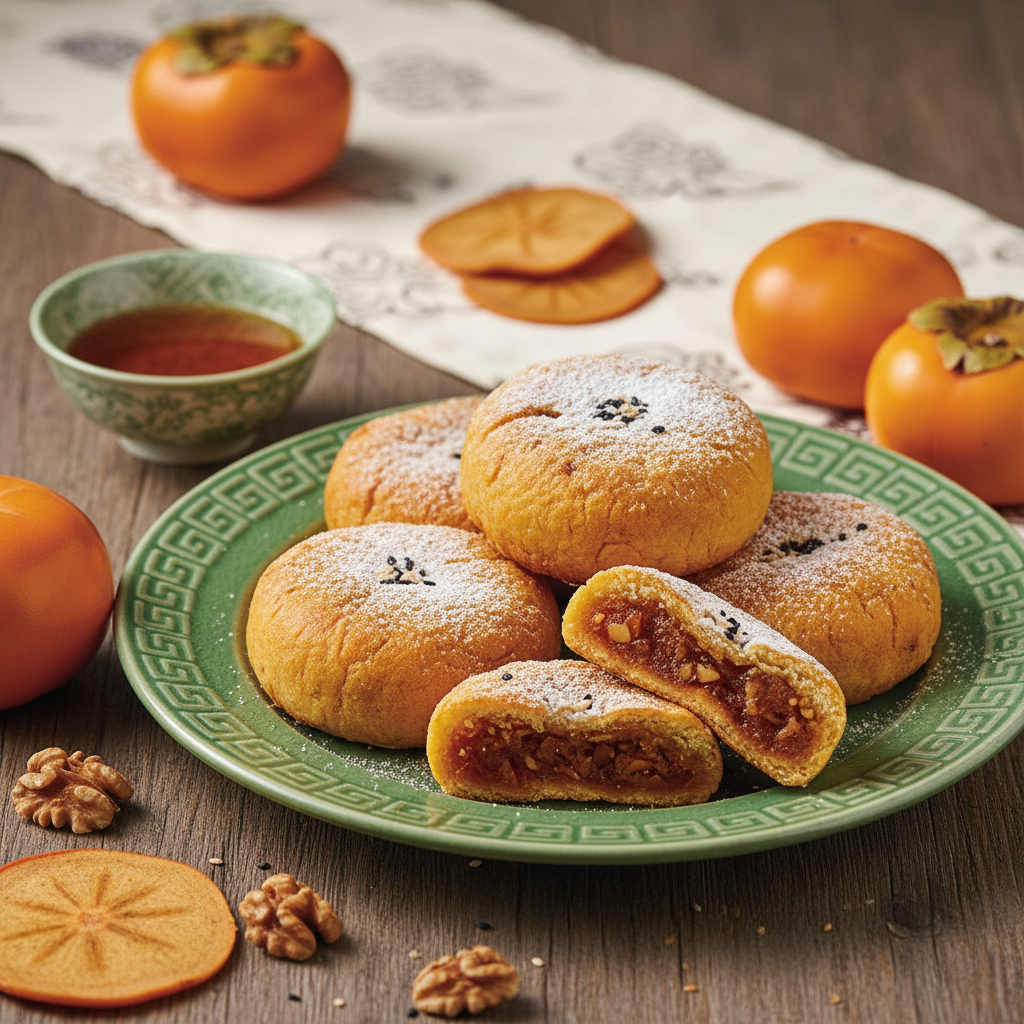
Dried persimmon is a traditional snack made by peeling fresh persimmons, sun-drying them, and pressing them flat. It has a sweet and chewy texture with the unique fragrance of persimmon, and is a common snack and local specialty in autumn and winter. Depending on the production process, some dried persimmons may have a layer of white sugar frost on the outside, known as 'persimmon frost'.
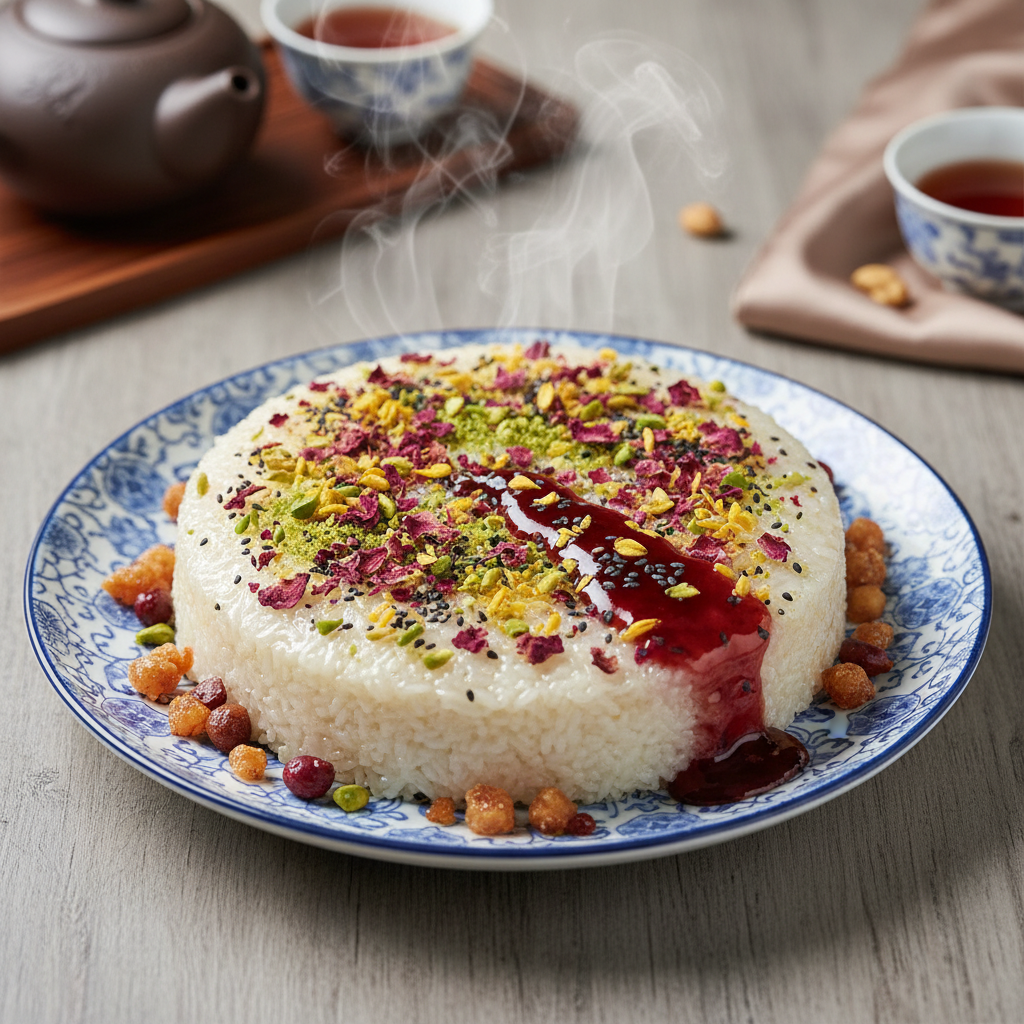
Jing Gao is a distinctive snack from Xi'an, Shaanxi province. It is primarily made from glutinous rice flour, steamed, and has a sweet, soft, and glutinous texture. It gets its name from its small, exquisite, and mirror-like shape.
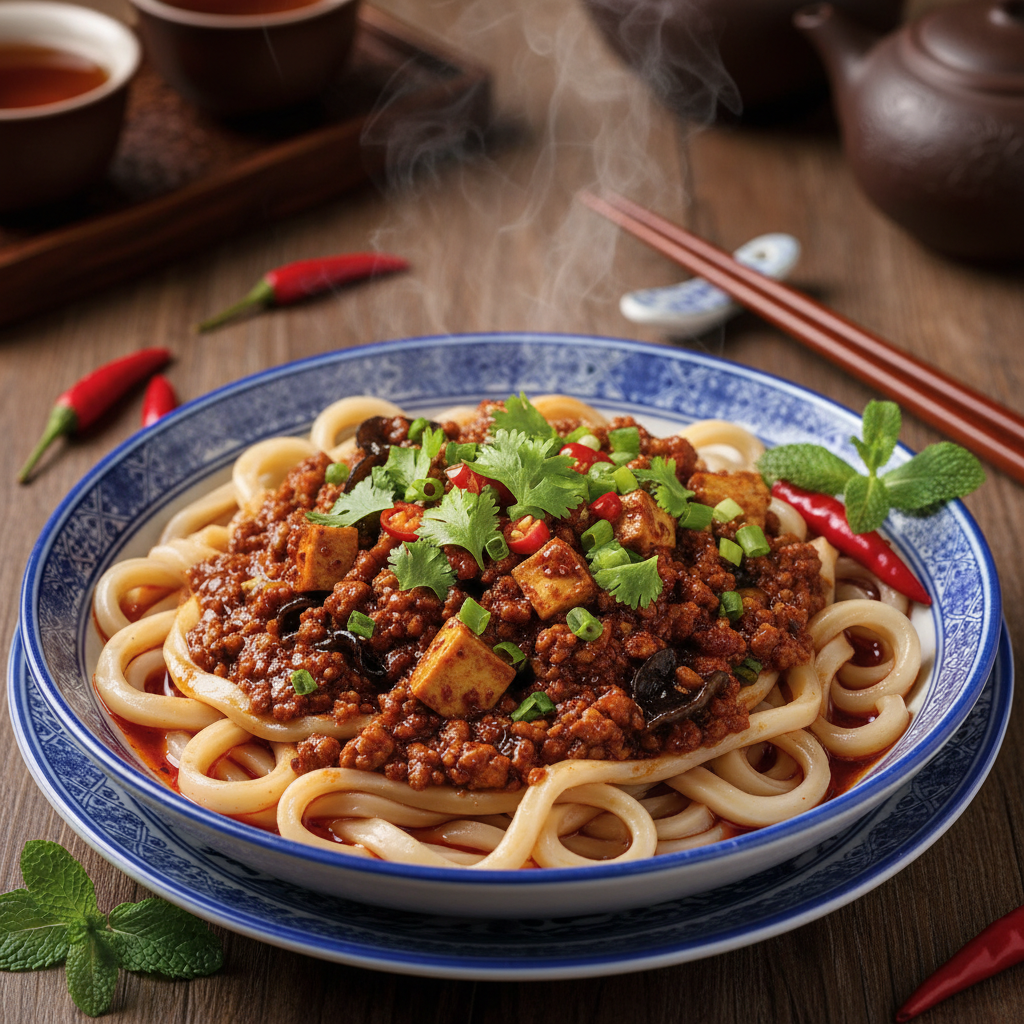
Sauteed Diced Pork Noodles is one of Shaanxi's traditional noodle dishes, famous for its thin, chewy noodles, sour, spicy, and savory broth, and a rich variety of 'saozi' (toppings). It is a specialty of Shaanxi Province, with Qishan Sauteed Diced Pork Noodles being the most renowned.
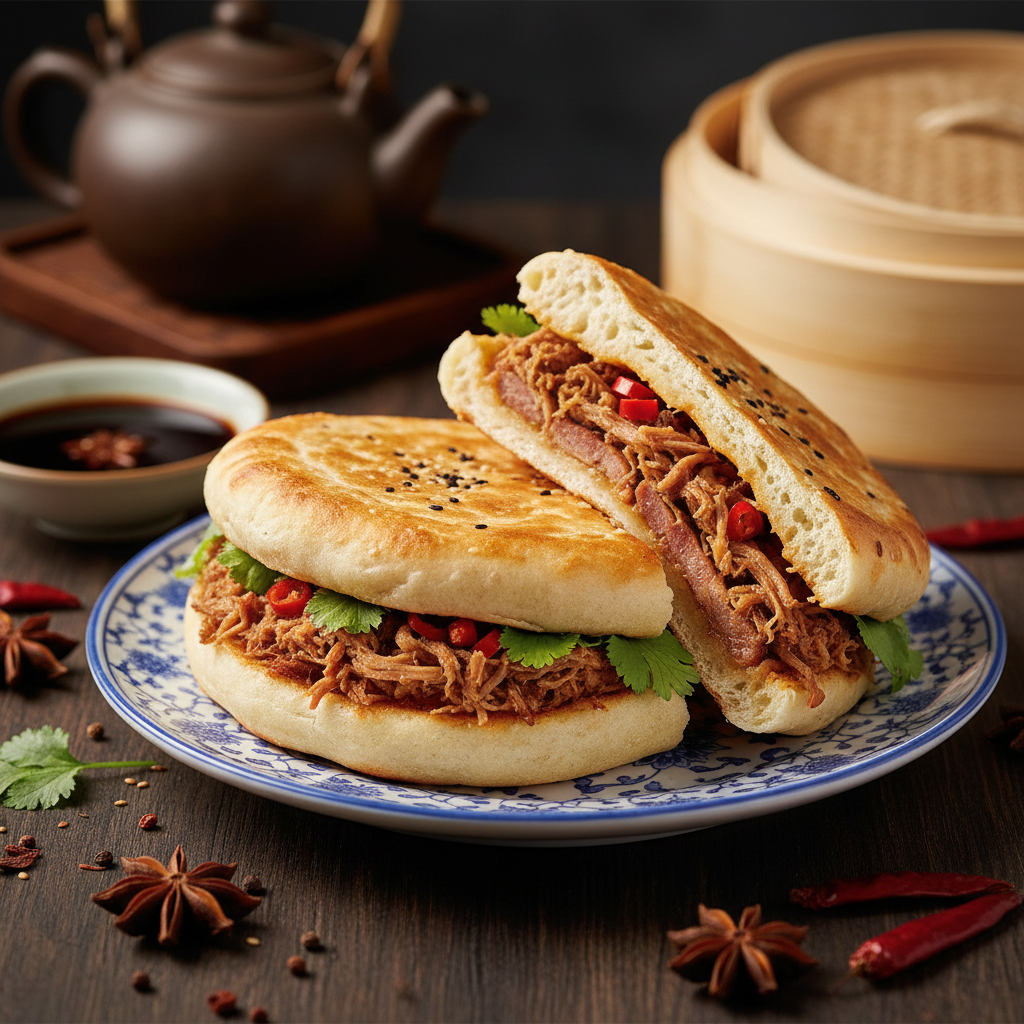
Roujiamo is a street food originating from Shaanxi, typically consisting of stewed meat (most commonly pork, beef in Xi'an Muslim areas, and lamb in Gansu) that has been chopped or shredded and stuffed into a 'Baiji Mo' (flatbread). It is considered a Chinese snack similar to Western hamburgers.
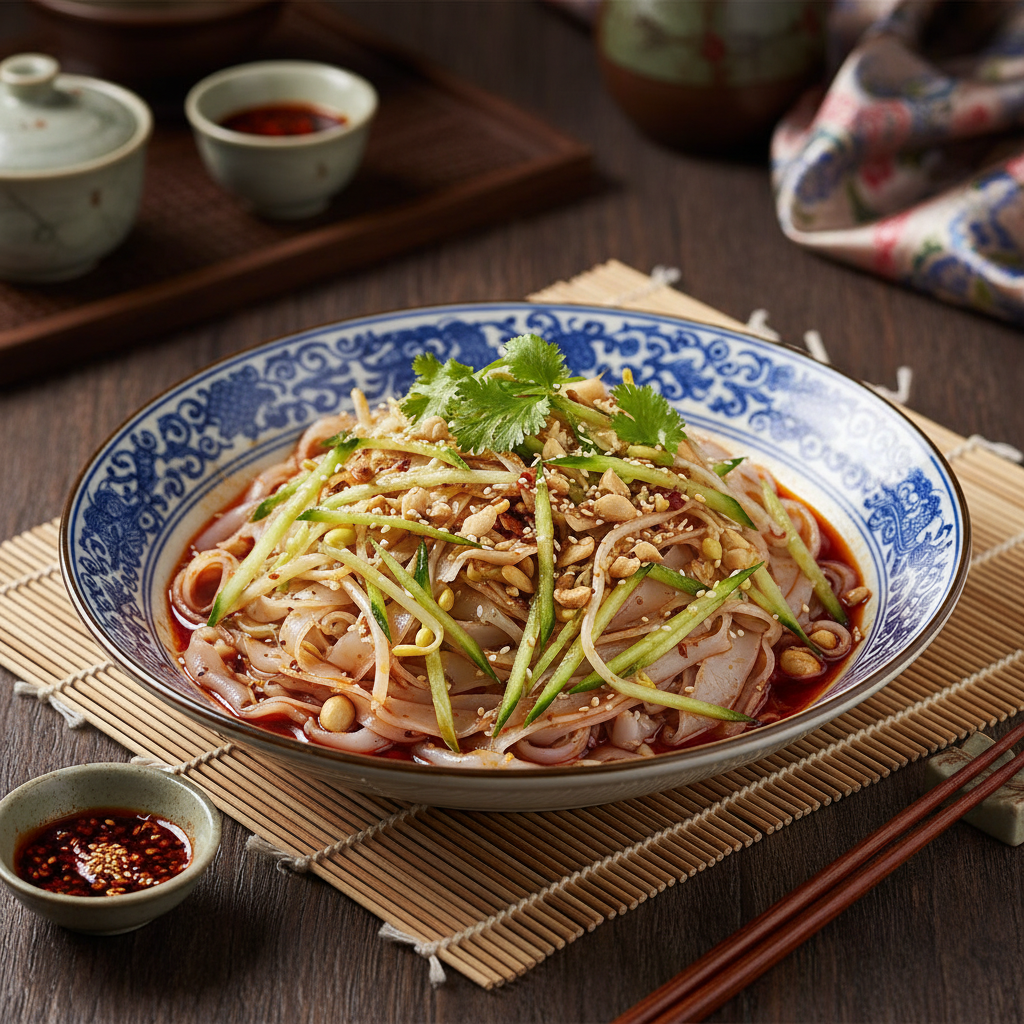
Liangpi is a Chinese snack, a cold noodle dish made from wheat flour or rice flour. It is a specialty dish originating from Xi'an, part of Shaanxi cuisine, and is now popular throughout China.
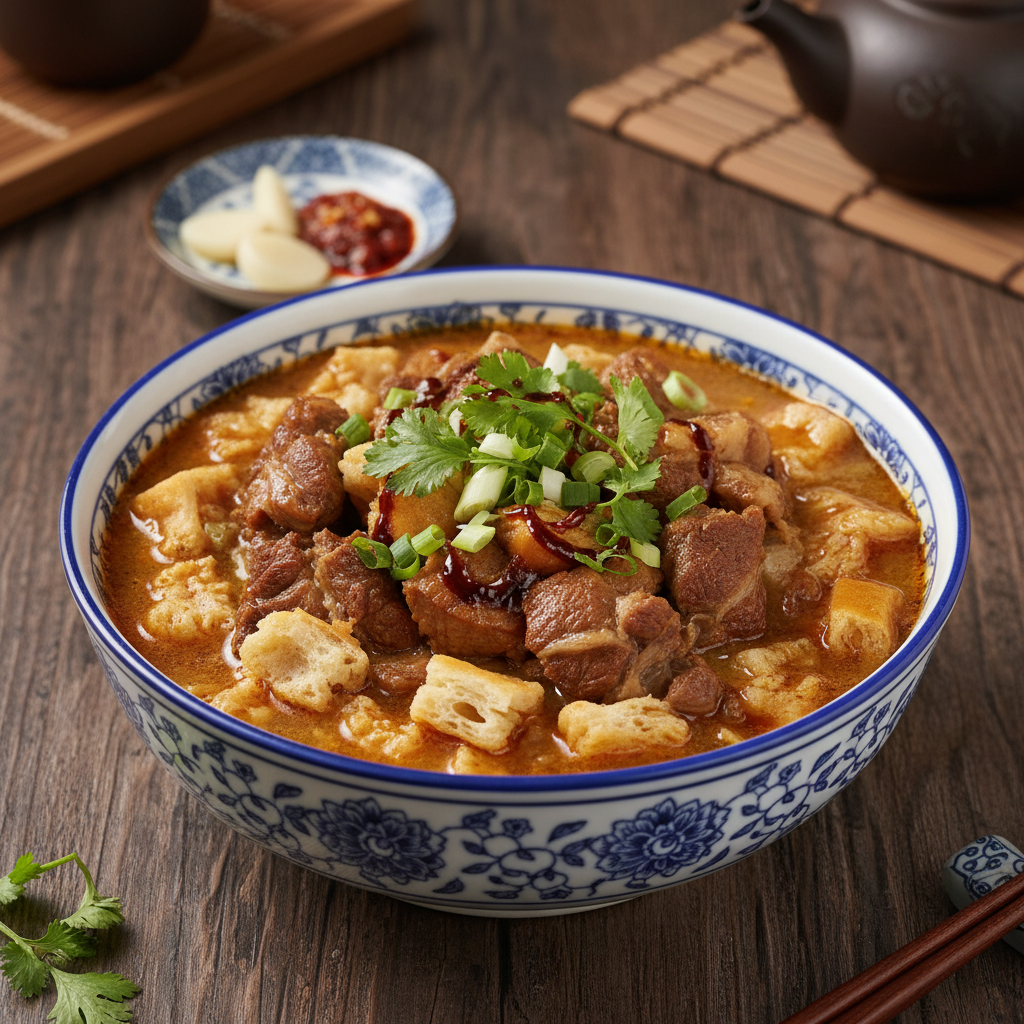
Yangrou Paomo is a specialty dish from the Guanzhong region of Shaanxi (especially Xi'an). It is a steaming hot stew made by cooking shredded steamed leavened bread (locally called 'mo') with lamb or beef broth, with the lamb version being the most common and classic.

Youpo Mian is one of Shaanxi's traditional noodle dishes, famous for its 'belt-width' noodles and unique preparation method. The noodles are typically handmade, wide, thick, and chewy. Hot oil is poured over them to release the aroma of chili powder, minced garlic, and chopped green onions, resulting in a spicy, fresh, and savory flavor.

A dumpling feast is a banquet primarily featuring various dumplings with different fillings and shapes, often including dozens or even hundreds of dumplings of diverse styles, embodying traditional Chinese food culture.

Biangbiang Noodles are a distinctive noodle dish from Shaanxi, famous for their wide, belt-like noodles, and are known as one of the "Eight Wonders of Shaanxi." The noodles are typically handmade, have a chewy texture, and are served with chili oil and other seasonings, making them fragrant, spicy, and delicious.

Shizimo is a specialty snack from China's Northwest region, primarily popular in Shaanxi, Gansu, and other areas. It uses flour as its main ingredient, with salt, oil, and other seasonings mixed into a dough. It is then baked using heated stones. Shizimo has a crispy texture and a rich wheat aroma. It gets its name 'Shizimo' (Stone Cake/Flatbread) because stones are used in its preparation.

Zeng Gao, also known as "Jing gao" in Shaanxi dialect, is a pastry made directly from glutinous rice. It usually includes red dates, dried longan pulp, or red beans, then thoroughly steamed and cut into pieces.

Hulu Chicken is a traditional famous dish from Xi'an, Shaanxi, originating in the Tang Dynasty. This dish uses a young chicken grown within one year, prepared through three processes: simmering, steaming, and deep-frying. Its characteristics are golden color, crispy skin, tender meat, rich flavor, and a shape resembling a gourd, hence the name 'Hulu Chicken'.