What are the best ways to get around Chinese cities?
Transportation options in Chinese cities are diverse, including metro, ride-hailing, taxis, bike-sharing and buses. This article provides international travelers with a detailed analysis of the characteristics, usage methods and applicable scenarios for each type of transportation.
8.1 What are the best ways to get around Chinese cities?
Getting around China’s big cities is part of the experience. To help you move easily, this guide walks through the main ways to travel within cities, how to use each option, and when they make the most sense. Most of them work best together with Alipay or WeChat Pay, which you should set up before your trip.
1. Metro / Subway
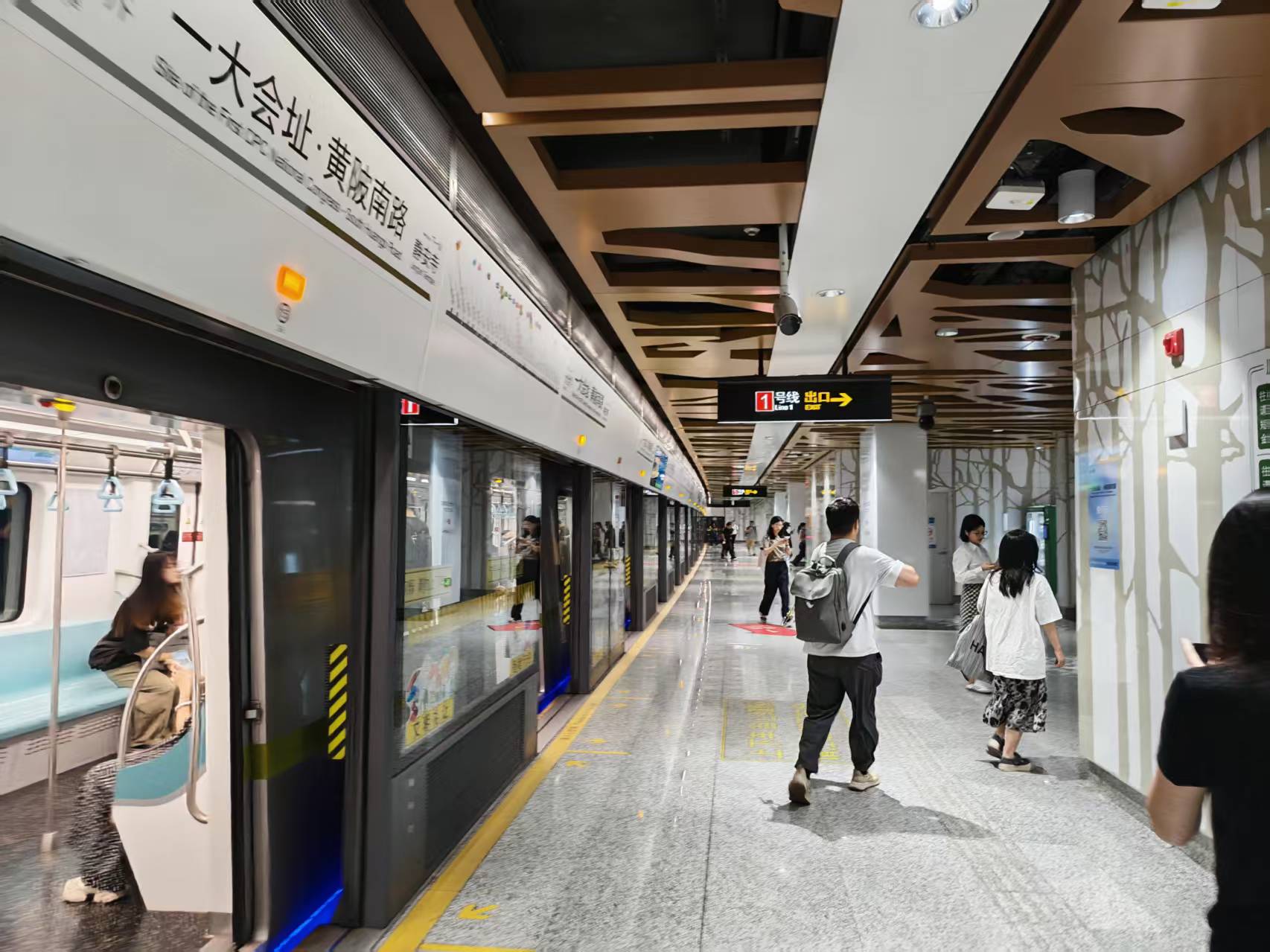
For most travelers, the metro is the best way to get around large cities like Beijing, Shanghai, Guangzhou and Shenzhen.
Why it’s great
- Fast and reliable – no traffic jams underground.
- Very wide coverage – connects major attractions, train stations, airports and business districts.
- Friendly for visitors – clear English signage, bilingual announcements and easy-to-use ticket machines.
How to ride
You have two main options:
-
Single-journey tickets
- Buy from ticket machines or service counters.
- Good for occasional rides.
-
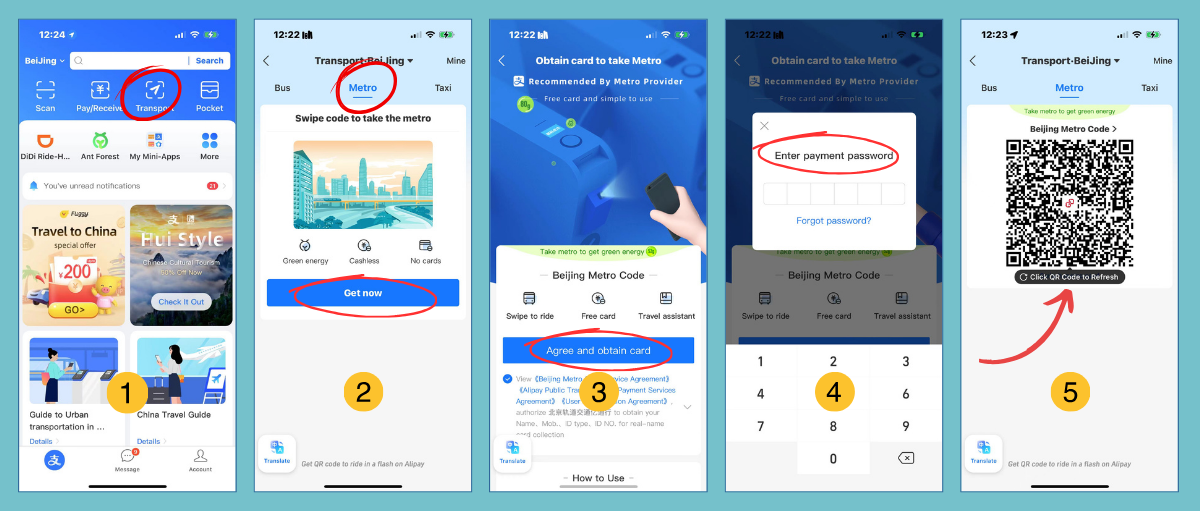
Transit QR code in Alipay or WeChat Pay (recommended)
- Open Alipay or WeChat → search for the local metro service (e.g. “Beijing Metro”, “Shanghai Metro”).
- Activate the metro QR code once.
- At the station, simply scan the QR code at the gate to enter and exit.
- Fare is calculated automatically and deducted from your chosen payment method.
With this method, one phone is enough to ride metro systems in most major Chinese cities.
2. Ride-hailing (DiDi and others)
Ride-hailing services, especially DiDi, are often more convenient than regular taxis.
Why it’s popular
- Clear pickup and drop-off locations in the app.
- Upfront fare estimates – no surprises.
- Automatic payment through Alipay / WeChat / cards.
- Some English support and built-in translation for chatting with drivers.
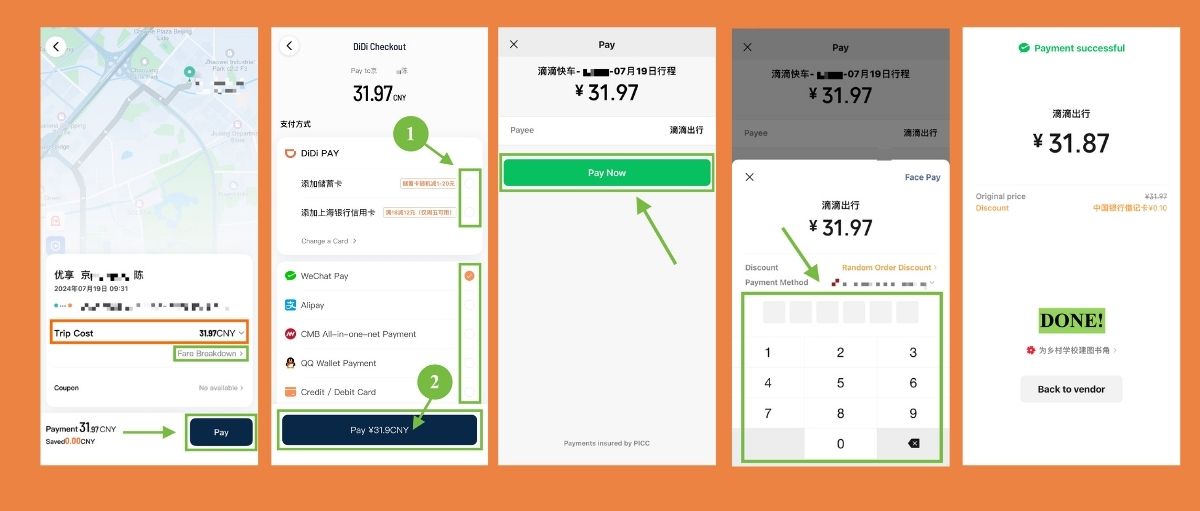
How to use DiDi
You can either:
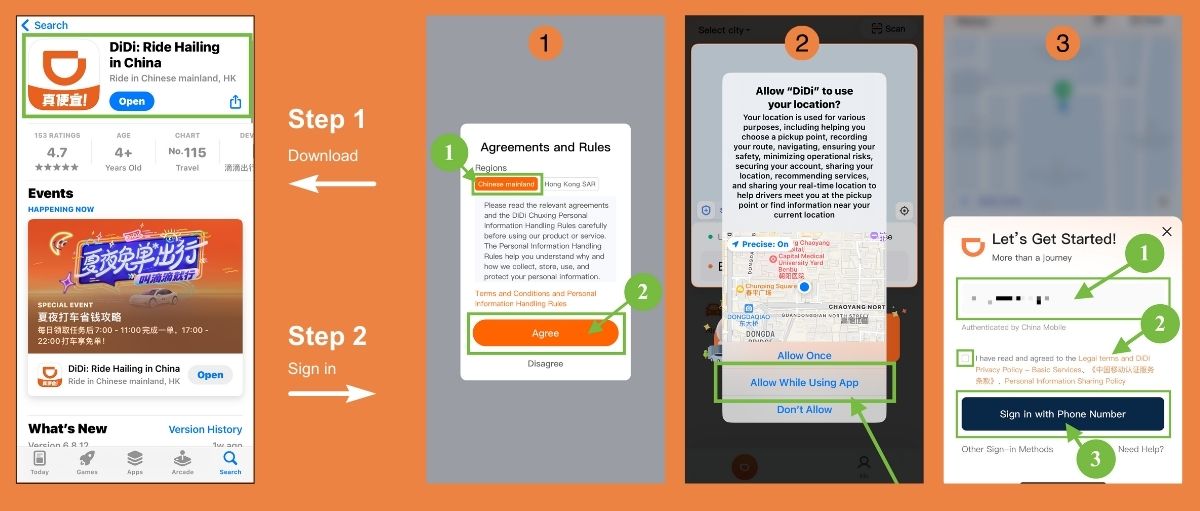
- Download the standalone “DiDi” app, or
- Use the DiDi mini-program inside Alipay or WeChat.
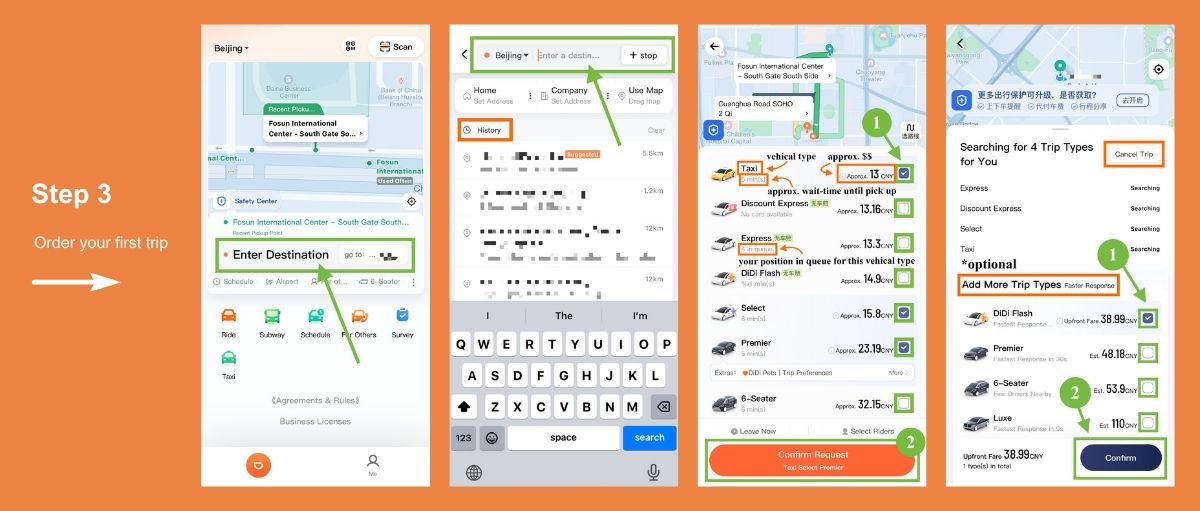
Typical steps:
- Link a payment method (international card or mobile wallet).
- Enter your destination (English often works in major cities).
- Confirm your pickup location on the map.
- Choose a car type (Express, Premier, etc.).
- Confirm and wait for your driver.
- After the ride, the fare is charged automatically.

3. Taxis
Taxis are still common and easy to find, especially around train stations, airports and major hotels.
Tips for using taxis
- Have the address in Chinese (screenshot from a map app or your hotel card).
- Make sure the driver turns on the meter when you start the trip.
- At the end, you can ask for a receipt (发票, fā piào), useful if you need to report an issue or for expense claims.
Most taxis accept cash, and many also support Alipay / WeChat scanning.
4. Bike-sharing
For short distances (within about 3 km), bike-sharing is cheap, flexible and fun.
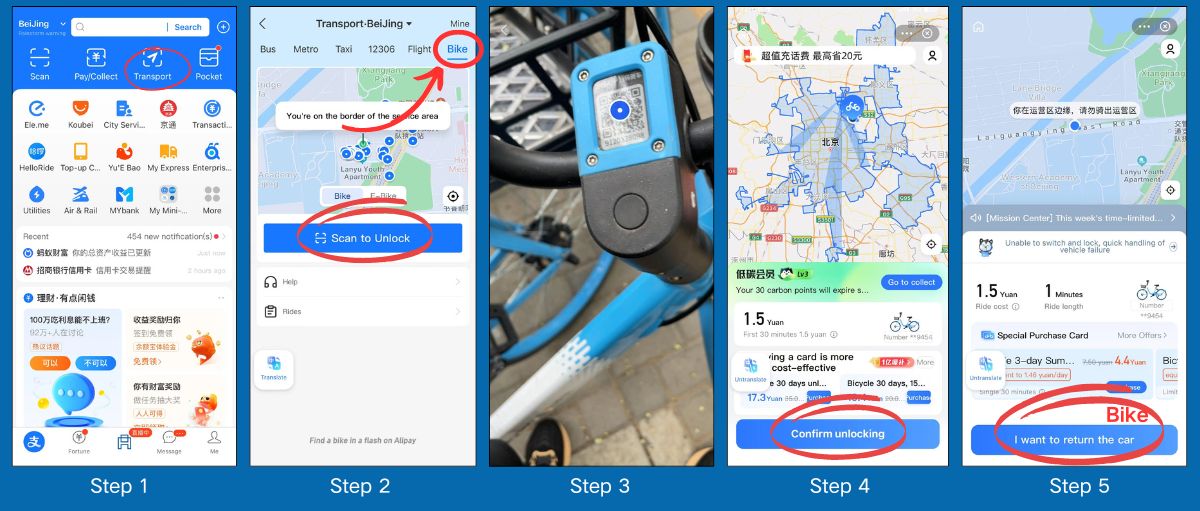
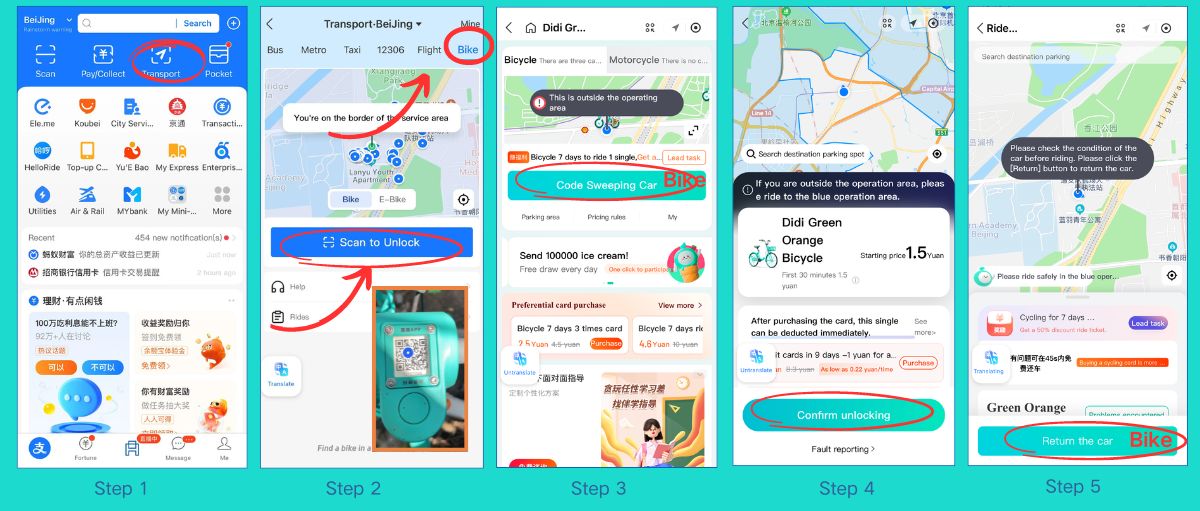
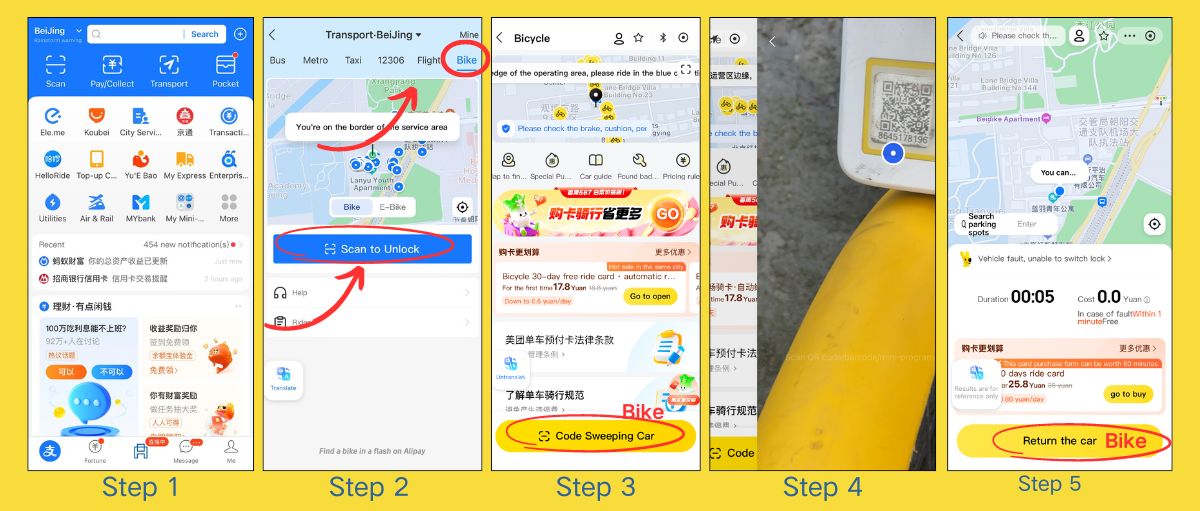
You can use several major brands (Hellobike, DiDi Bike, Meituan Bike) directly through Alipay or WeChat without installing extra apps.
How it works
- In Alipay or WeChat, open the bike-sharing service.
- Scan the QR code on the bike to unlock.
- Ride to your destination and park in a legal parking area.
- Manually lock the bike.
- The trip ends automatically and the fee is deducted.
5. Buses
Buses are the cheapest way to get around, usually costing only ¥1–2 per ride.
However, they are also the most challenging for international travelers.
- Route maps and stop names are usually only in Chinese.
- It is easy to take the wrong direction or miss your stop.
- Drivers rarely speak English.
If you really want to try buses, use a map app like Amap (Gaode) to plan your route and get real-time stop reminders.


6. Recommended strategy
For most international travelers, a simple priority order works well:
- Metro – first choice in big cities: fast, cheap and easy.
- Ride-hailing (DiDi) – best for door-to-door comfort and late-night trips.
- Bike-sharing – ideal for short distances in safe, bike-friendly areas.
- Taxis – backup option when ride-hailing or metro isn’t convenient.
- Buses – only if you are comfortable dealing with Chinese-only information.
With these tools and a few key apps, getting around Chinese cities can be smooth, efficient and surprisingly enjoyable.