How do I take the high-speed train in China?
A complete guide to traveling by high-speed rail in China, covering the full process from booking tickets and station security to boarding, luggage, seating and arrival, so international travelers can confidently experience China’s HSR.
8.2 How do I take the high-speed train in China?
Experiencing China’s world-famous high-speed rail (HSR) is one of the best ways to travel between cities. It is fast, comfortable and connects most major destinations. This guide walks you through the entire process from booking to arrival, step by step.
1. Booking tickets
For international travelers, online booking is the easiest and most reliable way to get high-speed train tickets. Your passport is the key ID document for the whole process.
Recommended options
-
Trip.com – Highly recommended for foreign travelers
- Full English interface
- Accepts international credit cards
- Clear seat classes and train options
-
Alipay / WeChat mini-programs – If you’ve already set up mobile payment, you can book inside the apps.
-
Railway 12306 (official app) – Has an English version, but registration and use can be complicated for first-timers.
Typical booking steps (similar across platforms)
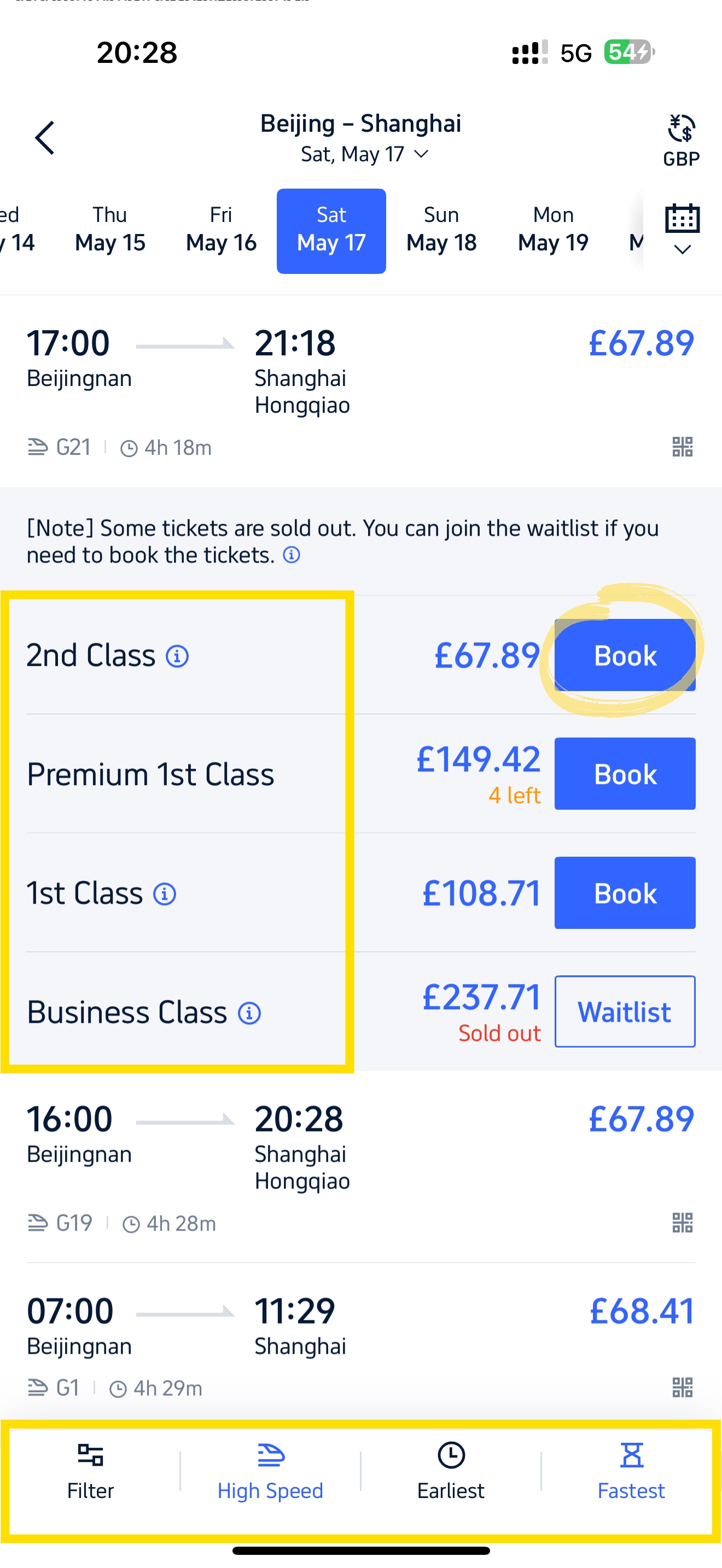
- Enter departure city, destination and travel date.
- View available trains and choose one based on time and duration.
- Select seat class: Second Class, First Class, or Business Class.
- Add passenger information:
- Name must match your passport exactly.
- Choose document type Passport and enter your passport number.
- Confirm the details and pay.
- You’ll receive a booking confirmation in the app, by SMS or email.



2. Getting to the station
Chinese high-speed rail stations are often very large and busy. Allow at least 45–60 minutes before departure, especially in big cities.
Many cities have multiple stations (e.g. Beijing South, Beijing West), so double-check your ticket and navigation app to make sure you are going to the correct station.
3. Entering the station and security checks
The station entry process usually has two steps:
- ID check at the entrance
- Show your passport to the staff at the station entrance.
- Security screening
- All luggage goes through an X-ray scanner.
- You walk through a metal detector, similar to airport security.
- Dangerous items (flammable, explosive, etc.) are strictly forbidden.
4. Finding the waiting area
After security, you enter a large waiting hall.
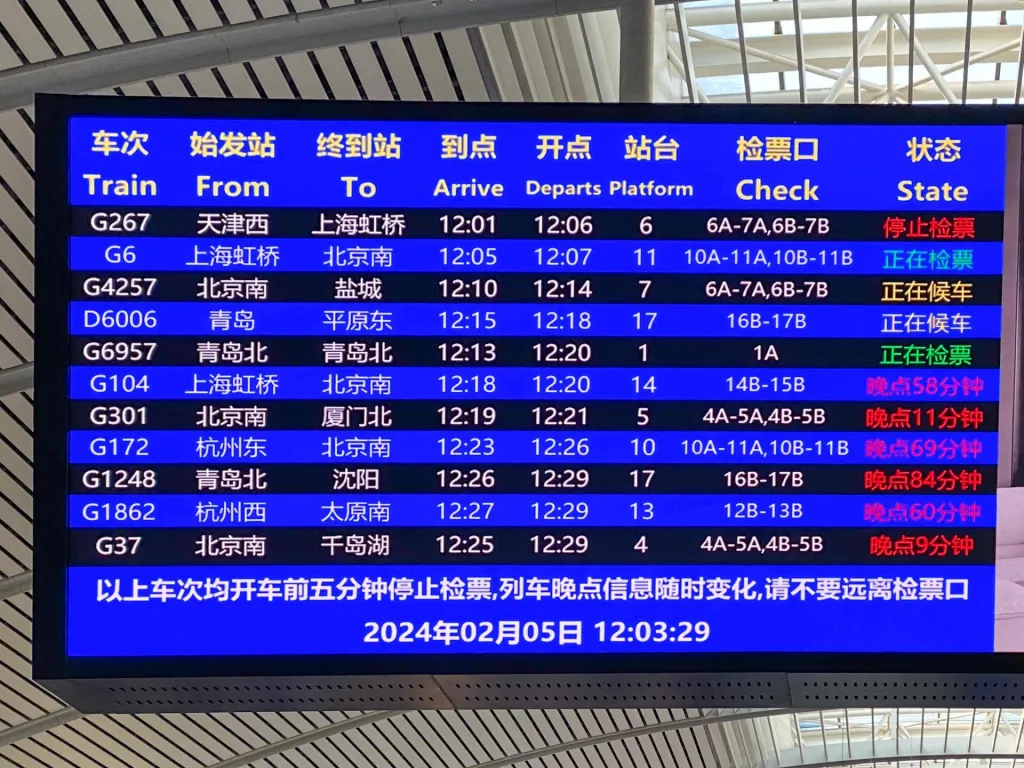
Your first task is to find the big departure board hanging above the hall.
- Look for your train number (for example, G123).
- On the same row, you’ll see the departure time, destination and the gate number (often labeled "Check-in" or "Gate").
- Once you know your gate number, go to that waiting area and sit nearby.
5. Ticket check and boarding
Boarding usually starts 15–20 minutes before departure.
Watch the screens at your gate and listen for announcements. When your train starts boarding:
- Go to the automatic gates marked “ID / Passport” or similar.
- Open your passport to the information page and place it face down on the scanner area.
- The system will match your passport to your e-ticket and open the gate.
After passing the gate:
- Follow the signs down to the platform (by escalator or stairs).
- On the platform, look for signs or markings showing car numbers.
- Match the Car No. on your ticket (e.g. Car 5) and wait in the correct area.
6. Onboard: luggage and seating
When the train arrives and stops, boarding is quick and orderly.
- Large suitcases can be placed in the luggage racks at the ends of the car.
- Smaller suitcases and backpacks can go on the overhead racks above the seats.
- Find your seat number based on the labels above or beside the seats.
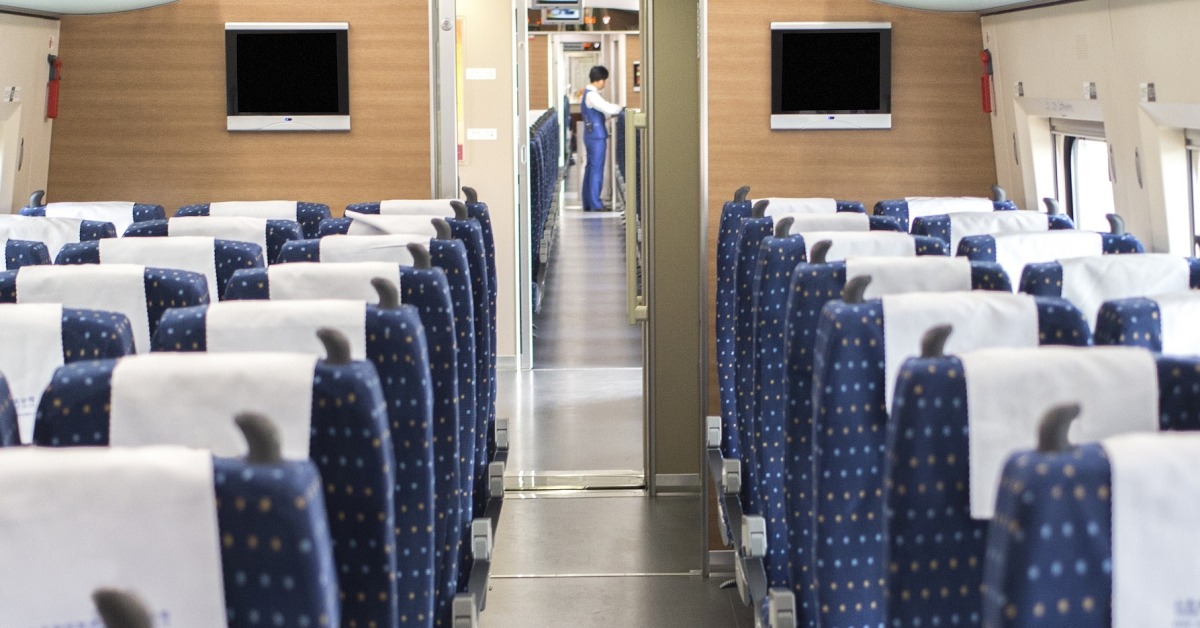
The ride is generally smooth and quiet. There are power outlets, tray tables and clean restrooms on board.
7. Arrival
Before arriving at your destination, there will be announcements in Chinese and English.
- Pack your belongings in advance.
- After the train stops completely, follow the crowd off the train.
- Follow signs to “Exit” to leave the station.
- You usually do not need to show your ticket again when exiting.
With this flow in mind, you’ll be able to use China’s high-speed rail system confidently and enjoy one of the world’s best train travel experiences.